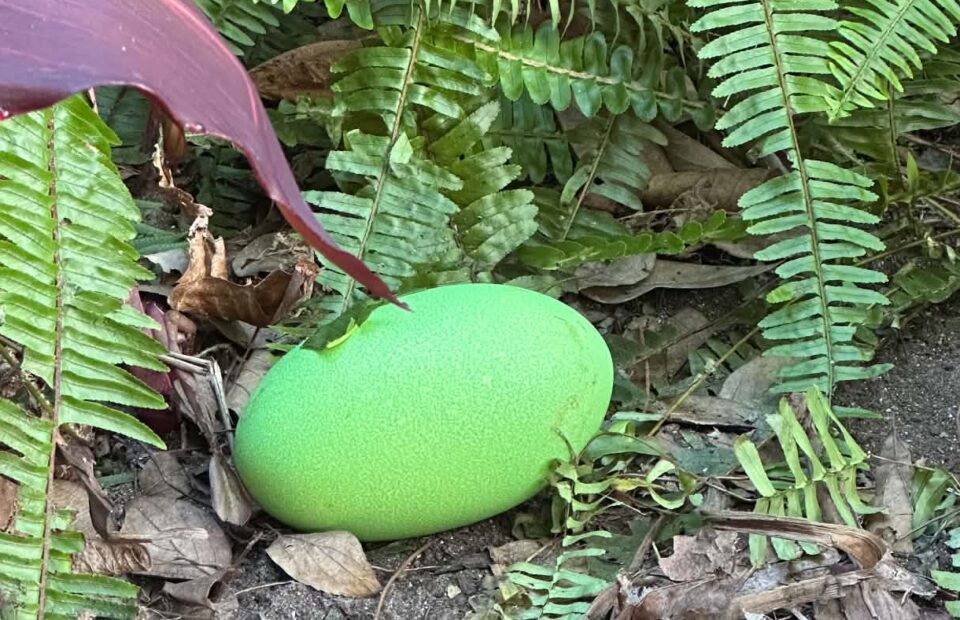
A fluorescent green egg tucked among the ferns has Adelaide Zoo's bird team celebrating a wait that lasted more than three decades. Ten-year-old southern cassowary Martina has laid the zoo's first cassowary egg in 34 years.
- 34 years since Adelaide Zoo's last successful cassowary breeding, in 1992
- 10 years old: Martina, the female who laid the egg
- 13 years old: Jeffrey, her mate, introduced for the first time this past August
- 1968: the year Adelaide Zoo's first cassowary chick ever hatched
Thirty-four years in the making
Martina and Jeffrey had never met before this year's breeding season. Southern cassowaries are largely solitary birds that can turn aggressive outside breeding windows, so keepers spent weeks easing the pair together — watching for low rumbling "boom" calls and testing whether the two could tolerate feeding near one another before removing the barriers between their enclosures.
The recommendation to pair the birds came through the species' managed regional breeding program. Once keepers saw signs the cassowaries were comfortable, they made the introduction.
"This is really exciting news for us because it has been 34 years since we've had successful cassowary chicks here at Adelaide Zoo, so the team and myself included are very excited," said Erin, Adelaide Zoo's Team Supervisor of Birds and Free Flight. "Martina and Jeffrey have only been paired since August this year, and this is the first time they've ever been put together."
"It has been 34 years since we've had successful cassowary chicks here at Adelaide Zoo." — Erin, Adelaide Zoo Team Supervisor, Birds and Free Flight
Why the egg is neon green
The egg's vivid color comes from biliverdin, a pigment also found in other bird eggshells, and it isn't just decorative. In the wild, southern cassowaries nest directly on the rainforest floor, where a green shell can help the egg blend into leaf litter and fallen vegetation — camouflage that may make it harder for predators to spot.
Southern cassowaries are large, flightless birds native to the rainforests of far north Queensland and nearby regions, and their size and prehistoric look have earned frequent comparisons to dinosaurs. They also play an outsized ecological role as seed dispersers, carrying the seeds of rainforest fruit across their territory in a way few other animals can replicate. A recent New York Times report on the pairing noted just how rare successful cassowary matchmaking is in captivity.
A father's job once the egg hatches
Cassowary parenting flips the usual script: once an egg is laid, the female generally moves on, leaving incubation and chick-rearing entirely to the male. That means Jeffrey, not Martina, would take over sitting on the egg and raising any chick that hatches.
The zoo has been careful to note the egg's arrival doesn't guarantee a chick — fertility isn't yet confirmed, and there's no certainty it will hatch. Still, after 34 years without a single cassowary egg at the zoo, even this early step counts as a milestone for a species whose numbers in the wild remain difficult to track.
For now, Adelaide Zoo's bird team is simply keeping watch, hopeful that this unlikely pairing of two birds meeting for the first time will be the one that finally works.


