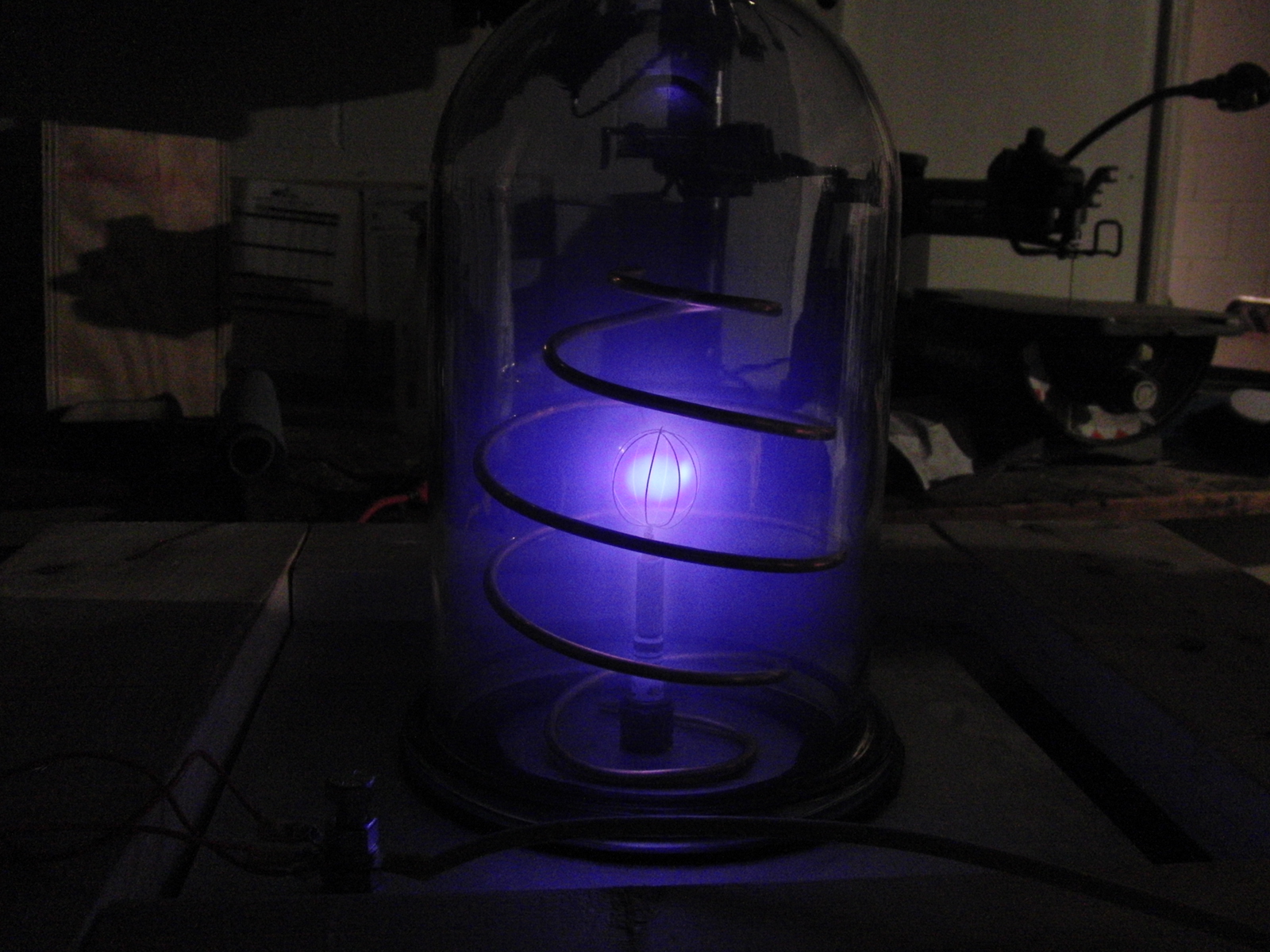
A seventh-grader from Dallas has built a working nuclear fusion device in his spare room and detected real neutrons from it — a result that puts him in line for the Guinness World Record for the youngest person to achieve nuclear fusion.
Aiden McMillan, 12, started reading about nuclear physics when he was eight years old, simply because the subject caught his attention. He spent two full years studying the science before he ever touched a piece of equipment, running calculations and working through concepts that most middle-schoolers never encounter.
"It doesn't make me jump higher. It doesn't make me write faster. It doesn't do anything for me," McMillan told NBC DFW. "But in the grand scheme of things, fusion as a whole, in my opinion, is the energy of the future."
The next two years were spent building. McMillan worked through seven different prototypes before reaching a result, splitting his time between a spare room at home and Launchpad, a nonprofit makerspace in West Dallas that supports ambitious student engineering projects. Components failed. Designs were scrapped. He had to learn how to safely handle vacuum pumps, high-voltage power supplies, and deuterium gas — skills well outside any standard middle school curriculum.
His device is a type of fusor, the same general design first patented by television pioneer Philo Farnsworth in the 1960s. It works by using high voltage to accelerate atoms of deuterium — a heavy form of hydrogen — inside a sealed chamber until some of them collide with enough energy to fuse into helium. The device does not generate usable electricity. Its only purpose is to demonstrate that fusion is occurring.
The proof comes from neutrons. When two deuterium atoms fuse, they release a neutron as a byproduct, and that neutron can be picked up by a detector placed near the chamber. Professional laboratories use the same basic technique to verify fusion reactions. According to Newsweek, McMillan's neutron measurements have since been independently verified — the final hurdle before the Guinness World Record title can be confirmed.
The moment the detector lit up was, in his words, hard to describe. "We got neutrons, yeah!" he recalled. "Kind of tearing up about it cause it was like, the end of a long, long journey."
The current Guinness record for youngest person to achieve nuclear fusion belongs to Jackson Oswalt of Memphis, Tennessee, who built his own fusor at age 11 and confirmed fusion just hours before his 13th birthday in 2018. If McMillan's verification is accepted, he would join that very small club of pre-teen fusioneers — a community of perhaps a dozen young people worldwide who have built devices capable of producing real fusion reactions in a home workshop.
Getting the project off the ground required more than physics knowledge. McMillan's mother required a detailed accounting of every possible risk before agreeing to let the work continue. "There were some alarm bells with my mom, yes," he said. "She was like, 'Whoa, whoa, whoa, take a step back, tell me exactly what could go wrong, and how it could go wrong and make sure it doesn't go wrong.'" Earning that trust, he said, was a condition of the whole project.
McMillan now plans to keep refining the design and to share what he learned with other students who are curious about nuclear physics. The fusor itself remains on display at Launchpad, where it has already become an inspiration for the next generation of young builders walking through the door — proof that a working nuclear fusion device can come together in a spare room, as long as someone is willing to read for two years before turning anything on.


