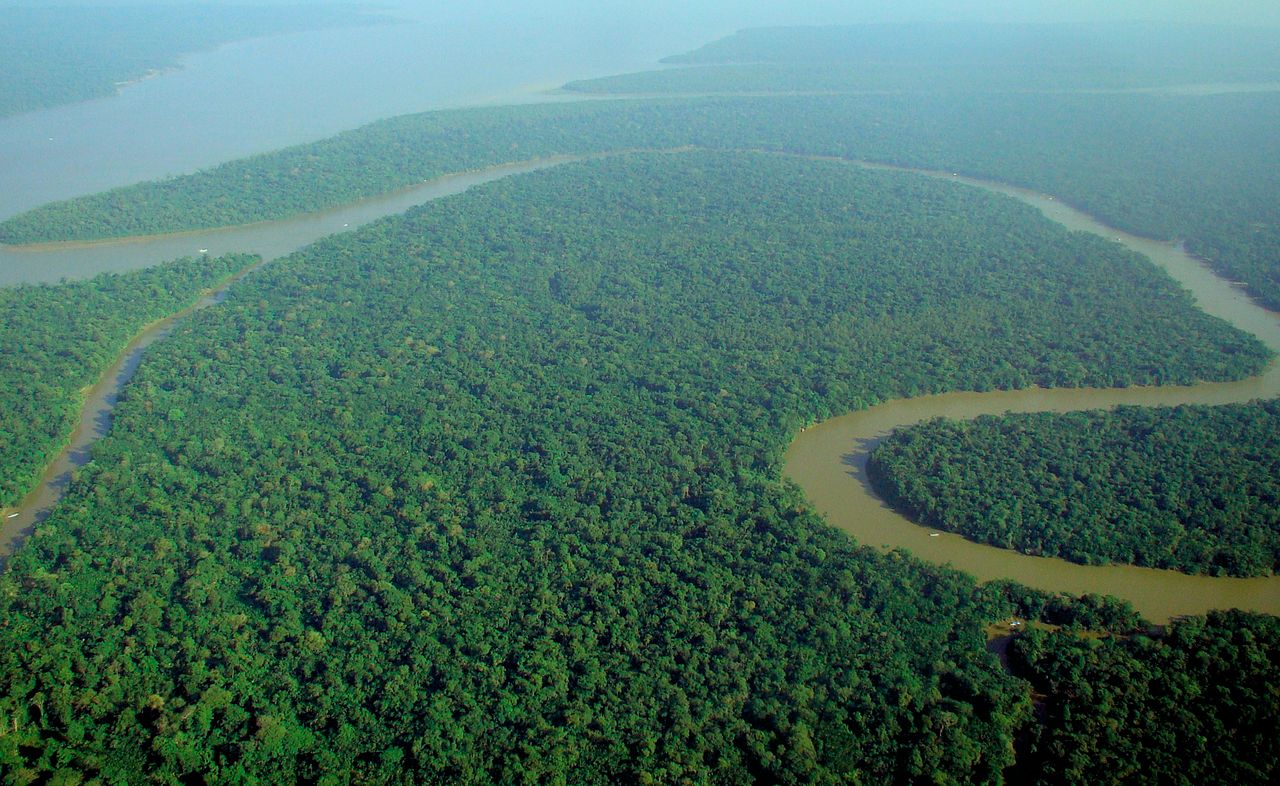
The Brazilian Amazon is recovering at a pace not seen in a decade. New data from Brazil's National Space Agency (INPE) shows that deforestation in the first half of 2026 fell to its lowest level in ten years — with just 500 square miles of rainforest cleared between January and June, down 38% from the 807 square miles lost in the same period in 2025.
The numbers represent one of the most encouraging signals in years for the world's largest tropical rainforest, which spans nine countries but is concentrated overwhelmingly in Brazil. The Amazon contains roughly 10% of all species on Earth, absorbs vast quantities of carbon dioxide, and plays a critical role in regulating South America's rainfall patterns and the global climate.
Lula's crackdown on illegal land clearing
Brazil's president Luiz Inácio Lula da Silva, who took office in 2023 after campaigning explicitly on a pledge to end illegal deforestation, has made protecting the Amazon a signature policy priority. His government has ramped up enforcement of environmental laws, prosecuted illegal land clearers, and expanded satellite monitoring — the same technology that produced this week's encouraging data.
"This shows that the political will to fight deforestation has prevailed," said Ane Alencar, science director at the Amazon Environmental Research Institute. "This is evidence that deforestation is not an inevitable process and its reduction is responsive to decisions made by society and the government."
Reversing the Bolsonaro-era surge
The decline reverses a dramatic trend of rising deforestation during the Bolsonaro era. Under the previous administration, Amazon deforestation surged to highs not seen in over a decade, alarming scientists and conservationists worldwide. Lula's return to power was accompanied by a direct reversal of those policies, and the results are now showing clearly in the data.
The Amazon's importance to global climate cannot be overstated. The rainforest stores an estimated 150 to 200 billion tonnes of carbon — roughly four times total global annual CO2 emissions. When trees are felled and burned, that stored carbon is released, accelerating global warming. Conversely, a protected and regenerating Amazon acts as a vital carbon sink.
Conservation groups welcomed the figures while urging continued vigilance. The Amazon still faces ongoing threats from illegal gold mining, land speculation, and agricultural encroachment, and some areas cleared in prior years are only now beginning to regrow.
How close the Amazon is to a tipping point
Scientific consensus holds that deforestation of more than 20–25% of the Amazon could trigger a "tipping point," causing large areas of tropical forest to transition permanently to savanna — with catastrophic consequences for regional rainfall and the global carbon budget. Current estimates place total deforestation at around 17–19% of the forest's original extent. The progress seen in 2026 moves Brazil meaningfully away from that threshold.
Brazil returns to the polls in October 2026, with Lula indicating he plans to stand again for re-election. Environmental groups are closely watching the outcome, given how dramatically Brazil's Amazon policy has shifted with successive governments.
The broader lesson from Brazil's turnaround is clear: political will, backed by satellite monitoring technology and strong enforcement, can translate directly into environmental outcomes. For the Amazon, the forests, and the millions of species that call it home, the latest figures offer genuine cause for hope.


