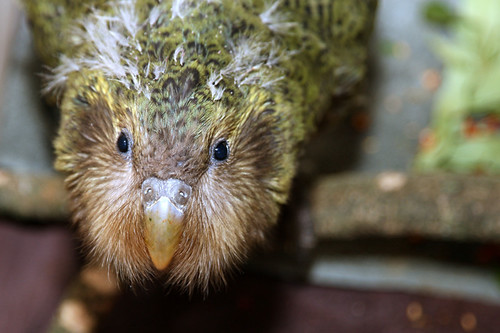
A ten-year-old male cat that spent years living as a family pet in rural Bolivia turned out to be something no scientist had ever formally described: an entirely new species of wild cat.
- 100+ years since the last new wild cat species was formally described
- 5 distinct tiger cat species now recognized, up from just 1
- 18 inches long and 3 pounds — smaller than an average house cat
- 1 known living individual, currently in protective care
A Cat Hiding in Plain Sight
The cat arrived at the Senda Verde Wildlife Sanctuary in Bolivia's Yungas region in 2017, after the family keeping him in their home turned him over for care. Paola Nogales Ascarrunz, a wild cat conservationist and National Geographic Explorer, met him while volunteering at the sanctuary and couldn't quite place what she was looking at.
Tiger cats — a group of small, spotted South American felines — had been lumped together as a single species, Leopardus tigrinus, based on similar appearances. Ascarrunz teamed up with an international group of researchers, including Brazilian geneticist Eduardo Eizirik, to run DNA analysis on museum specimens and living animals across the continent.
"Tiger cats have been enigmatic for decades," Eizirik said. The genetic data told a different story than anyone expected: at least five distinct species, "each with its own unique evolutionary history," he said.
What Makes Tilcayo Different
The newly named species, Leopardus tilcayo, is native to the Bolivian Yungas cloud forest, a fog-shrouded stretch of the Andes-Amazon basin that is among the least-studied ecosystems in the Neotropics despite housing species found nowhere else on Earth.
Researchers named it "Tilcayo" after the term local communities already used for the animal. "We chose to name the newly described species 'Tilcayo' ... as our way of honouring their ancestral knowledge and connection to this animal," Ascarrunz said.
Physically, the tilcayo cat is distinguished from its closest relative, the oncilla, by larger spot markings, a longer and more slender tail, and a muted fur tone. It measures roughly 18 inches from head to body and weighs about 3 pounds, making it noticeably smaller than a typical housecat.
"Describing a new cat species after more than 100 years shows how much we still have to learn about the biodiversity around us."
Searching the Cloud Forest
Right now, the single known individual lives in protective captivity at Senda Verde. Nobody has confirmed how many tilcayo cats exist in the wild, or exactly how far their range extends — tiger cats are notoriously easy to misidentify as oncillas or margays on camera-trap footage.
Ascarrunz is now installing camera traps across the Yungas forests to try to document the species in its natural habitat, data that would help researchers estimate population size and push for formal conservation status. The full genetic study, which also renames four related tiger cat species, was published in Current Biology01110-3). Background on the discovery and the sanctuary where it was made is available via Ascarrunz's National Geographic Explorer profile.
"We need to protect the Yungas forests, which are home to so many species," Ascarrunz said, "including some we are only beginning to understand."