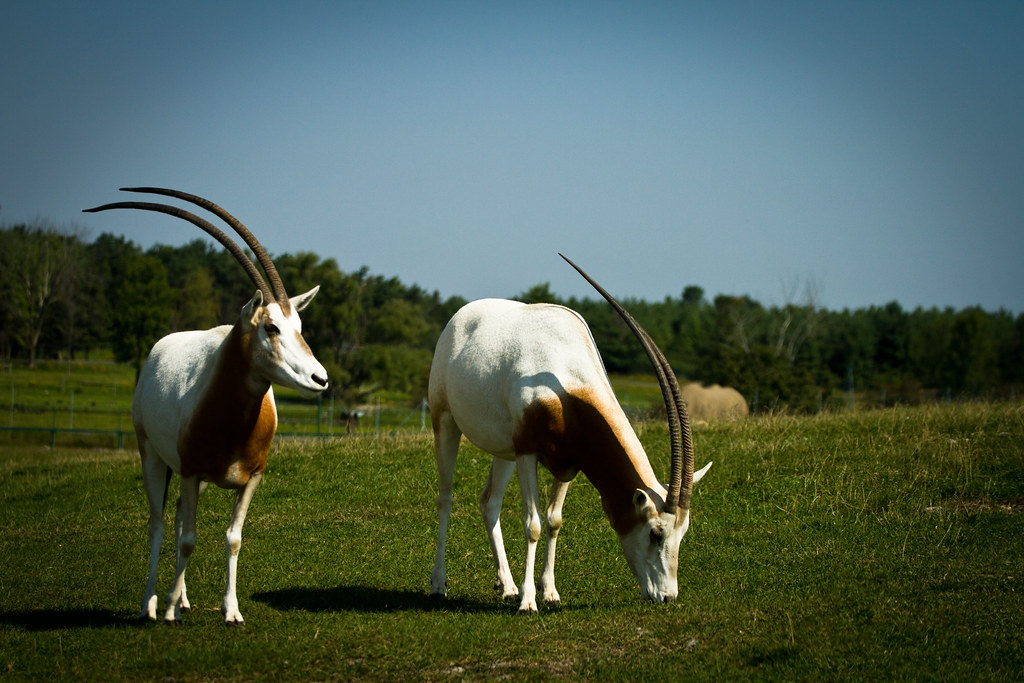
In the year 2000, the scimitar-horned oryx existed nowhere in the wild — not a single one. This month, conservationists confirmed the species has topped 600 free-ranging animals in Chad, nine years after the first calf was born back on native soil.
- 600+ scimitar-horned oryx now living wild in Chad
- 0 remaining in the wild in 2000, when IUCN declared the species Extinct in the Wild
- 285 oryx translocated from a captive "World Herd" in Abu Dhabi since 2016
- 510 wild-born calves recorded since the program began
- 85%+ survival rate for released and wild-born animals
From zero to a self-sustaining herd
The scimitar-horned oryx once ranged across the grassy fringes of the Sahara, but hunting and habitat loss wiped it out entirely by the late 20th century. Every living oryx existed only in zoos and private collections, descended from a small founder population.
Starting in 2016, the Environment Agency – Abu Dhabi partnered with the Chadian government, Sahara Conservation, the Smithsonian's National Zoo, the Zoological Society of London (ZSL), and other institutions to reverse that. They shipped genetically screened oryx from a curated "World Herd" into the Ouadi Rimé-Ouadi Achim Faunal Reserve, a protected area in central Chad larger than Portugal.
The releases worked better than planners expected. The original target was 500 wild oryx; the population has since passed 600, with third-generation animals — calves of calves of the original released herd — now being born on the reserve.
Why the comeback matters beyond one species
The oryx's return triggered a broader shift in how the reserve is managed and protected, benefiting an entire community of Sahelian wildlife, including gazelles, bustards, and vultures that share the same habitat.
"Species that are classified as Extinct in the Wild become almost so threatened that some call them lost causes. But this stunning achievement is a testament to what is possible." — Andrew Terry, Director of Conservation and Policy, Zoological Society of London
The recovery was strong enough that the IUCN Red List downlisted the scimitar-horned oryx from Extinct in the Wild to Endangered — the first time a large mammal has climbed back from that lowest category through a reintroduction program of this scale.
What's next for the reserve
Chad's government now manages the reserve full-time, enforcing wildlife protections and employing local rangers who track the herds and report poaching threats. The same partnership is already using lessons from the oryx program to support two other Sahelian species sliding toward extinction: the addax and the dama gazelle.
Ten years ago, there was no guarantee the reintroduction would take. Desert conditions are harsh, poaching pressure persists, and large mammal reintroductions have a mixed track record worldwide. The oryx's steady population growth — averaging strong annual gains for nearly a decade — suggests the model can be repeated.
"This is a historic moment not only for the scimitar-horned oryx but also for the Ouadi Rimé-Ouadi Achim Faunal Reserve and for Chad," said Chad's Minister of Environment, Fisheries and Sustainable Development, Mahamat Abdelkerim Hanno, marking the milestone. For a species that existed only behind fences a decade ago, that free-ranging herd of 600-plus is now the baseline conservationists are building from — not the ceiling.
Read more from Sahara Conservation on the program's decade of work in Chad.


