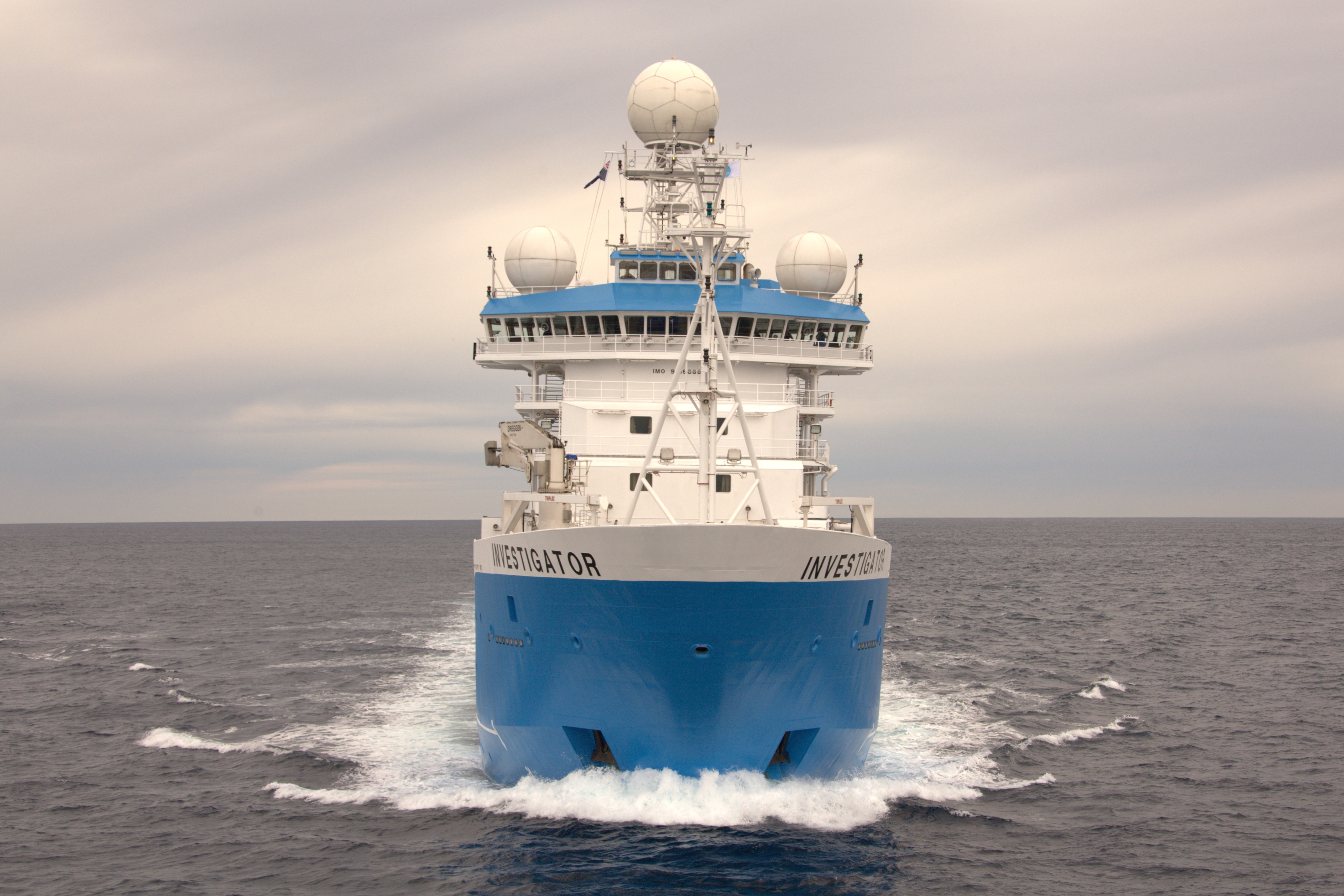
More than 100 marine species have been recorded for the first time in some of Australia''s most remote waters, after scientists sorted through 1,000 specimens collected near the Christmas and Cocos (Keeling) Islands. The result, published this week, is a window into a deep-sea world humans have barely glimpsed.
Two voyages, 22 seamounts, 1,000 specimens
Researchers from Museums Victoria, CSIRO and the Australian Museum collected the specimens over two voyages in 2021 and 2022 aboard the 94-metre oceanographic research vessel RV Investigator, working across 22 seamounts — massive subsea mountains — nearly 3,000 kilometres north-west of Perth. After years of meticulous taxonomic work, the team has confirmed at least 149 of the animals are entirely new to science.
The newly described species span sea stars, brittle stars (close relatives of starfish, and the most abundant group found), worms, sea cucumbers, crabs, and at least one fish — a new species of greeneye. They live in a strange, high-pressure world where sunlight never reaches and conditions would crush most things that walk on land.
"It''s an incredibly important environment, and we know nothing about it," said jellyfish expert and paper co-author Claire Rowe. "Some of these specimens have been collected down to 5,000 metres below the surface. I can''t even run 5ks." She added that the animals are "all weird and wacky, but really adapted to their environment, which is incredibly cool."
A worm found nearly 5,000 metres down
One standout, Bathyvermilioides juliebrocka, is among the deepest annelid worms ever discovered on more than 100 RV Investigator voyages. Just millimetres long, the animal was scooped from roughly 4,990 metres down. From its hard tube of calcium carbonate, only a feather-like tentacle peeks out. "In a way, it looks like a little flower," said deep-sea worm researcher Elena Kupriyanova, who was on the expedition.
Dr Kupriyanova said it was striking to find a firm-bodied creature living at such depth, where most animals have evolved to be gelatinous in order to survive the crushing pressure — roughly 500 atmospheres at that depth. "Somehow these animals managed to calcify and maintain their tube despite this high pressure in the abyss," she said.
Another new species, O''Loughlin''s Sea Cucumber (Deima oloughlini), was named in honour of respected Australian marine taxonomist Mark O''Loughlin. Friendlier in appearance is the sponge crab Sphaerodromia brizops, which is known for its habit of carrying marine invertebrates around like a hat.
Seamounts as stepping stones, not islands
The findings also help rewrite a long-held idea about seamounts. For decades, scientists assumed many of these subsea mountains were biological islands, each with their own unique, isolated fauna. The new work suggests they are better understood as "stepping stones" — habitats that allow deep-sea organisms to spread from one mountain to the next, mixing common species across vast distances while still hosting some specialists.
"Because we can have examples of both unique fauna and actually quite common species on different seamounts around the world," Dr Kupriyanova said, the picture is more interconnected than scientists once thought.
Almost half a decade after the two RV Investigator voyages, the expeditions are still producing discoveries. More than 400 collected species remain to be formally described, meaning the count of newly named animals from these waters is likely to keep climbing for years.
The work also gives policymakers, conservationists, and ocean managers crucial baseline data for an area increasingly relevant to global fisheries and seabed exploration. Knowing what lives in the deep waters around Christmas and Cocos Islands is the first step toward protecting it from threats such as bottom trawling and proposed deep-sea mining elsewhere in the Indo-Pacific.
For now, though, the result reads less like a policy document and more like a love letter to the ocean: 149 brand-new sea creatures, hauled gently up from the dark, ready to be named. It is a reminder that even in 2026, there are vast neighborhoods of Earth where the maps are mostly blank — and that good ships, patient scientists, and a little funding can still fill them in.


