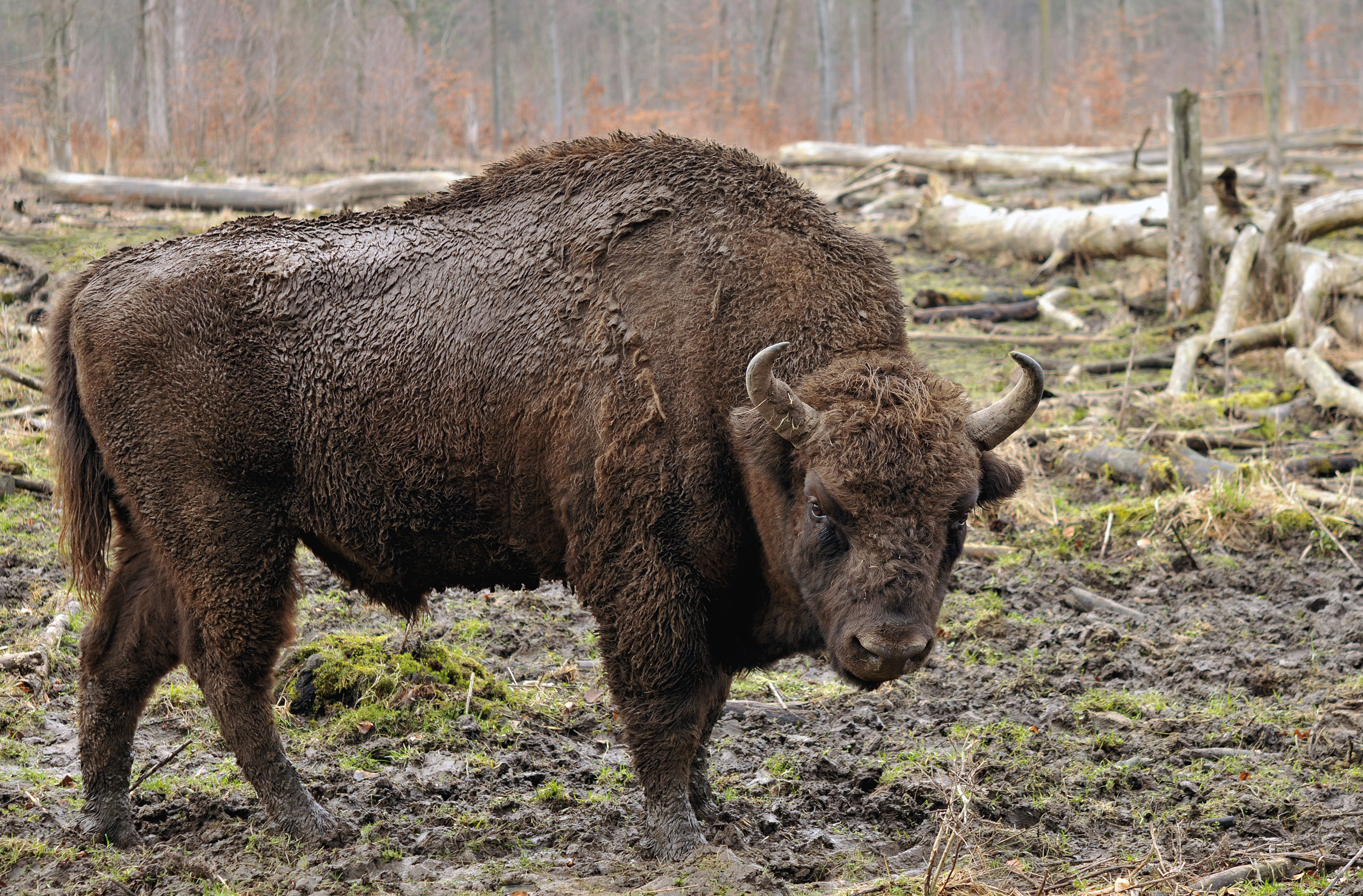
A species that vanished from British soil roughly 6,000 years ago is now bulldozing its way through a Cumbrian estate — on purpose, and for free.
- 6,000 years since wild bison last roamed Britain
- 5 European bison founding the new Cumbria breeding herd
- 700-acre secure enclosure inside the 5,000-acre Castletown Estate
- 4,000+ acres of woodland, wetland and coastal habitat the project aims to restore
In spring, a bull, two adult females and their two calves were moved from the UK's first free-roaming bison herd at West Blean and Thornden Woods in Kent to Castletown Estate near Carlisle, founding a second breeding population under the Solway Wild Lands project. By June, the BBC reported the Wildwood Trust, which owns the herd, describing the animals as "thriving" in their new home.
From Kent to Cumbria
The move builds on the Wilder Blean Project, a 2022 trial led by Kent Wildlife Trust and the Wildwood Trust that was the first time wild bison had set foot in Britain in millennia. Within two years, that small founding herd — originally three animals from Ireland and Scotland — proved a semi-wild bison population could not only survive in the UK but actively restore ancient woodland around it. The Cumbria herd is the first expansion beyond Kent, and a test of whether the model works on a very different, much larger landscape.
Paul Whitfield, Wildwood Trust's director general, called it encouraging to see the project take root in a second location.
"It's incredibly encouraging to see bison from the founding herd at Blean established and thriving in Cumbria."
Why Bison Make the Best Landscapers
European bison are classified as a keystone species: their everyday behavior reshapes an entire ecosystem without a single human intervention. As the animals push through dense vegetation, they fell smaller trees and open gaps in the canopy, letting sunlight reach a forest floor that has sat in shade for decades. Their dust-bathing habit scrapes bare patches of earth that pioneer plants and burrowing insects depend on, while their grazing and browsing habits create a shifting mosaic of open glades instead of a single, uniform thicket.
Unlike the open-plains American bison many people picture, European bison are woodland specialists, according to Arbtech ecologists — which is exactly why they're being paired with other rewilding species. Exmoor ponies graze tough grasses the bison leave behind, Iron Age pigs turn over the woodland floor with their snouts, and Longhorn cattle browse low-hanging scrub, together building the same complex, species-rich habitat mosaic that vanished from Britain along with the bison themselves.
The Cumbria project also has to work within strict legal limits: bison in the UK fall under both the Dangerous Wild Animals Act and livestock regulations, meaning every release requires careful consultation with neighboring landowners and farmers. That the herd now shares a working estate with commercial agriculture, without incident, is itself being treated as proof of concept for expanding bison rewilding to other large landscapes across Britain.


