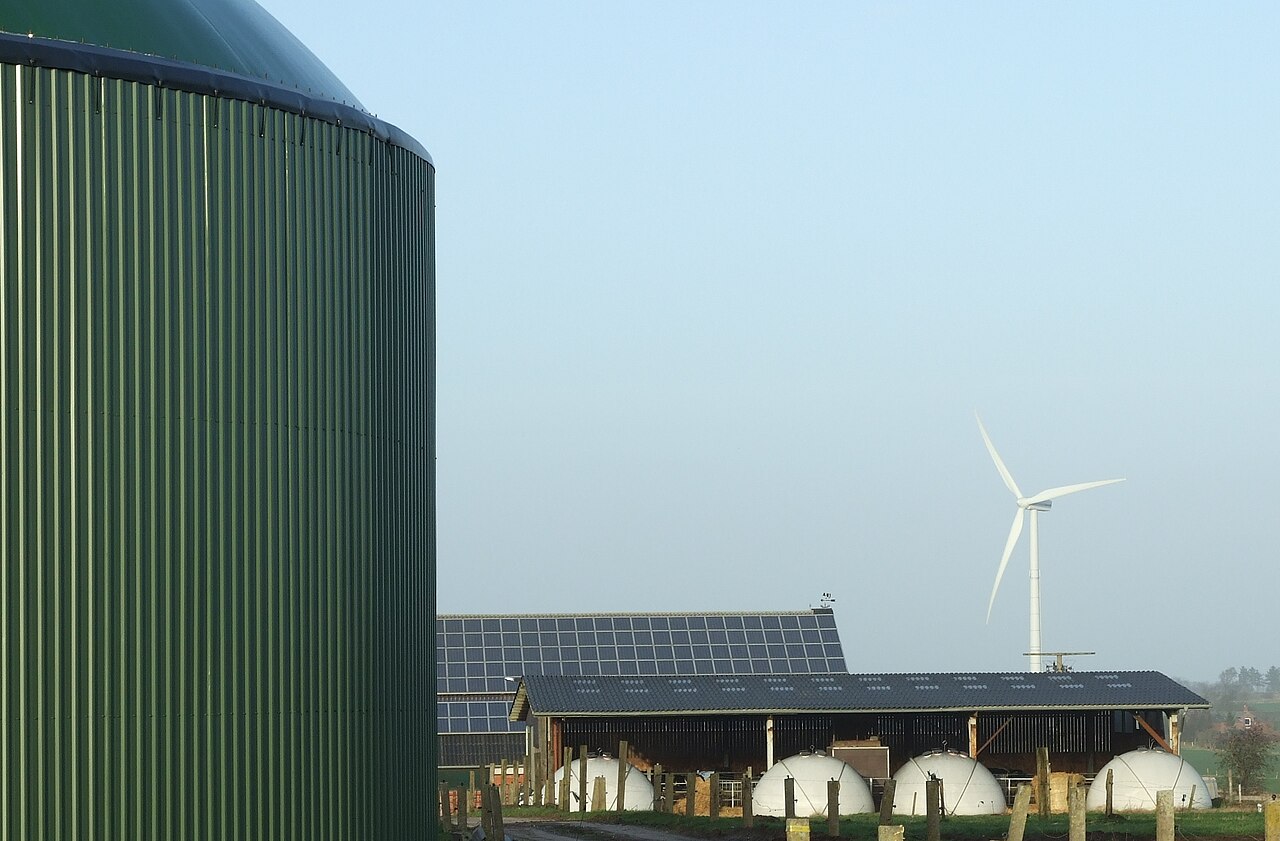
Germany has crossed a threshold that seemed distant just a decade ago: for the first time in its history, wind and solar energy have generated more of the country's electricity than fossil fuels. The milestone — confirmed in fresh analysis released this week by Carbon Brief — marks a turning point for Europe's largest economy and the world's fourth-largest energy consumer.
A thin but symbolic margin
The numbers: in 2025, wind turbines and solar panels combined to produce 44 percent of Germany's electricity, edging ahead of coal and natural gas at 43 percent. It is a thin margin, but symbolically enormous. Germany — which built its industrial identity on coal and ran its climate policy for decades through the lens of competing interests — has now crossed to the other side of the ledger.
The trajectory has been steep. A decade ago, renewables accounted for around 30 percent of Germany's electricity mix. The growth of offshore wind in the North Sea, a dramatic expansion of rooftop and utility solar, and the continued buildout of onshore wind have driven consistent year-on-year increases. In 2024, renewables came close to parity. In 2025, they crossed it.
Germany's transition — the Energiewende — was launched in earnest after 2011, when the Fukushima nuclear disaster accelerated the country's decision to phase out nuclear power while also committing to ambitious clean energy targets. Critics long argued that abandoning nuclear while decarbonizing electricity was an impossible task. The 2025 data suggests the critics were wrong.
The shift mirrors a broader transformation across the European Union, which also crossed the clean-power-exceeds-fossil-fuels threshold for the first time in 2024. An integrated European electricity grid — where German solar can be balanced by Norwegian hydro, Spanish wind by French nuclear — has helped absorb the variability of renewable generation and improve reliability.
Coal and industry: the unfinished business
Still, the Carbon Brief analysis is careful to note the gaps in Germany's story. The country remains more coal-dependent than almost any other nation in Europe. After the nuclear phaseout, Germany compensated partly by extending the life of its lignite plants — a decision that drew sustained criticism from climate scientists and has kept per-capita carbon emissions among the highest in the EU. The government has committed to phasing out coal "by no later than 2038," a timeline that many environmental groups say is too slow.
There is also the question of industrial energy. While the electricity sector has improved dramatically, Germany's heavy industry — steel, chemicals, cement, automotive manufacturing — still relies heavily on natural gas for heat and process energy. Decarbonizing heat and industry is the unfinished second chapter of the Energiewende.
A model other economies are watching
But the landmark achieved in 2025 should not be minimized. Germany built a clean electricity system despite political headwinds, high energy prices, and the loss of its nuclear fleet. It did so largely through market mechanisms and technology deployment rather than regulatory mandates. The falling cost of solar in particular — from over €0.40 per kilowatt-hour a decade ago to under €0.06 today — made the economics self-reinforcing once the initial policy framework was in place.
For the rest of the world, Germany's threshold carries a message. No major economy has tried harder to transition away from cheap, reliable fossil fuels while maintaining a large industrial base. The fact that it succeeded — even partially, even imperfectly — is a proof of concept that other economies are watching closely.
The milestone is a moment worth marking. A country that once powered the 20th century on coal is now, for the first time, powered more by the wind and the sun.


