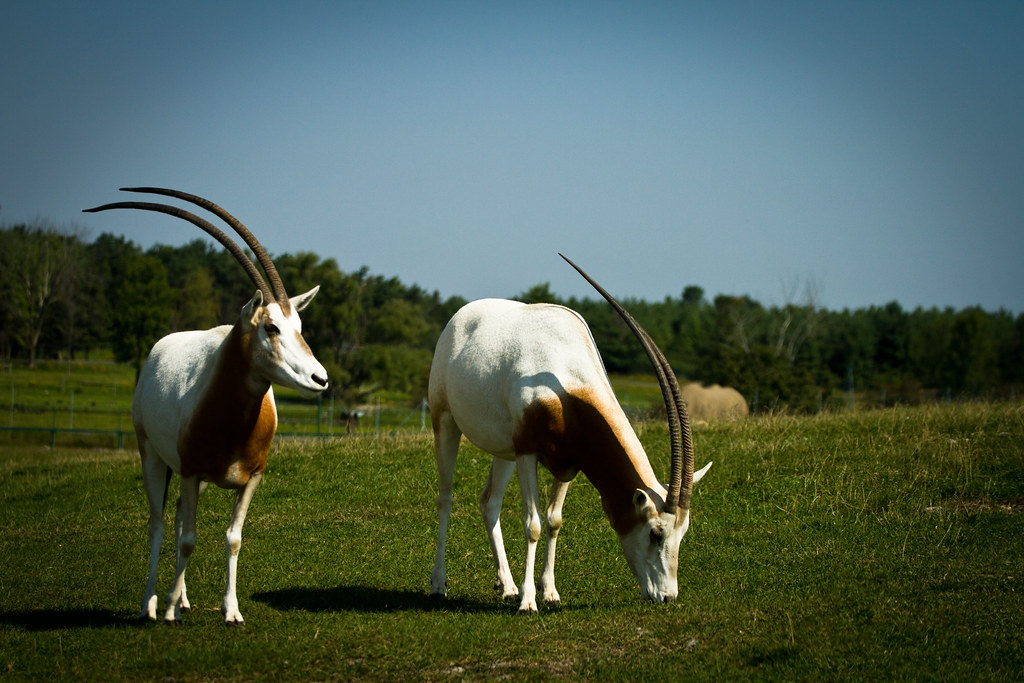
Somewhere in a rainforest canopy, a frog with translucent skin is waiting to be named. In the deep ocean, a colony of organisms is living on chemicals from a hydrothermal vent, unknown to science. In your backyard, a species of beetle may exist that no human has ever documented.
We are living, according to a landmark new study, in a golden age of species discovery. Scientists are now identifying more than 16,000 new species every year — a rate that has accelerated dramatically thanks to advances in DNA sequencing, artificial intelligence, and citizen science programs that put millions of amateur naturalists to work.
The Numbers Are Staggering
The study, published in the journal PLOS Biology, analyzed taxonomic data spanning decades and found that the rate of species discovery has increased steadily since the year 2000. In the most recent years measured, the pace exceeded 16,000 newly described species annually across animals, plants, fungi, and microorganisms.
To put that in perspective: roughly 44 new species are being formally described every single day.
"The common perception is that we've already found everything," said Dr. Benoît Fontaine, a conservation biologist at France's National Museum of Natural History and one of the study's authors. "The truth is the opposite. We're just getting started."
Current estimates suggest that between 8 and 20 million species exist on Earth. Fewer than 2.5 million have been formally described. That means the majority of life on this planet remains unknown to science.
Technology as a Magnifying Glass
Several technological advances have supercharged the field. Environmental DNA — or eDNA — allows scientists to detect species from traces of genetic material left in water, soil, or air, without ever seeing the organism directly. A single water sample from a river can reveal dozens of fish, amphibian, and invertebrate species present in the ecosystem.
Artificial intelligence has transformed the painstaking work of morphological comparison — studying physical features to distinguish species. Machine learning models can now analyze thousands of specimens in the time it once took to examine a handful, flagging potential new species for expert review.
And citizen science platforms like iNaturalist, which now has more than 200 million observations submitted by volunteers worldwide, have turned casual nature walks into data collection expeditions. Multiple new species have been discovered first by amateur photographers who posted images online and caught the attention of taxonomists.
Why Discovery Matters for Conservation
Describing a species is not just an academic exercise. It is, in many cases, the first step toward protecting it. Species that haven't been formally identified cannot be listed as endangered, cannot be included in habitat protection plans, and cannot be the subject of conservation funding.
"You can't protect what you don't know exists," said Dr. Fontaine. "Every species we describe is a species we can fight to save."
The study found that many newly discovered species are already threatened. Habitat loss, climate change, and pollution are destroying ecosystems faster than scientists can catalog them, creating what researchers call a "taxonomic emergency" — a race to document life before it disappears.
The Uncharted Frontiers
The areas with the greatest discovery potential are also some of the most challenging to study. Deep ocean environments, tropical forest canopies, underground cave systems, and soil ecosystems are all believed to harbor enormous numbers of undescribed species.
Insects remain the most species-rich group on Earth and the most poorly documented. Scientists estimate that millions of insect species have yet to be described, many of them playing critical roles in pollination, decomposition, and food webs.
Fungi are another frontier. The emerging field of mycology has revealed that fungal diversity dwarfs what was previously understood, with some estimates suggesting that as few as 10% of fungal species have been described.
A Hopeful Message
In a media landscape dominated by extinction stories, the golden age of species discovery offers a counternarrative: the natural world is even richer than we knew. Every new species found is evidence that life's creativity is vast, resilient, and still full of surprises.
"People ask me if I'm worried about the future," said Dr. Fontaine. "Of course I am — the threats are real. But I'm also in awe. Sixteen thousand new neighbors every year. This planet never stops astonishing me."