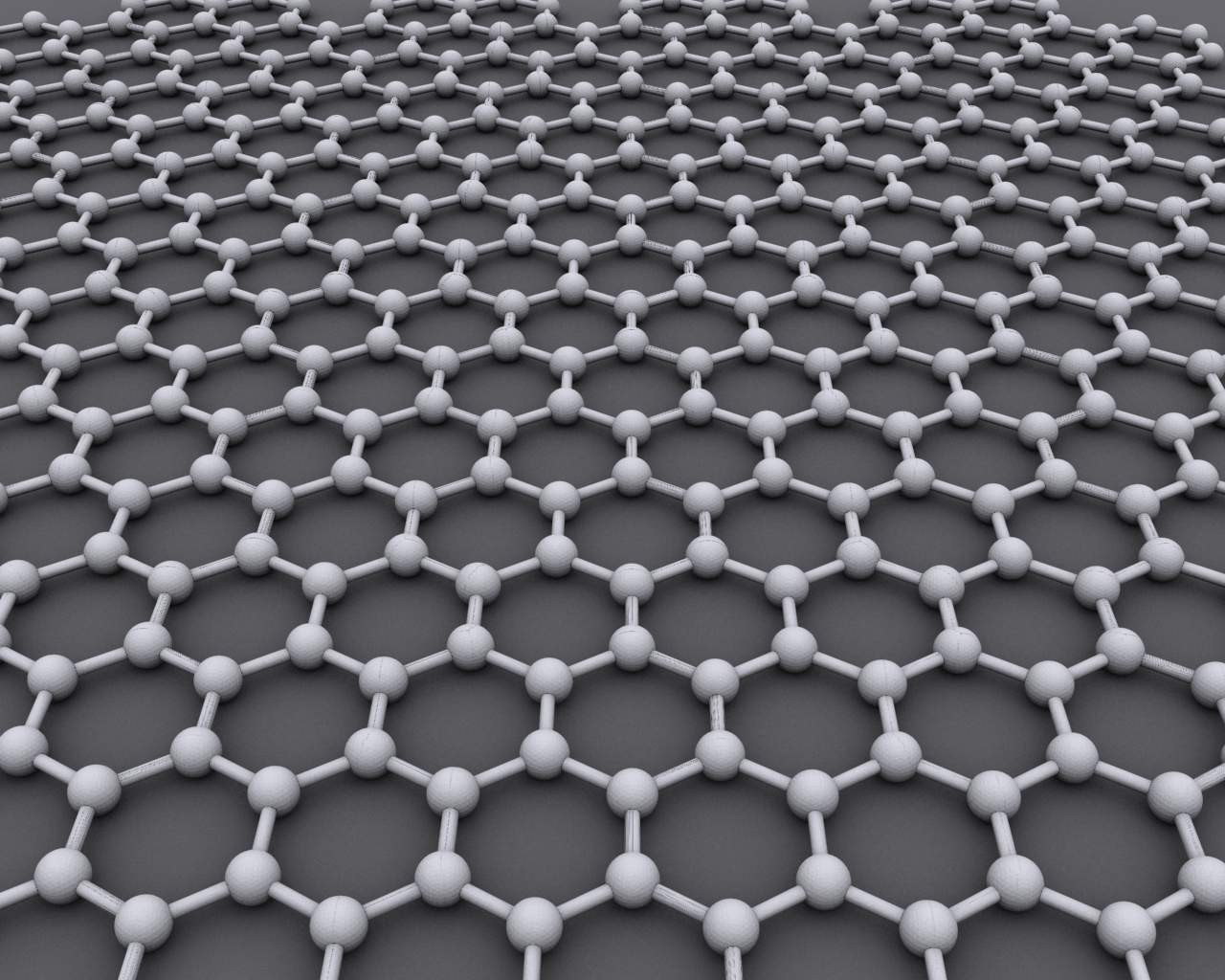
For decades, physicists chased an answer to a deceptively simple question: can electrons move like a perfectly smooth, frictionless fluid? The answer, it turns out, was hiding in a single layer of carbon atoms.
Researchers at the Indian Institute of Science (IISc) in Bangalore, working alongside collaborators from Japan's National Institute for Materials Science, have identified an exotic quantum state in graphene where electrons flow collectively — not as individual particles, but as a near-frictionless liquid. Their findings, published in Nature Physics on April 15, represent a major breakthrough in condensed matter physics.
Breaking a 170-Year-Old Law
The team created exceptionally clean graphene samples and measured how the material conducts both electricity and heat simultaneously. What they found was startling: instead of rising and falling together, as the well-established Wiedemann-Franz law predicts, the two properties moved in opposite directions. Electrical conductivity went up while thermal conductivity dropped.
The deviation was not subtle. At low temperatures, the measurements diverged from the Wiedemann-Franz law by more than 200 times — a dramatic rupture from a principle that has held firm across metals since 1853.
The Dirac Fluid
"It is amazing that there is so much to do on just a single layer of graphene even after 20 years of discovery," said Arindam Ghosh, a professor at IISc's Department of Physics and one of the study's corresponding authors.
The phenomenon occurs at a special point known as the "Dirac point," where graphene sits at the exact boundary between being a conductor and an insulator. By carefully adjusting the number of electrons, the researchers coaxed the material into this precise state. At this threshold, electrons stop behaving as individual carriers. They merge into a collective flow that resembles water — but with extraordinarily low viscosity.
"Since this water-like behaviour is found near the Dirac point, it is called a Dirac fluid — an exotic state of matter which mimics the quark-gluon plasma, a soup of highly energetic subatomic particles observed in particle accelerators at CERN," explained Aniket Majumdar, the study's first author and a PhD student at IISc.
A Perfect Fluid in a Desktop Lab
The team measured the fluid's viscosity and found it to be extremely low — making it one of the closest realizations of a "perfect fluid" ever observed. Previously, the only known near-perfect fluids existed in extreme environments: the quark-gluon plasma generated inside particle colliders at temperatures trillions of degrees above absolute zero, and ultracold atomic gases cooled to billionths of a degree above it.
Graphene offers something neither of those environments can: accessibility. A university lab can now probe quantum fluid dynamics with a thin carbon sheet and sensitive instruments, rather than a multibillion-dollar accelerator.
From Black Holes to Quantum Sensors
Beyond its fundamental significance, this discovery opens practical doors. The Dirac fluid's unique properties make graphene a candidate for developing highly sensitive quantum sensors — devices that could amplify faint electrical signals or detect extremely weak magnetic fields.
The implications extend even further into theoretical physics. Scientists can now use graphene as a bench-top laboratory for exploring ideas usually associated with astrophysics and high-energy physics, including black-hole thermodynamics and entanglement entropy scaling.
It is a remarkable reminder that some of the most profound discoveries in physics can still emerge from one of the simplest materials on Earth — a single sheet of carbon, one atom thick.


