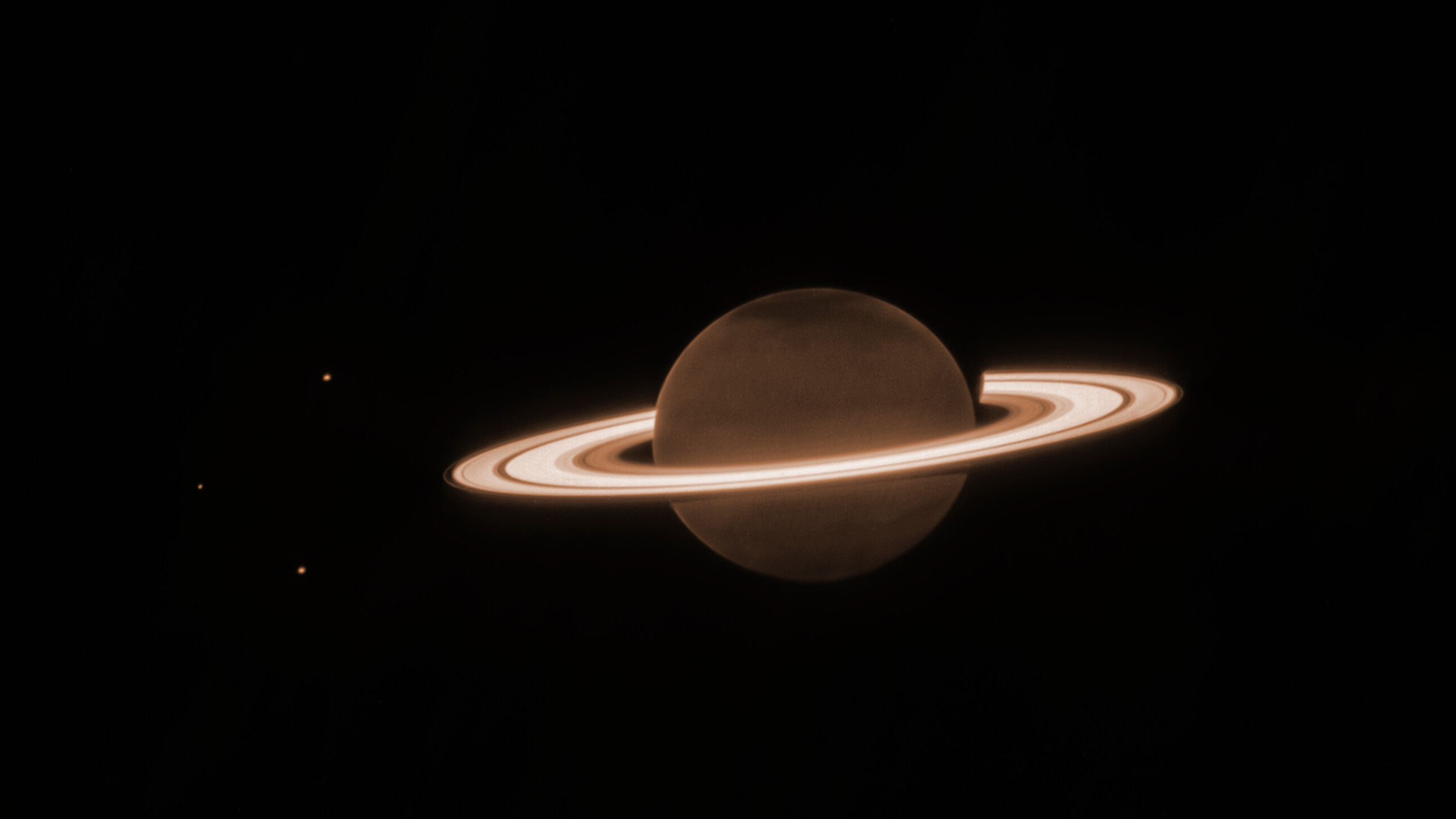
For nearly two decades, Saturn appeared to be doing the impossible. Spacecraft measurements suggested the gas giant''s rotation rate was changing over time, as if a planet 95 times the mass of Earth could somehow speed up or slow down. Now, astronomers using NASA''s James Webb Space Telescope say they have finally cracked the case — and the answer is one of the most beautiful self-sustaining systems ever observed in the solar system.
In a study published in the Journal of Geophysical Research: Space Physics on May 29, 2026, an international team led by Professor Tom Stallard of Northumbria University reports that Saturn''s spectacular northern lights are at the heart of the puzzle. The aurora, the planet''s atmosphere, and its electrical currents are locked into a continuous feedback loop that has fooled instruments for years.
A mystery dating back to Cassini
The puzzle was first flagged by NASA''s Cassini orbiter in 2004. By tracking radio signals tied to Saturn''s magnetic field, Cassini''s instruments suggested the planet''s rotation rate was gradually drifting — a result physicists found impossible to swallow. Planets simply don''t change their spin on human timescales.
In 2021, Stallard''s group proposed that Saturn was not actually spinning at different rates. Instead, electrical signals linked to the aurora were being warped by winds high in Saturn''s upper atmosphere, which were quietly altering the very signal scientists were using to clock the planet. The fix solved one mystery but raised another: what was driving those winds in the first place?
Webb watches Saturn for a full day
To find out, Stallard''s team turned to JWST, which observed Saturn''s northern auroral region continuously for one entire Saturnian day — roughly 10.5 hours. The team focused on infrared light emitted by a molecule called trihydrogen cation, which forms in Saturn''s upper atmosphere and acts as a built-in thermometer.
The precision was a leap forward. Earlier measurements had uncertainties of about 50 degrees Celsius, blurring the planet''s subtle temperature patterns. Webb''s observations were roughly ten times sharper, finally letting astronomers see distinct zones of heating and cooling for the first time.
The maps matched a computer model researchers had built more than a decade ago — but only if the energy source was located exactly where the most powerful auroral particles slam into the planet''s atmosphere.
A planetary heat pump
A planetary heat pump
The picture that emerged is remarkable. Energy deposited by the aurora heats specific patches of Saturn''s atmosphere. That heat drives winds. The winds generate electrical currents. Those currents help power the aurora itself. The system feeds itself in a closed loop.
"What we are seeing is essentially a planetary heat pump," Stallard said. "Saturn''s aurora heats its atmosphere, the atmosphere drives winds, the winds produce currents that power the aurora, and so it goes on. The system feeds itself."
For decades, scientists knew something strange was happening with Saturn''s apparent rotation rate but could not explain it. The new JWST data finally closes a chapter that has frustrated planetary scientists since the Cassini era.
Why it matters beyond Saturn
Why it matters beyond Saturn
The discovery is more than a satisfying answer to an old riddle. Self-sustaining auroral systems are likely common around magnetized giant planets, including the gas giants being discovered around other stars. Understanding how Saturn''s atmosphere couples with its magnetic field gives researchers a template for interpreting future observations of distant worlds — and a reminder that planets are not the static spheres they appear to be from afar, but dynamic, churning systems that hide their secrets in plain sight.


