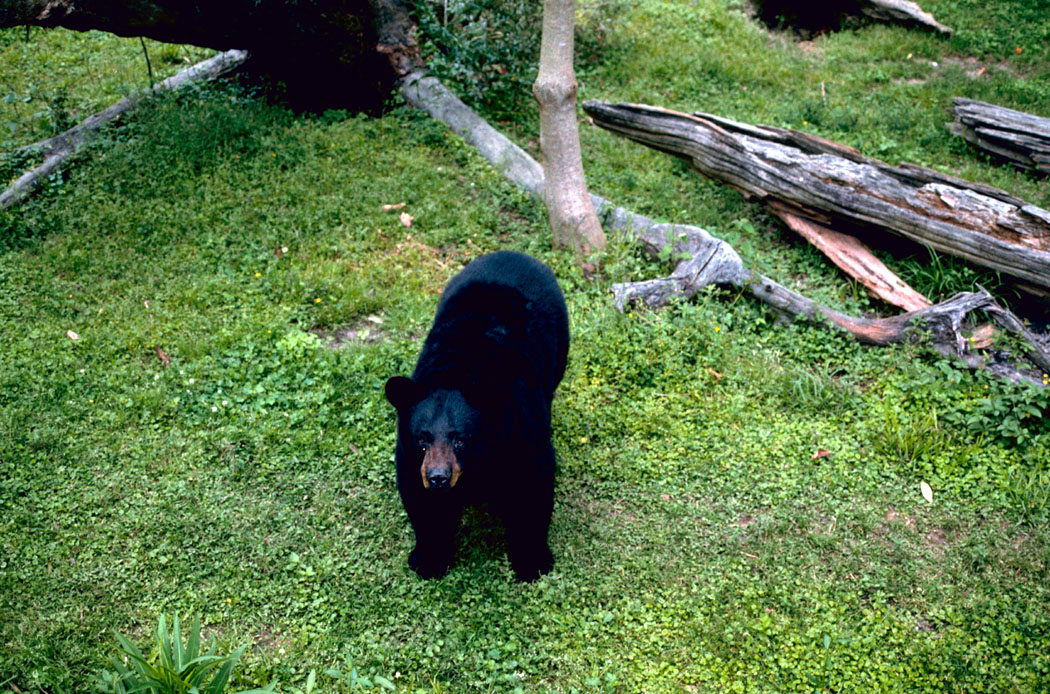
A bear subspecies spent 24 years on the U.S. endangered list before biologists quietly declared the job done. The Louisiana black bear, once squeezed into a handful of disconnected forest fragments, was removed from federal protection in 2016 after conservationists rebuilt the one thing it actually needed: trees.
- 1992: year the Louisiana black bear was listed as threatened
- 2016: year it was formally delisted — a 24-year recovery effort
- 600,000+ acres of forestland restored in the Mississippi River floodplain
- Historic range spans Louisiana, Mississippi, and parts of east Texas
Why a forest subspecies ran out of forest
The Louisiana black bear (Ursus americanus luteolus) once ranged across the bottomland hardwood forests that lined the lower Mississippi River. Decades of land conversion for agriculture cleared the vast majority of that habitat, leaving bears stranded in small, disconnected pockets of Louisiana, including the Tensas and Atchafalaya river basins.
Isolated populations stop behaving like one healthy population. Without connected habitat, bears could not move between remaining forest patches to find mates or new territory, pushing local numbers toward collapse. That isolation, not direct hunting pressure, was the primary reason the subspecies was added to the endangered species list in 1992.
How reforestation reconnected a species
Reversing that decline took land, not just legislation. The U.S. Fish and Wildlife Service and the Louisiana Department of Wildlife and Fisheries bought land to expand wildlife management areas and national wildlife refuges across the bear's range. Private landowners restored bottomland hardwood forest on over 600,000 acres through USDA programs including the Wetlands Reserve Program and Conservation Reserve Program.
Nonprofit partners did much of the on-the-ground coordination. The Black Bear Conservation Coalition, The Nature Conservancy, and Ducks Unlimited worked with private landowners to reforest farmland and stitch together the forest corridors bears needed to reconnect fragmented subpopulations.
Habitat loss was identified as the primary reason the Louisiana black bear was placed on the federal endangered species list — and habitat restoration, not captive breeding or relocation, is what ultimately reversed that decline.
What delisting actually changed
On April 11, 2016, the U.S. Fish and Wildlife Service formally removed the Louisiana black bear from the endangered species list, citing the restored and reconnected habitat as the primary justification, according to the Federal Register notice. Bears are now confirmed in four core areas of Louisiana, with confirmed sightings extending into east Texas and Mississippi as subpopulations expand and reconnect naturally.
Management responsibility shifted entirely to the Louisiana Department of Wildlife and Fisheries after delisting, a sign regulators considered the population stable enough to no longer need federal oversight. That is the quiet, unglamorous marker of a genuine recovery: a species boring enough, population-wise, to be handed back to routine state wildlife management.
The Louisiana black bear's story is a reminder that species recovery is frequently a real estate problem as much as a biological one. Give a forest animal enough forest back, reconnect the fragments, and population recovery can follow — even for a subspecies that spent 24 years on a list built for species that might not make it.


