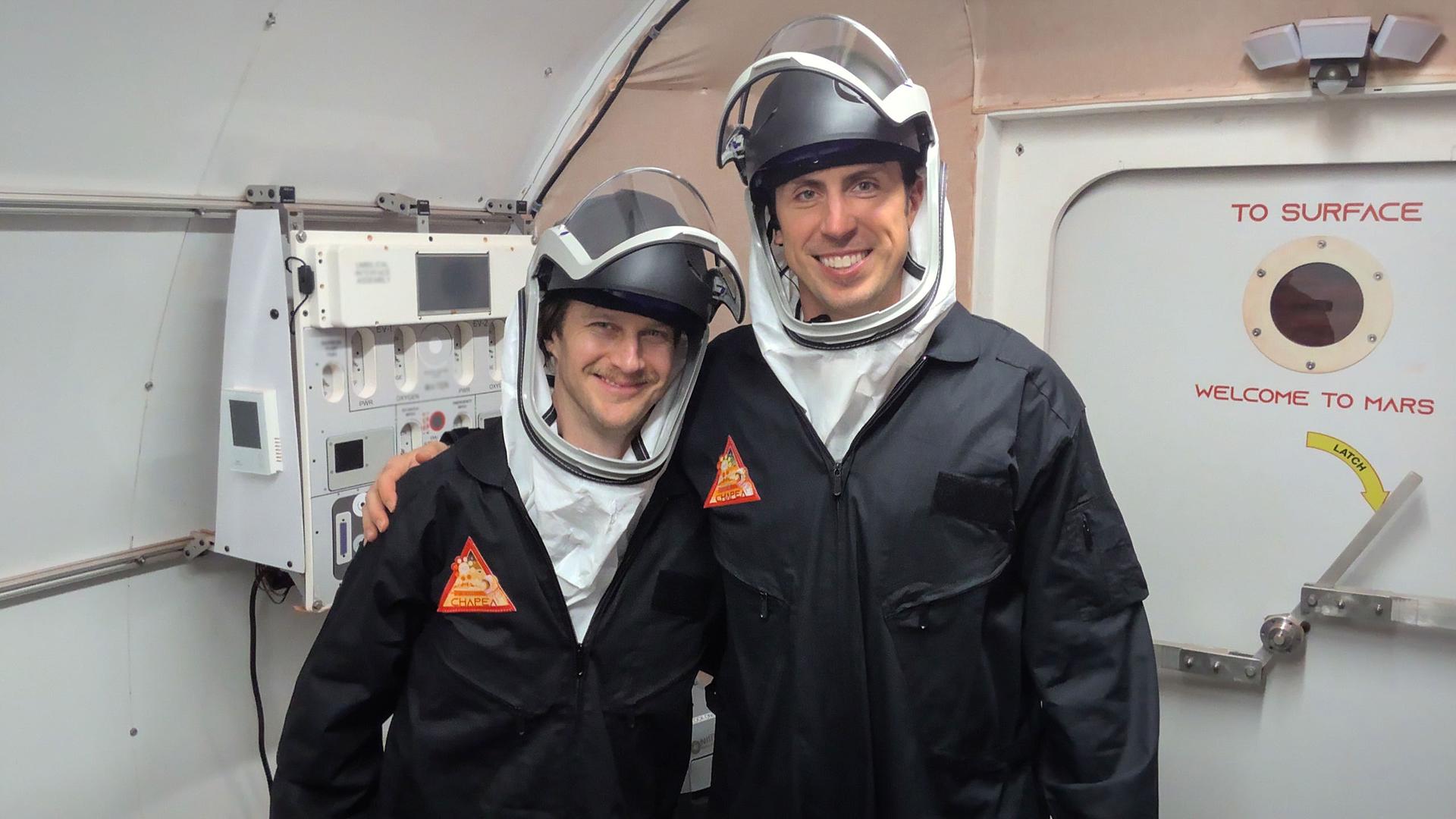
Four volunteers walked out into daylight on Halloween after not seeing the outside world for more than a year, having just finished living inside a fake Mars habitat built specifically to feel nothing like home.
- 378 days spent inside a simulated Mars habitat
- 1,700 square feet of 3D-printed living and work space
- 4 crew members: Ross Elder, Ellen Ellis, James Spicer, and Matthew Montgomery
- 2nd full-length CHAPEA mission NASA has now completed
Life Inside a Fake Mars
The crew entered NASA's Crew Health and Performance Exploration Analog, or CHAPEA, habitat at Johnson Space Center on Oct. 19, 2025, and didn't leave until Oct. 31, 2026. For those 378 days, commander Ross Elder, medical officer Ellen Ellis, and crewmates James Spicer and Matthew Montgomery ran a mock Mars mission inside a 3D-printed structure designed to mimic the isolation of deep space.
Their routine included simulated spacewalks, habitat maintenance, exercise regimens, and growing their own plants, all while NASA deliberately layered in the stressors a real Mars crew would face: communication delays, limited resources, and total isolation from the outside world. There was no stepping outside for fresh air and no quick trip home if something went wrong — only the sealed habitat and each other.
Why This Matters for the Moon
NASA isn't running these missions out of curiosity. The agency says data collected from the crew's health and performance will directly shape how it prepares astronauts for upcoming Artemis missions and a future lunar base, where similar isolation and delay problems will be unavoidable.
The four crew members endured communication delays, resource limits, and total isolation for 378 straight days specifically to help NASA fine-tune food systems, crew scheduling, and bandwidth use on its Deep Space Network before real astronauts face the same conditions millions of miles from help.
Specifically, NASA says the mission's findings will help refine food system design, make better use of limited crew time, manage bandwidth on the agency's Deep Space Network, and strengthen the medical and psychological support systems flight doctors use to keep deep-space crews functioning under pressure.
Who Lived Inside
Johnson Space Center Director Vanessa Wyche and NASA astronaut Jack Hathaway welcomed the crew back during a live exit ceremony, where all four volunteers addressed the public for the first time in over a year. Media were invited to watch the moment the habitat doors opened and the crew stepped outside the hangar that had enclosed their entire world for more than twelve months.
This was NASA's second full CHAPEA mission inside the Houston facility, part of a longer-running program designed to rehearse the psychological and logistical realities of a Mars-length mission before anyone actually leaves Earth orbit. Each completed mission adds another full data set on how real people — not just hardware — hold up under the conditions a genuine Mars expedition would demand.
Unlike a real spaceflight, the four volunteers were never in physical danger and could technically have left at any point. What they couldn't escape was the isolation itself: more than a year without a walk outside, a visit from family, or a change of scenery, all so that future astronauts might be better prepared when the stakes are real. Full mission details are available from NASA's CHAPEA program page.