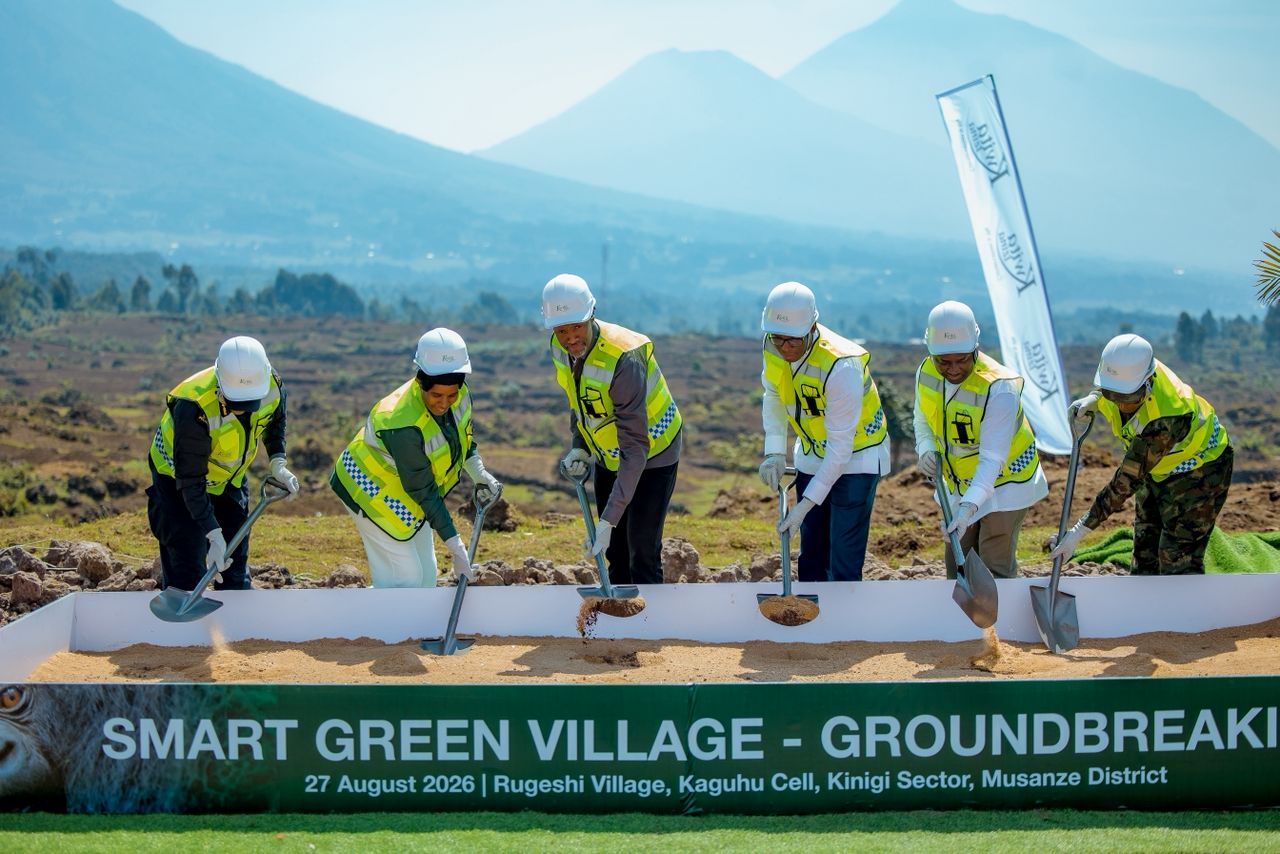
Rwanda is spending more than $49 million to build brand-new homes for 547 families — not because of a disaster, but because the mountain gorillas next door are getting more room to roam.
- $49 million invested in the new Smart Green Village
- 547 households moving into modern housing with power, water, schools and health centers
- 3,740 hectares being added to Volcanoes National Park
- 17,000+ people expected to benefit from the full 10-year, $300 million resilience program
A village built for the move
Construction broke ground on August 27 in Rurembo, in Musanze District's Kinigi Sector, on land the government has already compensated and prepared. The Smart Green Village will include modern housing, health centers, schools, renewable energy, rainwater harvesting, wastewater treatment and eco-lodges built around community tourism.
It's the residential half of a much bigger plan: expanding Volcanoes National Park, home to Rwanda's mountain gorilla population, by roughly 3,740 hectares, with another 6,620 hectares set aside as buffer zones. The current phase covers about 450 hectares and moves 547 households out of the pilot expansion area.
Rwanda's gorilla tourism underwrites much of this effort. Trekking permits fund park protection and anti-poaching patrols across the Virunga Massif, which Rwanda shares with Uganda and the Democratic Republic of Congo — cross-border habitat that mountain gorillas need to survive long-term, after the species fell to a few hundred individuals decades ago before conservation efforts pushed regional numbers past 1,000.
More room for the gorillas next door
The government has also run a tourism revenue-sharing program for two decades, reinvesting 10% of park income into nearby districts. This year's allocation for the four districts bordering Volcanoes National Park totals roughly RWF 1.98 billion, on top of more than RWF 23 billion distributed since the program began. Musanze and Nyabihu each receive about RWF 659.8 million, Burera gets RWF 495 million, and Rubavu receives RWF 164.95 million — money that has already backed nearly 1,300 local projects in education, healthcare, water access and livelihoods.
"We have learned that this new village will bring many positive changes to our lives. We will have access to schools, health centres, roads and cleaner cooking solutions, which will make life easier for women and families," said Esther Mukamakuza, a resident relocating into the new village.
The groundbreaking coincided with Rwanda's 21st Kwita Izina, the country's annual gorilla-naming ceremony, held this year under the theme "Conservation is Life: Sustaining the Future." Kwita Izina began as a national tradition in 2005, modeled on the Rwandan custom of naming children soon after birth, and has since grown into an international event that recognizes the role communities and partners play in protecting mountain gorillas. Jean-Guy Afrika, CEO of the Rwanda Development Board, framed the Smart Green Village as proof that conservation and development don't have to compete: "The Smart Green Village represents our shared vision that conservation and community development must go hand in hand."
The wider Volcanoes Community Resilience Project is expected to eventually resettle around 3,400 households and improve conditions for more than 17,000 people, at an estimated cost of $300 million over 10 years. Officials say the goal is to ease human-wildlife conflict on the park's edge by giving both the gorillas and their human neighbors more breathing room, rather than treating the two as competing interests.
Read the Rwanda Development Board's full announcement, or learn more about Kwita Izina, Rwanda's annual gorilla-naming tradition running since 2005.


