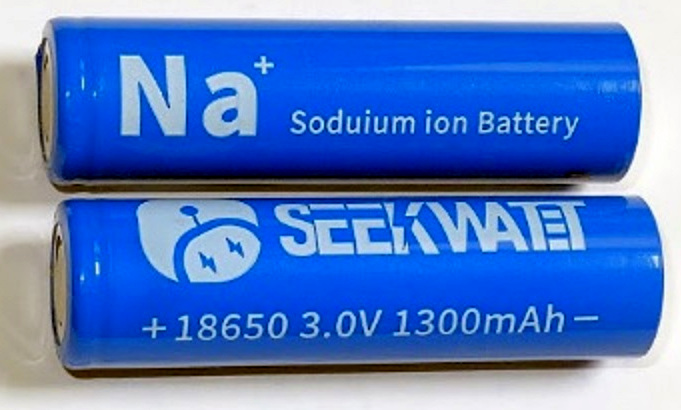
For more than a decade, the electric-car story has been a lithium story. That is starting to change.
A growing wave of sodium-ion battery cells is rolling off pilot lines and into real products — and the latest crop is finally good enough to take on lithium-iron-phosphate (LFP), today's workhorse chemistry for affordable EVs and stationary storage. Independent test data on new commercial-grade cells from leading sodium-ion makers show energy densities in the 160–200 Wh/kg range, cycle lives stretching well past 5,000 charges, and strong performance in cold weather where lithium-ion famously struggles.
That package is enough to power a small city car, a delivery van, an e-bike fleet, or a backyard battery — all without using a single gram of lithium, cobalt or nickel.
Why sodium?
Why sodium instead of lithium
Sodium sits one row below lithium on the periodic table and behaves a lot like it inside a battery: ions shuttle back and forth between two electrodes, storing and releasing electricity on command. The difference is what they are made of. Lithium is concentrated in a handful of mines on three continents, and its price has whipsawed wildly over the past five years. Sodium, by contrast, is essentially everywhere — in seawater, in salt flats, in cheap industrial soda ash — and costs a tiny fraction of lithium per kilogram.
That one swap cascades through the rest of the cell. Sodium-ion designs typically use aluminum current collectors on both sides instead of pricey copper, switch to iron- and manganese-based cathodes, and rely on hard carbon anodes made from biomass waste. The result, according to several recent industry teardowns, is a cell whose raw materials can cost 30–40% less than an equivalent LFP cell at scale.
Real cars, real grids
From lab curiosity to real vehicles and grids
The technology is no longer just a lab curiosity. Automakers in China have already launched compact EVs that use sodium-ion packs, and several global brands are quietly testing the chemistry in hybrid pack designs that combine sodium-ion and lithium-ion cells in the same vehicle — putting sodium where its strengths shine and lithium where high range is essential.
Grid storage may be where sodium-ion changes the math the fastest. Utility-scale battery farms care less about weight than about cost per kilowatt-hour and how long the system lasts. Sodium-ion's long cycle life, wide temperature tolerance and abundant supply chain are tailor-made for that job. Projects in China, Europe and Australia are now pairing solar farms with sodium-ion banks designed to run reliably for two decades.
Safer, too
The safety edge of discharged storage
There is one more quiet advantage: safety. Sodium-ion cells can typically be shipped and stored at 0 volts — fully discharged — without damage, which dramatically reduces fire risk during transport and warehousing. That alone is reshaping how factories, ports and recycling firms plan for the next decade of battery logistics.
None of this means lithium is going away. High-end EVs and aviation will still demand its energy density for years to come. But for the millions of cheaper cars, scooters, home batteries and grid installations that the energy transition really runs on, a second affordable chemistry has arrived — and it is built from one of the most plentiful elements on the planet.


