Off the coast of Tasmania, divers are hand-planting seaweed onto the seafloor, one spool at a time, to rebuild forests that took less than a year to vanish.
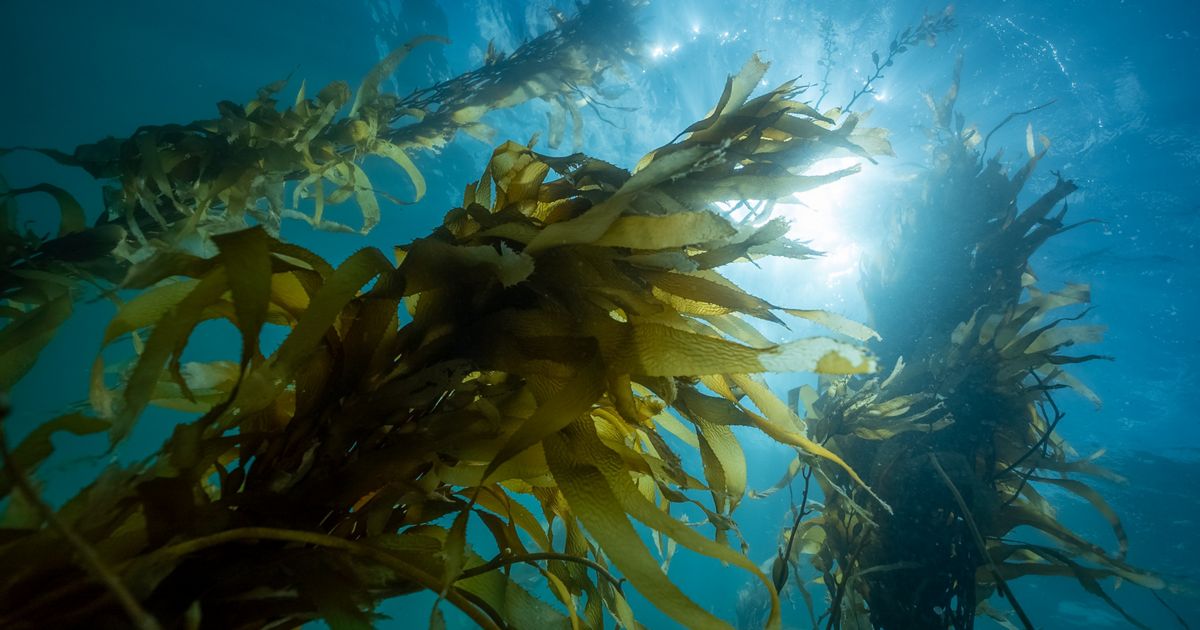
Giant kelp once grew so densely along Tasmania's east coast that fishing boats struggled to push through it. Warming water and swarms of invasive sea urchins have wiped out 95% of it since the 1940s, according to the marine ecologists tracking the collapse.
- 95% of Tasmania's giant kelp forests lost since the 1940s
- 6 international interns diving through Tasmanian winter this year to replant kelp
- Restored patches can regrow into a full forest within a year under the right conditions
- Project run jointly by the University of Tasmania's IMAS, Eaglehawk Dive Centre and the Great Southern Reef Foundation
Why the kelp disappeared so fast
Dive instructor Pauline Nuttens watched it happen in real time. She guided groups through a thriving kelp forest at Eaglehawk Neck in 2015; when she came back the next summer, the forest was gone.
"It was gone in less than a year, a big forest… that was a big shock to me. This is when I realised how catastrophic this was," Nuttens said.
Scott Bennett, a marine ecologist at the University of Tasmania's Institute of Marine and Antarctic Science (IMAS) and co-founder of the Great Southern Reef Foundation, says giant kelp forests provide critical habitat, food and nursery space for many marine species — so their disappearance ripples through the rest of the ecosystem.
How the underwater gardening works
The restoration technique, developed by IMAS Professor Scott Ling, starts in a laboratory rather than the ocean. Kelp spores are grown onto spools of twine until they mature into juvenile plants. Divers then carry the spools underwater and wrap them around the base of surviving kelp at protected sites around the Tasman Peninsula.
This year, a new live-in internship program at Eaglehawk Dive Centre is putting more trained divers into the water for that work. Six participants, including a marine science graduate student who grew up watching California's kelp forests, spend a month diving in near-freezing conditions — thick wetsuits, thermoses of hot water poured into dive boots between dives, and hours underwater planting kelp by hand.
"When conditions are right, you can regrow a forest within a year," said Dr. Scott Bennett.
Results have been mixed, as warm-water spikes, kelp-hungry fish and storms sometimes undo a season's planting. Bennett says the team is now focused on picking restoration sites more carefully, prioritizing locations still cool and stable enough to support long-term regrowth, alongside protecting the kelp forests that have survived.
Full details of the internship and restoration project are available from ABC News and The Nature Conservancy Australia.