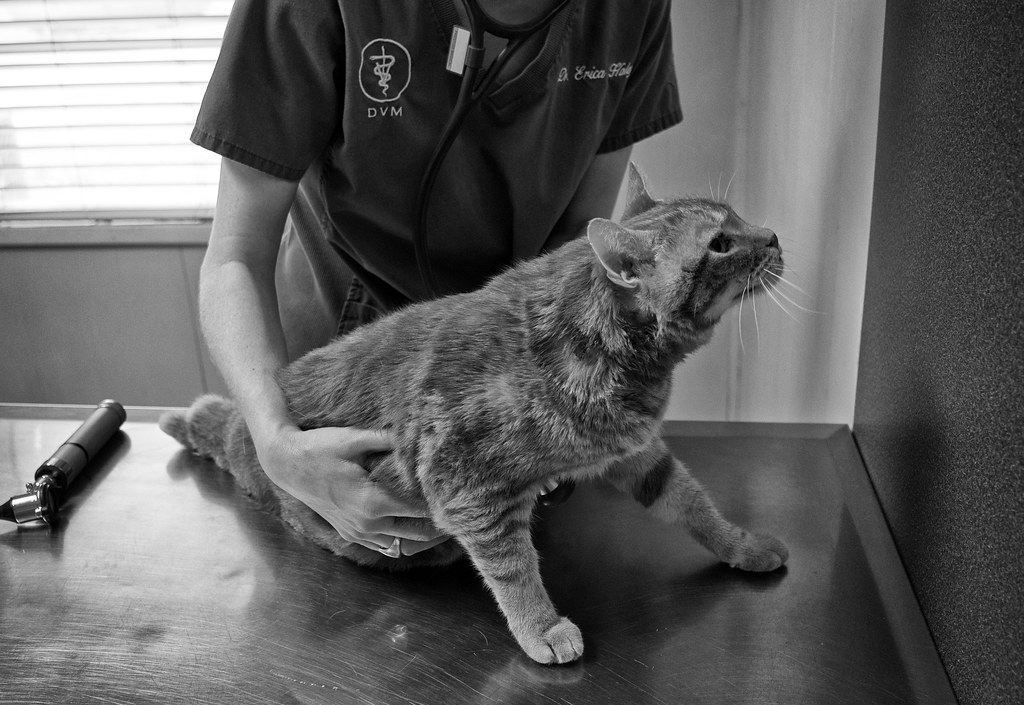
When Karen Waldron and Shawn Ricci thought they were about to lose their 13-year-old cat, Beckham, to cancer, they had no idea the ordeal would end with a record research gift.
- $15 million — the new gift, the largest in the cancer center's history
- 13 years — how long Beckham has been part of their family
- $4 million — their prior 2025 gift to expand the veterinary teaching hospital
- 20–30 minutes — the drive local pet owners now have to a top-tier cancer referral center
A cat's recovery sparked the gift
Beckham had suddenly become uncoordinated and stopped eating and drinking. At Virginia Tech's Animal Cancer Care and Research Center in Roanoke, Dr. Joanne Tuohy found and treated tumors in his ear, and he made a full recovery.
Waldron and Ricci, longtime animal advocates who own and operate Bent Tree Farm, a horse breeding and training center in Shawsville, had already seen the center's work firsthand. Their dog Lafayette — found abandoned on the road near their farm — was also treated there, for thyroid cancer that required surgery and chemotherapy.
"He had his thyroid and parathyroid removed, and because of follow-up treatments and the chemotherapy, he has been living an absolutely fantastic life," Ricci said. "You would not know anything was wrong with this dog."
What the $15 million will fund
The gift, announced this month, is the largest ever donated to the Animal Cancer Care and Research Center and one of the largest ever to Virginia Tech's Virginia-Maryland College of Veterinary Medicine. It builds on a $4 million gift the couple made in 2025 to expand the college's Veterinary Teaching Hospital.
"We've been fortunate that we can take time off, get the hotel and stay with the animal undergoing treatment," Ricci said. "But it is really wonderful for people in this area to get that referral and go just 20, 30 minutes up the road, and they don't have to worry about finding hotels, finding babysitters for their kids. It's a much less traumatizing experience for people to be able to have local care of this quality."
Dogs, cats, and other animals develop many of the same cancers people do, so research and clinical trials performed at the center are often translational — meaning discoveries made treating pets can also inform human cancer treatment. Pet owners across the region can now enroll their animals in those trials rather than traveling hours for specialized care.
A pattern of local giving
The gift extends a relationship Waldron and Ricci have built with the veterinary school over many years, according to Cardinal News, which first reported the donation. The couple has quietly funded emergency care expansions, residency training, and now cancer research, each gift tracing back to an animal in their own lives that needed help.
For Waldron and Ricci, the decision traces back to gratitude — for Beckham, for Lafayette, and for every family in southwest Virginia who won't have to drive hours for the kind of care that saved their own pets. The research the gift funds is expected to benefit not just future patients at the center, but potentially human cancer treatment as well, since so many tumor types behave similarly across species.
The center's veterinarians say translational studies made possible by gifts like this one are already informing how oncologists think about certain tumors in people, particularly cancers that progress similarly in dogs and cats. A $3.28 million linear accelerator at the center, funded separately, already lets veterinarians deliver the same precision radiation therapy used in human hospitals — technology that simply didn't exist at a regional pet cancer center a decade ago.
For now, Beckham and Lafayette are both doing well. Their family's gift means the next family that walks through the center's doors with a sick pet won't have to wonder whether the care exists close to home — it already does, and it just got better funded.


