A wolf named Pluie kicked off one of the largest conservation projects on Earth. In 1991, she was fitted with a tracking collar near Banff National Park — and over the next two years, she wandered through more than 100,000 square kilometers, crossing three U.S. states, two Canadian provinces, and three national parks.
- 3,400 km — length of the habitat corridor the project aims to protect, from Yellowstone to the Yukon
- 25 million hectares of land already under protection, an area larger than the United Kingdom
- 204 wildlife road crossings built so far
- 33 years since the initiative launched in 1993
- 800 partner organizations, including governments and Indigenous nations
What Pluie the wolf taught conservationists
Pluie's collar data proved that protected parks alone weren't enough — wide-ranging animals like wolves, grizzly bears, and mountain caribou needed a connected landscape, not isolated islands of habitat. That insight became the founding idea behind the Yellowstone to Yukon Conservation Initiative (Y2Y), a joint U.S.-Canada effort launched in 1993.
Over three decades, Y2Y and its 800-plus partners have grown protected land in the corridor from 9% to nearly 18% of the target area. The project also helped bring British Columbia's Klinse-Za caribou herd back from near-extinction by working directly with Indigenous nations on habitat restoration.
The crossings that cut collisions to near zero
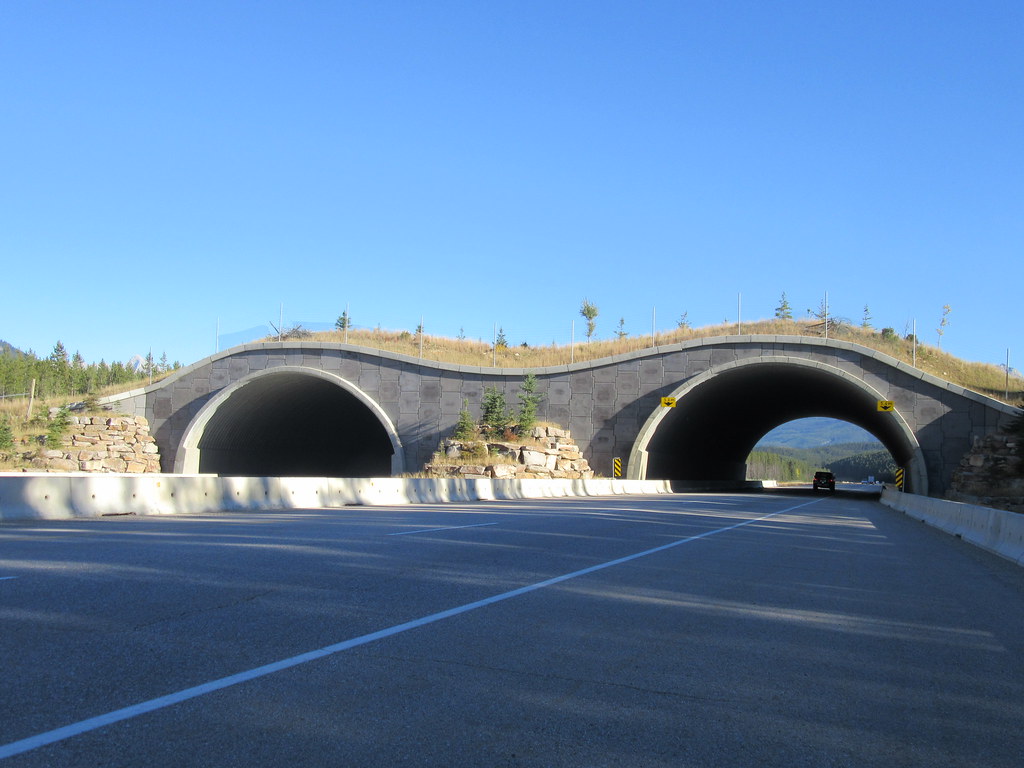
The most visible piece of the project is its wildlife crossings — grass-covered overpasses and underpasses built over highways like the Trans-Canada near Banff. More than 200 have gone up so far, letting elk, wolves, and grizzly bears cross busy roads without becoming roadkill statistics.
The crossings solve a problem for people too. Wildlife-vehicle collisions have dropped sharply on stretches of highway fitted with the structures, and Jodi Hilty, Y2Y's president and chief scientist, says the corridor also absorbs carbon and protects clean water for nearby communities.
"If we want to sustain animals like Pluie the wolf, we actually have to think at the scale that nature needs." — Jodi Hilty, President and Chief Scientist, Yellowstone to Yukon Conservation Initiative
A finalist among 15 global projects
In September 2026, Y2Y became the first-ever Canadian finalist for the Earthshot Prize, Prince William's annual £1 million environmental award. It's one of three finalists in the Protect & Restore Nature category, competing against projects in Australia and Bhutan.
Hilty is candid that even the prize money wouldn't go far on its own — a single wildlife overpass can cost up to $20 million. But she says the recognition matters more for the visibility it brings, connecting Y2Y with other Earthshot alumni tackling similar habitat-fragmentation challenges, from the Amazon to Africa.
Winners across all five Earthshot categories will be announced at a ceremony in Mumbai in November, each taking home £1 million (about $1.9 million CAD) to scale up their work. Whether or not Y2Y wins its category, the corridor keeps expanding on its own momentum: more protected areas and crossings are already under development along the route.
A model other regions are copying
Y2Y's approach — treating an entire mountain range as one connected system rather than a patchwork of separate parks — has influenced conservation planning far beyond North America. Hilty says the initiative regularly compares notes with past Earthshot winners working on similar habitat-fragmentation problems in the Amazon and elsewhere, trading lessons on everything from funding models to community partnerships.
The corridor still isn't finished. Roughly 82% of the target landscape remains outside formal protection, and new highway segments are being planned or built across the route every year, each one a potential barrier for a migrating grizzly or caribou herd unless a crossing goes in alongside it. Y2Y's pitch to funders and governments is that the crossings pay for themselves over time through fewer vehicle collisions and lower insurance and repair costs, on top of the ecological benefit.
For a project that started with a single collared wolf wandering across three national parks, inching a 3,400-kilometer wildlife highway toward completion — one overpass, one protected hectare at a time — is still the whole plan. It's just being recognized on a bigger stage now.