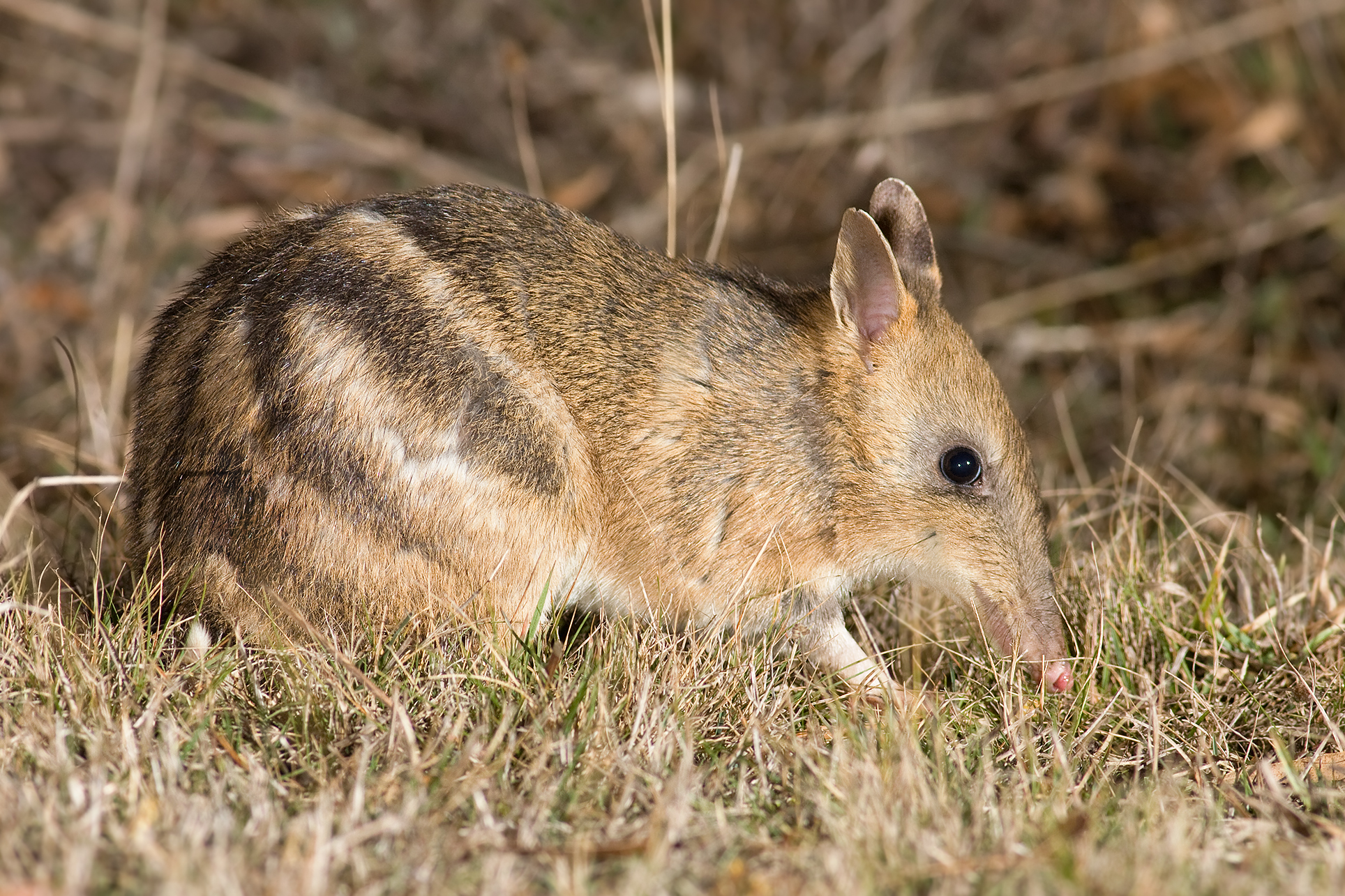
For the first time in 35 years, a small, big-eared marsupial that was declared extinct in the wild on the Australian mainland is once again digging through the soil in Victoria.
Conservationists have released up to 100 eastern barred bandicoots onto Phillip Island, off the coast of Victoria, in what is being described as the largest-ever reintroduction of the species into the wild in Australia. The release marks a major milestone in a recovery program that began in the early 2000s with just a few hundred surviving animals, and it offers a rare piece of unequivocally good news in Australian wildlife conservation.
A Tiny "Ecosystem Engineer" Returns
The eastern barred bandicoot is a small nocturnal marsupial with a pointed snout, long ears and pale bars across its hindquarters that give the species its name. Adults weigh less than a kilogram. They once ranged across grasslands and woodlands of southeastern Australia, but by the late 20th century, predation by introduced foxes and feral cats — combined with habitat loss and disease — had wiped out the mainland population. The species was officially declared extinct in the wild on the mainland in 1991.
Only two strongholds remained: small captive-bred populations and a separate wild population on Tasmania.
Bandicoots are often described as "ecosystem engineers." Their constant digging for insects, fungi and roots aerates and enriches the soil, spreads seeds and helps water move through the landscape. Bringing them back is not just about saving one species; it's about restoring a function the land has been missing for decades.
The Genetic Rescue Behind the Comeback
What makes this release especially significant is the science behind it. The new founders are the product of a genetic rescue program that bred bandicoots from the mainland captive population with bandicoots from Tasmania — two groups that had been genetically isolated for more than 10,000 years.
Mixing the two populations produces animals with more genetic diversity, which generally translates into better disease resistance, stronger immune systems and a greater ability to adapt to a changing environment. In short: the bandicoots being released onto Phillip Island are genetically more robust than the ones that disappeared from the mainland a generation ago.
The mission was led by a coalition that included the Odonata Foundation, Cesar Australia and the Eastern Barred Bandicoot Recovery Team, alongside Phillip Island Nature Parks, Zoos Victoria, Parks Victoria, and the Eastern Maar and Bunurong Traditional Owners. Amazon's Right Now Climate Fund invested AU$2.5 million in restoring endangered Australian species, including this effort.
Why Phillip Island
Phillip Island is fox-free, which removes the single biggest threat the bandicoots face. The island also offers a mosaic of grasslands and coastal vegetation that closely matches the habitat the species evolved in.
Matt Singleton, Chief Operating Officer at the Odonata Foundation, called the release "the culmination of years of dedication and collaboration by the Recovery Team." Over the next three years, the released bandicoots will be monitored through genetic testing to confirm that the population is breeding successfully and stabilising in the wild.
Since conservation work began in 2004, the broader breeding program has grown the bandicoot population from a few hundred individuals to a safeguarded community of more than 2,000 animals across several protected sites.
A Blueprint for Other Lost Species
The scale and approach of the Phillip Island release are likely to be studied closely by conservation teams around the world. Many threatened mammals face the same combination of pressures the bandicoot faced: introduced predators, fragmented habitat and shrinking genetic diversity. Showing that those pressures can be reversed, even partially — and that a species written off as extinct in the wild can be returned to the landscape — is the kind of proof other recovery programs depend on.
For now, the bandicoots are out there in the dunes and grasses of Phillip Island, doing what bandicoots do: digging, sniffing, breeding, and slowly putting some of the wild back into the wild.


