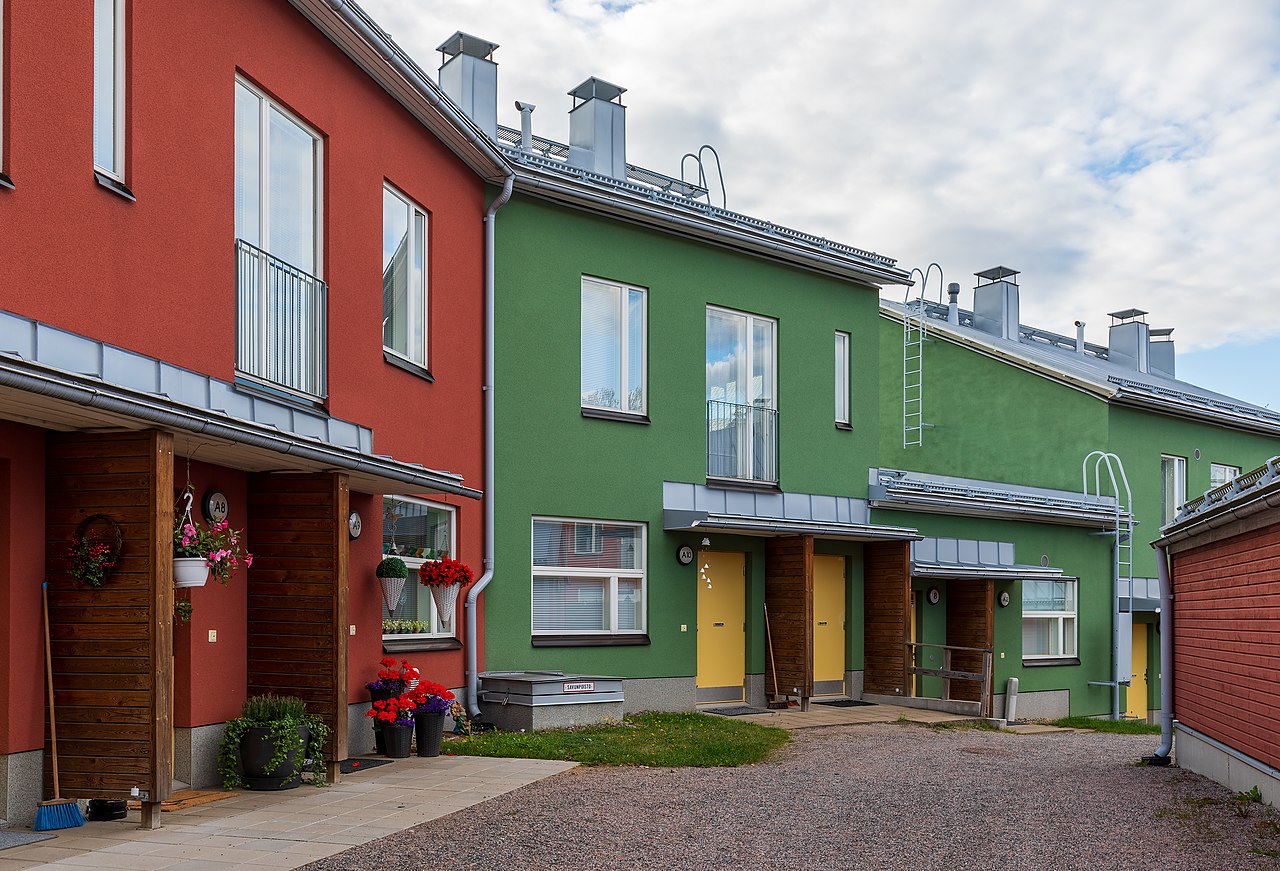
Finland has once again claimed the title of the world's happiest country, extending its remarkable streak to an unprecedented nine consecutive years. The 2026 World Happiness Report, published by the Wellbeing Research Centre at the [University of Oxford](https://www.ox.ac.uk), confirmed what Finns themselves seem to take in quiet stride: their nation remains the gold standard for human well-being.
With an average score of 7.764 out of 10, Finland continues to outpace the field by a comfortable margin. Iceland rose to second place, swapping positions with Denmark, which slid to third. But the real headline-grabber this year is Costa Rica, which rocketed from 23rd place in 2023 to fourth — making it the first Latin American country ever to crack the top five.
What Makes Finland So Happy?
## How Finns Explain Their Own Contentment Finnish President Alexander Stubb responded to the news with characteristic Nordic understatement: "I do not think there is a magic potion, but it helps to have a society which strives towards freedom, equality and justice."
Researchers attribute Finland's sustained dominance to a combination of factors that, taken together, create a deeply stable foundation for well-being. Universal healthcare, free education through university, robust social safety nets, and one of the world's lowest levels of income inequality all play their part. Corruption is minimal, trust in institutions runs high, and access to nature is woven into daily life.
Semi Salmi, a Helsinki pensioner interviewed while swimming at an outdoor sea pool, put it simply: "Finns are very content, confident, have faith in their system, their country, their government." He pointed to his own father, currently in long-term care and "extremely well taken care of by the system," as proof that the social contract works.
Costa Rica's Remarkable Climb
## Behind Costa Rica's Jump to Fourth Place Perhaps the most uplifting subplot in this year's report is Costa Rica's dramatic ascent. The Central American nation's jump is attributed largely to the quality of its social fabric — strong family ties, vibrant community connections, and a cultural emphasis on relationships over material wealth.
"We think it's because of the quality of their social lives and the stability that they currently enjoy," said Jan-Emmanuel De Neve, an Oxford economics professor who co-edits the report. "Latin America more generally has strong family ties, strong social ties, a great level of social capital."
The concept of pura vida — "pure life" — is more than a tourist slogan in Costa Rica. It reflects a genuine cultural philosophy that prioritizes contentment, gratitude, and human connection. The country also abolished its military in 1948, redirecting those funds toward education, healthcare, and environmental protection, which has paid long-term dividends in citizen well-being.
Lessons for the Rest of the World
## A Warning Sign for Young People Online The report also highlighted a troubling finding: heavy social media use is contributing to sharp declines in well-being among young people, particularly teenage girls in English-speaking countries and Western Europe. Life evaluations among under-25s in the United States, Canada, Australia, and New Zealand have dropped significantly over the past decade.
Still, the top-line story remains one of hope. The Nordic model continues to prove that intentional investment in equality, trust, and social infrastructure creates conditions where happiness isn't just possible — it becomes the norm. And Costa Rica's rise demonstrates that wealth alone isn't the answer. Sometimes, the secret to national happiness is as simple as showing up for the people around you.


