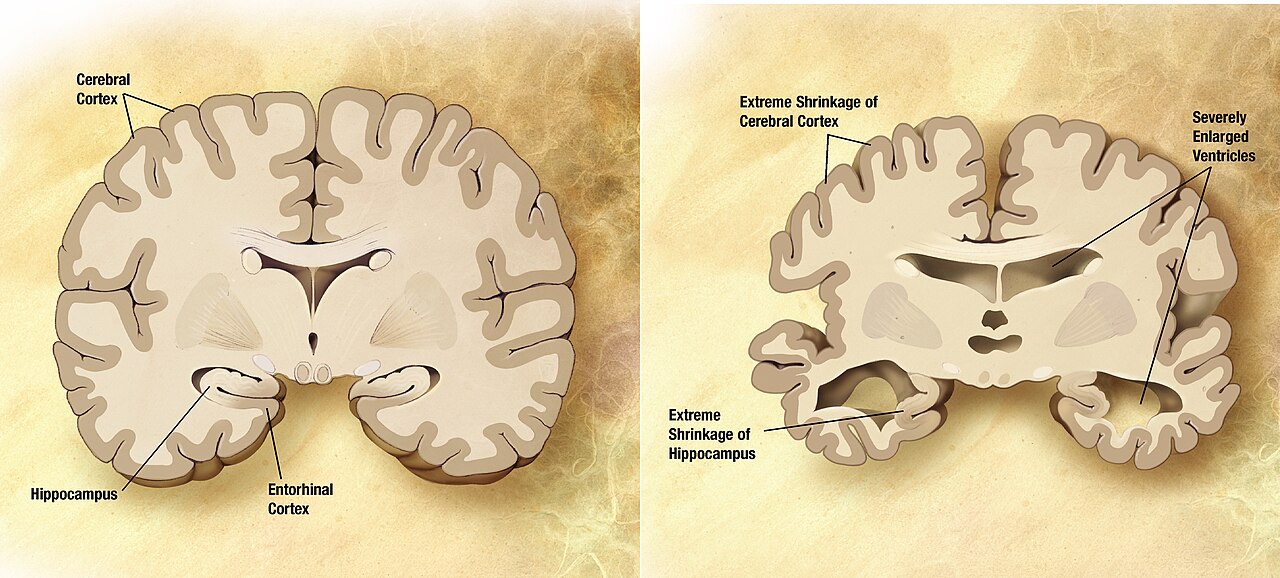
A landmark new study has found that women who take hormone replacement therapy (HRT) have a significantly lower risk of developing Alzheimer's disease — a finding that opens a major new avenue in the fight against one of the world's most common and devastating conditions.
A 13-year study of postmenopausal women
The research, published this week in the journal Alzheimer's & Dementia, followed more than 180,000 postmenopausal women in the United Kingdom over a period of 13 years. Women who had taken HRT showed a 10% lower overall risk of developing dementia, and a 16% lower risk of being diagnosed with Alzheimer's disease specifically — the most common form of dementia, affecting tens of millions of people worldwide.
A long-overlooked connection
HRT works by adding female hormones — typically oestrogen, progesterone, or a combination — back into the body when natural levels fall during the menopause. It has long been prescribed to manage menopause symptoms: hot flushes, night sweats, mood changes, and disrupted sleep. Its role in protecting the brain, however, has been a newer and underexplored area of investigation.
"While HRT has long been prescribed primarily to relieve menopausal symptoms such as hot flushes and night sweats, this work suggests it may also play a role in long-term cognitive health for some women," said study lead Professor Anne-Marie Minihane from the Norwich Institute of Healthy Ageing in England.
The findings connect to a well-documented but poorly-understood disparity in dementia: women make up around two-thirds of all Alzheimer's cases globally, even accounting for their longer average life expectancy. Researchers have long suspected the menopause plays a role. Oestrogen is not just a reproductive hormone — it also has important functions in the brain, supporting energy metabolism in neurons and protecting against inflammation. When oestrogen levels fall sharply at menopause, the brain's energy supply changes, and this may increase vulnerability to Alzheimer's over time.
What the study found — and what it means
How researchers compared HRT users and non-users
The study tracked over 180,000 women for 13 years, comparing dementia outcomes between those who had taken HRT and those who had not. The size of the study — and the length of follow-up — make it one of the most comprehensive investigations of this question to date.
An estimated 2.8 million women in England alone are currently prescribed HRT. If even a portion of those prescriptions are also protecting cognitive function, the implications for public health are substantial.
The researchers are careful to note that this is an observational study, meaning it tracks associations rather than demonstrating a direct cause-and-effect relationship. It remains unclear which types of HRT, at which doses, at which age, and taken for how long, provide the greatest protective effect. Further trials will be needed to establish clinical guidance.
Nevertheless, the findings are significant. Alzheimer's disease affects approximately 55 million people worldwide and remains, despite decades of research, effectively incurable. Prevention — identifying risk factors that can be modified — is the most promising current strategy for reducing the global burden of the disease.
"This is an area of research that urgently needs further investigation," Professor Minihane said. "Understanding the timing, type, and dose of HRT that provides the greatest cognitive benefit will be key to translating these findings into clinical guidance."
A new conversation for menopause care
From a 2002 cancer scare to renewed interest
For years, HRT was treated with significant caution following a 2002 study that raised concerns about cancer risk. Subsequent research has substantially revised and nuanced those findings, and HRT use has been rising again as doctors and patients better understand its risk-benefit profile.
This new data adds another dimension to that conversation. Menopause is a universal experience for women — and for too long it has been underresearched and undertreated. Studies like this one are beginning to reveal that the choices made during and after menopause may echo through decades of life that follow.
For the millions of women navigating menopause decisions every year, this study is a prompt to have a more detailed conversation with their doctor — about cognitive health as well as symptom relief.