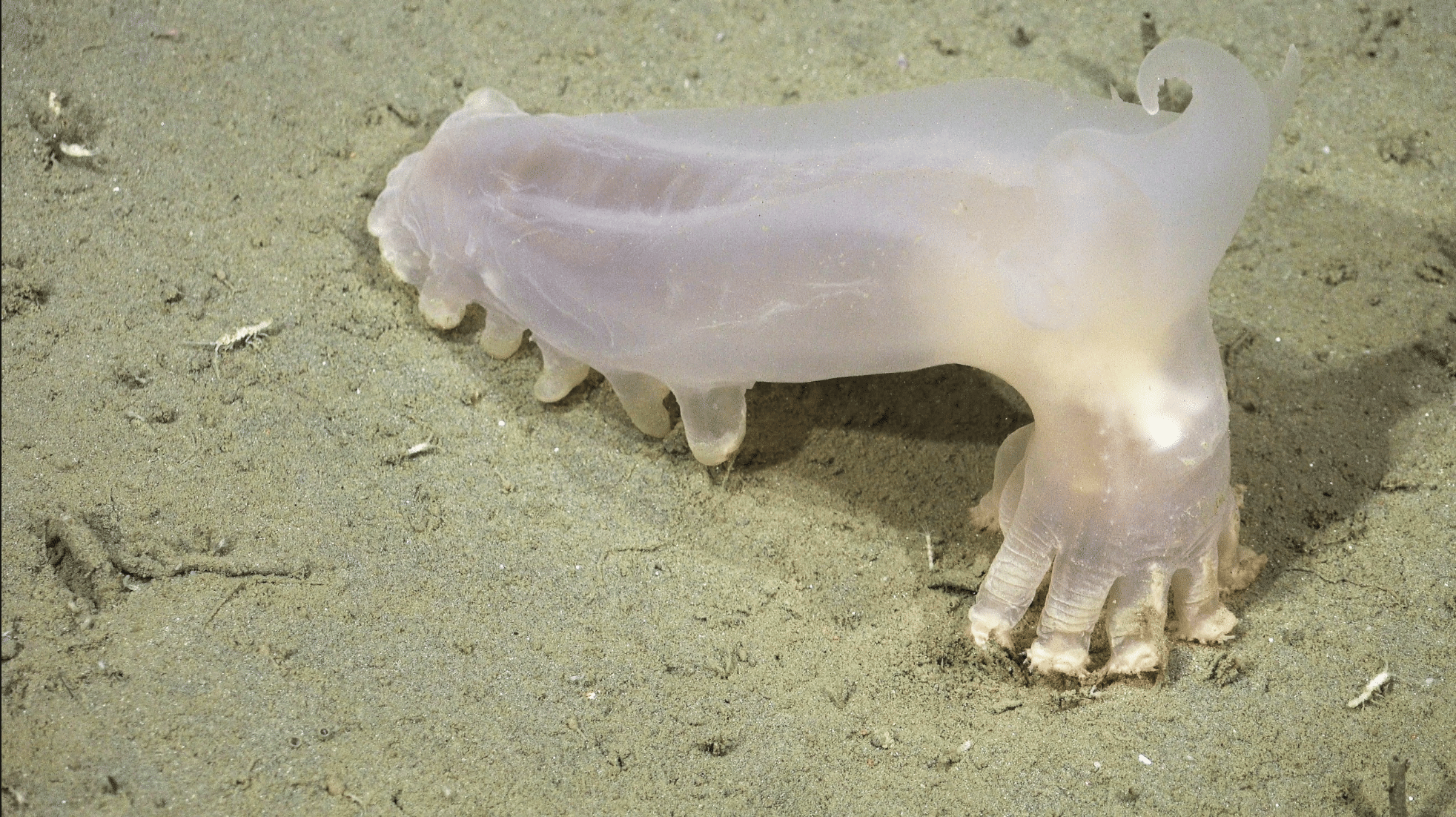
A sea cucumber named after the Norse god of mischief just became one of 57 brand-new species confirmed living in a canyon off Argentina's coast that plunges nearly twice as deep as the Grand Canyon.
- 57 new marine species identified
- 5 entirely new scientific genera discovered
- 20 taxonomists from Latin America and Europe took part
- 11,480+ feet — the depth of the Mar del Plata Submarine Canyon where the specimens were collected
Two Weeks, 57 New Species
The discoveries came out of a Species Discovery Workshop held at the Universidad Maimónides in Buenos Aires in July 2026, where researchers raced to identify specimens gathered a year earlier during a deep-sea expedition in the Mar del Plata Submarine Canyon.
That expedition, run by the Schmidt Ocean Institute aboard the research vessel Falkor (too), had already drawn more than 4 million live viewers after its remotely operated vehicle filmed a bright orange sea star nicknamed "Patrick Star." A year later, the quieter work of sorting through the samples it collected has turned out to be just as remarkable.
Taxonomists examined only about 10% of the copepod samples gathered on the expedition. Every single one turned out to be new to science — 20 new copepod species in total, alongside 22 new sea cucumbers and crinoids, 14 new corals and sea pens, and one new mollusc.
Meet Loki the Sea Cucumber
The workshop's breakout star is "Loki" (genus Peniagone), a translucent deep-sea sea cucumber named for the horn-like appendages curling from its body, found at a depth of 2,577 meters. It's one of up to 10 new sea cucumber species pulled from the canyon.
Among the new coral finds are the sea pen Pseudumbellula sp. and a vivid orange-red octocoral in the genus Orstomisis, both collected from habitat-forming coral communities more than 6,000 feet below the surface.
"Discovering 57 new species and five new genera in just two weeks demonstrates the speed and power of collaborative taxonomy. The deep sea holds some of the least understood ecosystems on Earth." — Dr. Michelle Taylor, Ocean Census Head of Science
Looking Ahead to 2027
The specimens and historical samples from earlier Argentine expeditions will now be permanently housed at the Museo Argentino de Ciencias Naturales in Buenos Aires, giving local scientists a lasting biological collection to study for years to come.
The workshop was also an investment in people, not just species counts — pairing 20 early-career Latin American researchers with international taxonomy experts through the open-access Ocean Census NOVA platform.
"International cooperation in taxonomy is critical, especially in groups with few active specialists," said Dr. Daniel Lauretta, a chief scientist with Argentina's CONICET research council and the Museo Argentino de Ciencias Naturales, who led the original expedition.
Lauretta and his team are already planning a follow-up expedition for February–March 2027, this time to a different submarine canyon expected to hold even higher levels of endemic — found-nowhere-else — marine life. If this round is any indication, the deep South Atlantic still has plenty of surprises left to introduce to science.
Of the more than 240,000 marine species formally documented worldwide, scientists estimate millions more remain unknown. Each two-week workshop like this one nudges that number a little closer to complete — one horned sea cucumber at a time.


