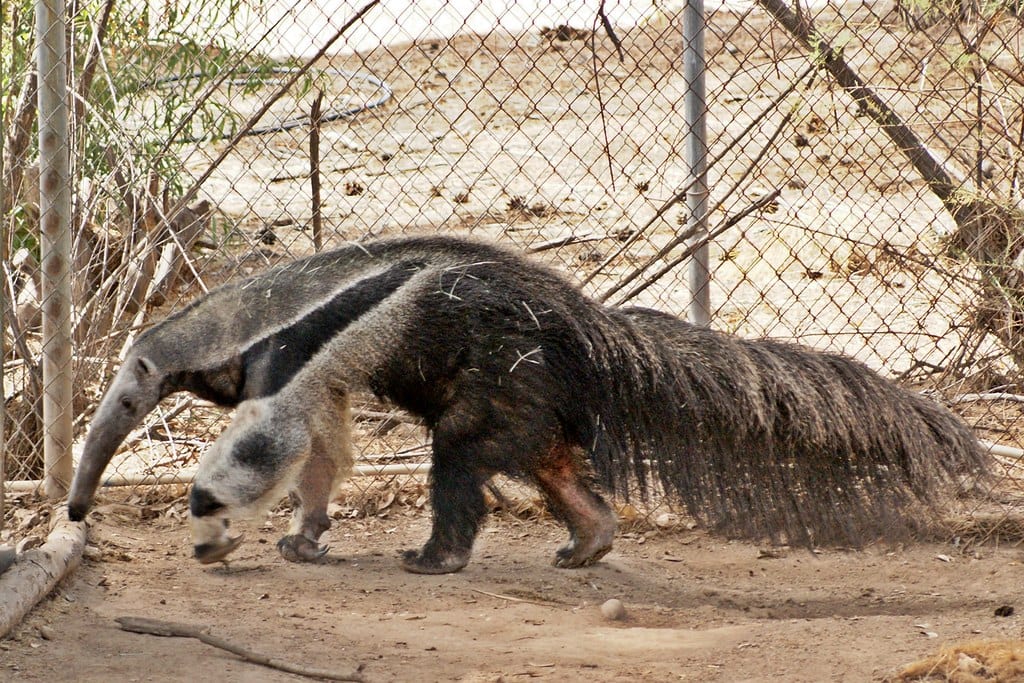
A camera trap in Argentina's Gran Chaco caught something no one there had documented in 39 years: a giant anteater, shuffling through the brush as if it had never left.
- 39 years since the last confirmed giant anteater sighting in the area (gone since 1986)
- 6,400 hectares restored at the Alma Guaraní Natural Reserve
- 20 camera traps used to track the animal's movements
- 30-50% drop in ant abundance measured in degraded, non-restored land
Giant anteaters (Myrmecophaga tridactyla) are listed as Vulnerable by the IUCN, squeezed out of much of South America by agricultural expansion and forest clearing across the Gran Chaco, one of the continent's most heavily deforested ecosystems. Their return to a specific patch of restored land is now being treated as a real-world test of whether passive restoration actually works.
What a decade of fence-building did
For more than ten years, volunteers at the Alma Guaraní Natural Reserve have run two parallel restoration strategies. In some zones they planted native trees directly. In others, they simply put up fencing to keep out livestock, dogs, hunters and fishers, then let the land recover on its own.
Researchers tracking the reserve's wildlife with a network of 20 camera traps found the returning anteater spent most of its time in the passively restored, fenced-off sections rather than the actively replanted ones. That is a meaningful data point for conservationists deciding where to spend limited restoration budgets.
The mechanism appears to be food supply. In degraded areas of the Chaco, researchers measured ant and termite abundance — a giant anteater's primary diet — dropping by 30 to 50 percent compared with well-preserved habitat. Fencing off land and waiting, it turns out, can be enough to bring the food source, and the anteaters, back.
The animal's presence after 39 years absent is being described by researchers as direct evidence that letting degraded land recover on its own can restore habitat for a threatened species faster than active replanting alone.
A pattern showing up elsewhere in South America
The Alma Guaraní sighting isn't an isolated case. In Brazil's Espinilho State Park, a giant anteater turned up in August 2023 — the first in that area since 1890 — with eleven more sightings recorded through early 2024. Researchers believe that animal likely wandered in from Argentina's Iberá Park, where the conservation group Rewilding Argentina has released roughly 110 giant anteaters as part of a long-running reintroduction program.
Together, the two cases suggest a broader rebound is underway across the region's restored grasslands and wetlands, one that doesn't always require releasing captive-bred animals — sometimes it just requires giving the land room to heal and waiting for wildlife to find it.
Why this matters beyond one anteater
Giant anteaters are what ecologists call an "ecosystem engineer." Their digging aerates soil and controls insect populations that would otherwise spike unchecked, giving their presence outsized importance relative to their numbers. A single confirmed individual in a 6,400-hectare reserve is a small data point, but it's the kind of small data point that shapes multi-million-dollar restoration decisions across the Gran Chaco, one of South America's largest and most threatened dry forest ecosystems.
For the volunteers who spent a decade stringing fence line and waiting, it's also simply proof the work did something. The full account of the restoration effort and the tracking data behind it is detailed in Mongabay's reporting on the Alma Guaraní reserve, with the latest confirmation reported on World Anteater Day.
Conservationists now plan to keep the camera trap network running, watching for further anteater activity and for whether the same passive-restoration pattern holds in other degraded Chaco parcels nearby.