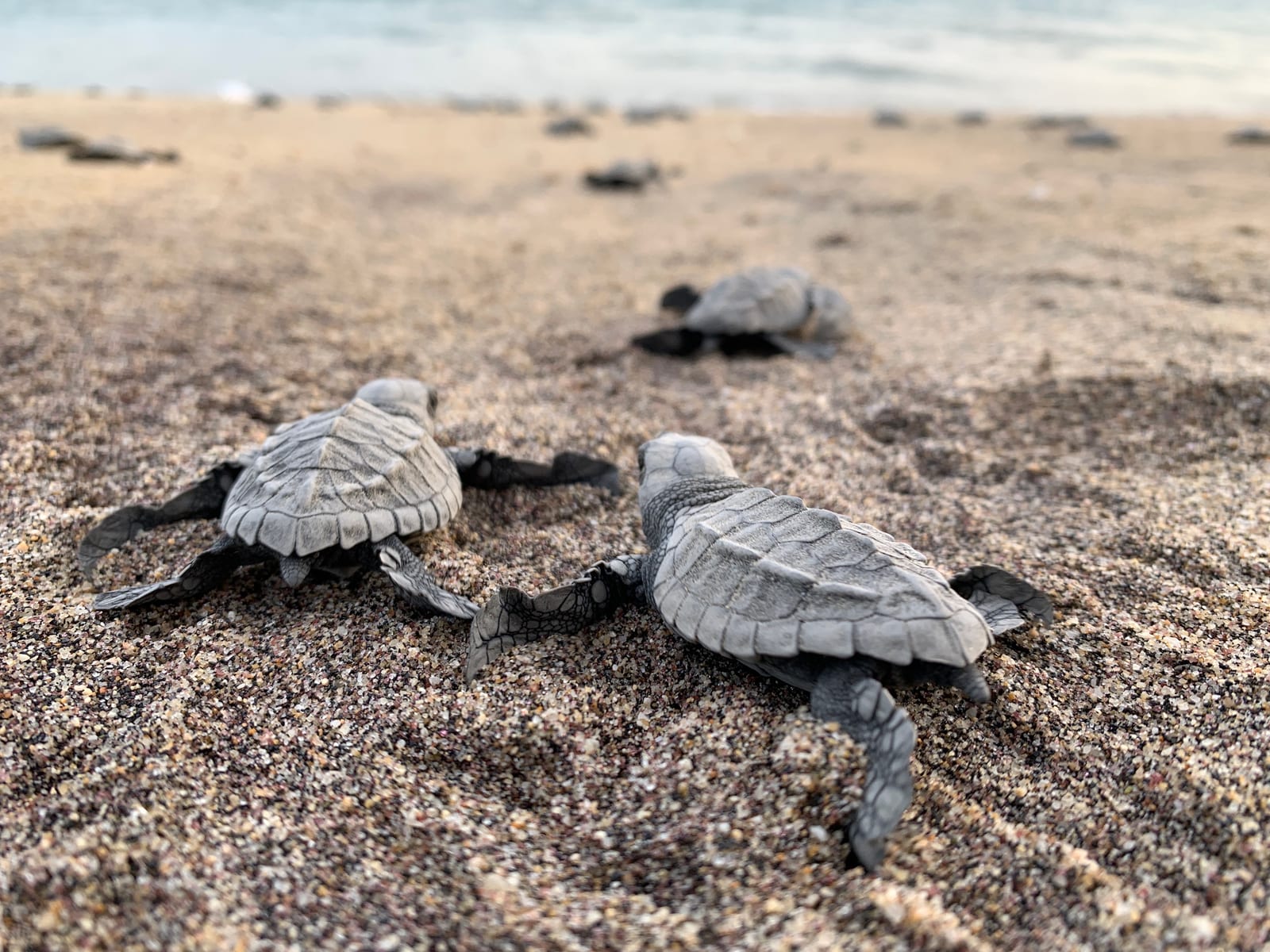
An endangered sea turtle that has no business nesting in California did it anyway — twice — and this month 54 of her hatchlings finally scrambled into the Pacific Ocean.
- 54 hatchlings released into the ocean after emerging from their nest
- 2 separate nests, laid by 2 different olive ridley turtles
- 50 to 100 eggs typically found inside a single nest
- 45 to 60 days of incubation before hatching begins
A turtle in the wrong ocean, on purpose
Olive ridley sea turtles are usually found nesting on warm tropical beaches in places like Mexico, Costa Rica, and India, not the cooler waters off Southern California. So when one came ashore at the Seal Beach National Wildlife Refuge in September and dug a nest, biologists knew they were watching something unprecedented.
Three days later and eight miles down the coast, a second olive ridley turtle repeated the behavior at Huntington Beach. Researchers initially assumed it was the same animal returning to lay a second clutch, which is normal olive ridley behavior. A closer look at shell size and barnacle patterns in photographs showed otherwise: two separate females had independently chosen Orange County beaches to nest, the same season, for the first time any agency has on record.
"This is our first ever documented case of a nest for an olive ridley turtle here on the West Coast," said NOAA Fisheries biologist Justin Viezbicke, who also noted the turtles' odd daytime nesting behavior — olive ridleys almost always nest at night.
How the eggs were protected
Both nest sites were cordoned off and posted with warning signs so beachgoers would stay clear while the clutches incubated. Wildlife officials ultimately relocated more than 200 eggs to the Aquarium of the Pacific in Long Beach, where they could be kept at a stable, monitored temperature and humidity inside secure incubators rather than left exposed to unpredictable coastal weather.
Sand temperature does more than control hatching time for sea turtles — it also determines the sex of the hatchlings, with warmer sand producing more females. That made precise incubator control especially valuable for a nest this unusual and this closely watched.
"This is our first ever documented case of a nest for an olive ridley turtle here on the West Coast. This is a highly endangered and protected species."
What happens next
On the night of November 14, dozens of the hatchlings were finally carried down to the sand and released, wriggling across the beach at Seal Beach until the surf carried them out to open water. Aquarium staff and NOAA officials called it a bittersweet send-off after weeks of round-the-clock monitoring.
Scientists still don't know whether the nesting was a one-time fluke or an early signal that warming Pacific waters are nudging the species' range northward, alongside other unusual recent sightings of whale sharks, yellow-bellied sea snakes, and hammerhead sharks off the Southern California coast. More nests could already be hidden along beaches no one has checked yet.
For now, researchers are treating the hatch as a conservation win worth celebrating on its own terms: an endangered species successfully reproducing somewhere it has never been recorded doing so before, watched over by an unlikely coalition of federal biologists, aquarium staff, and beachgoers who kept their distance long enough to let nature take its course.