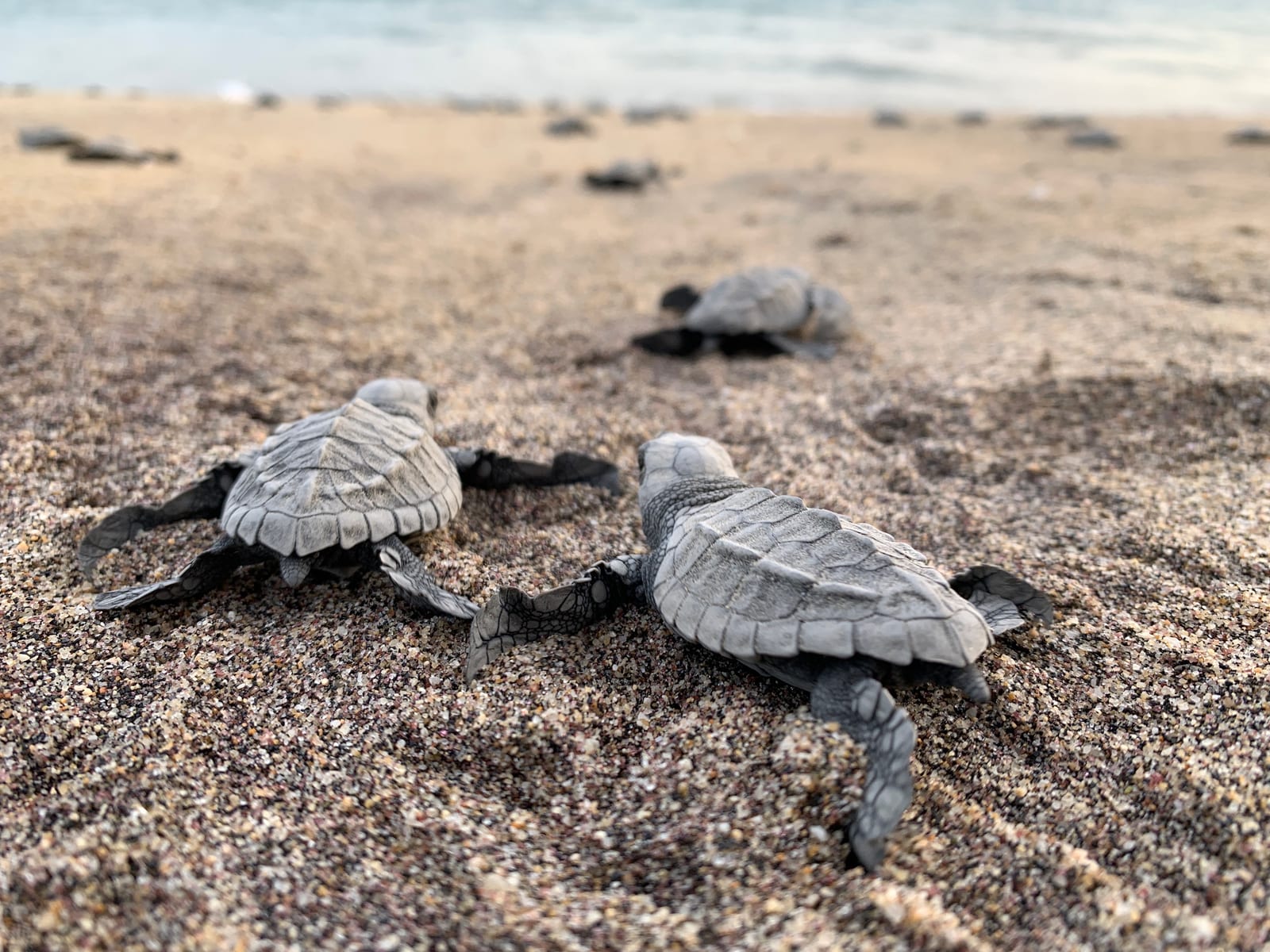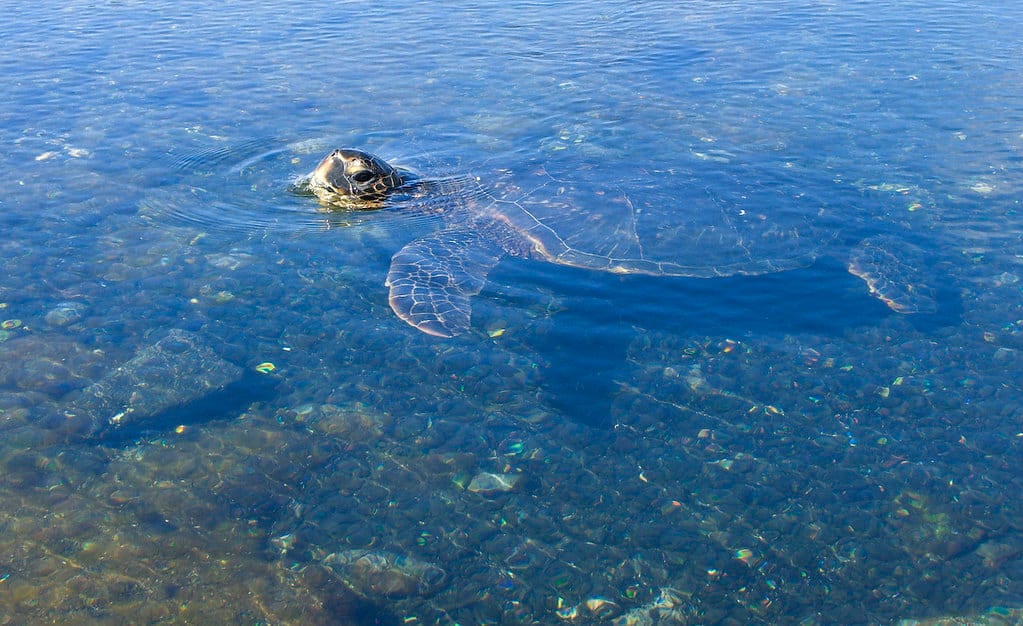
A lagoon excavated more than two decades ago for a waterfront development that never got built has turned into one of the best places on the Arabian Peninsula to be a young sea turtle. Researchers tracking juvenile green turtles in the United Arab Emirates found that the animals are choosing this accidental basin over the open coast, and choosing it by a wide margin.
- 9 juvenile green turtles fitted with tracking tags
- 80%+ of their tracked time spent inside the protected lagoon
- 5x higher odds of a turtle occupying the basin than nearby coastal waters
- 700+ km logged by one turtle on a journey toward Oman
An Accident of Urban Planning Becomes a Habitat
The lagoon sits inside the Al Qurm Wa Lehhfaiiah Protected Area near Khor Kalba, on Sharjah's east coast along the Gulf of Oman. It was dug out in 2003 to support a waterfront project that was later shelved, leaving a sheltered, tidally connected basin linked to the Khor Kalba mangroves.
Nobody designed it as turtle habitat. But its calm water, algae-covered floor and connection to the mangrove channels turned out to check every box a juvenile green turtle needs: food, shelter from predators, and protection from the rougher currents and boat traffic of the open gulf.
What the Tracking Data Showed
Green turtles (Chelonia mydas), listed as endangered by the IUCN, have been documented feeding and developing in UAE waters since at least the 1980s, though the region's major nesting beaches lie across the water in Oman. Nesting inside the UAE itself remains rare enough that a 2024 event at Al Dhafra was flagged by Environment Agency – Abu Dhabi as unusual.
To understand how the young turtles actually use this stretch of coast, researchers tagged nine juveniles and followed their movements. The pattern was stark: the animals spent the large majority of their tracked time inside the lagoon rather than ranging across the surrounding coastline, and statistically were far more likely to be found there than anywhere else nearby.
The turtles were roughly five times more likely to be inside the lagoon than in the surrounding coastal waters — a signal researchers read as deliberate habitat selection, not chance.
One tagged turtle eventually left the basin and swam more than 700 kilometers south along the coast toward central Oman, suggesting the lagoon functions as a waypoint rather than a permanent home — a nursery turtles eventually outgrow.
Why a Leftover Construction Site Matters
The findings, covered by Moneycontrol and reported by Popular Science, add to growing evidence that artificial or repurposed coastal infrastructure can function as real conservation habitat, not just a poor substitute for natural wetlands.
That matters for a species still recovering from decades of egg harvesting, bycatch and coastal development across the Gulf. Once turtles leave sheltered basins like this one, they face fishing nets, shipping lanes and plastic pollution on the open water — so every additional year a juvenile can spend growing undisturbed improves its odds of reaching adulthood.
Researchers now want to know whether other semi-enclosed, human-altered waterways along the Gulf of Oman and Arabian Gulf coastlines are hosting similar undocumented turtle populations. If so, protecting what's already built — rather than building something new — could be one of the cheapest conservation wins available in a region better known for ambitious, large-scale environmental projects than for leaving things alone.
For now, the turtles of Khor Kalba offer a simple lesson: sometimes the best habitat is the one nobody meant to create.