Your body may already be making a molecule that fights Alzheimer's — researchers just had to find it first.
- CST (catestatin) is a small peptide your body already produces naturally
- It cut buildup of both tau and amyloid, the two hallmark Alzheimer's proteins
- Mice treated with it showed improved cognitive and motor function
- Findings published in the journal Molecular Therapy
A peptide your body already makes
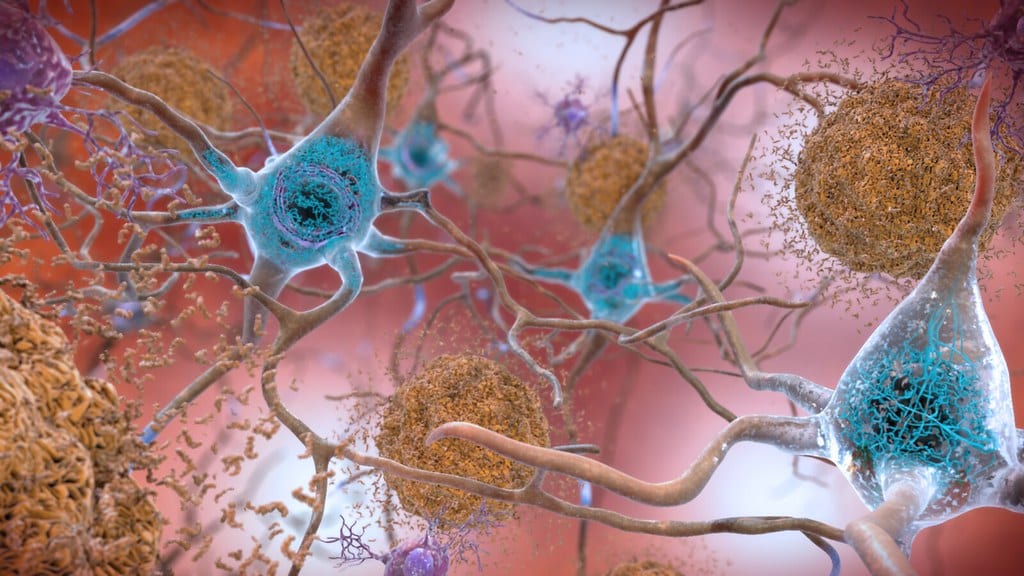
Scientists at the University of California San Diego School of Medicine identified catestatin, or CST, as a naturally occurring protein fragment that appears to counter several of the key processes driving neurodegeneration at once. That matters because most experimental Alzheimer's treatments are built to hit a single target — usually either amyloid or tau, the two misfolded proteins that clump in the brains of people with the disease.
CST is derived from chromogranin A, a protein already involved in cell signaling and hormone release throughout the body. Researchers had previously linked chromogranin A fragments to cardiovascular, metabolic, and immune regulation — suggesting CST moonlights across a surprisingly broad network of biological processes rather than doing one narrow job.
Alzheimer's and related neurodegenerative disorders remain among medicine's toughest conditions to treat, progressively stripping away memory, movement, and independence as neurons die off. Most drugs in development chase a single mechanism; a molecule capable of hitting several at once would be a genuinely different kind of candidate.
What researchers found in mice
Using mouse models that displayed Alzheimer's-like symptoms, the team injected CST and tracked what changed. The peptide reduced the accumulation of both tau and amyloid beta, the proteins most associated with memory loss and brain cell death. It also lowered brain inflammation and improved the animals' cognitive performance and motor coordination compared to untreated mice showing the same disease symptoms.
Our findings show that CST can act across several of these disease-associated pathways and shift the brain toward a healthier state.
That's senior author Sushil K. Mahata, PhD, a professor of medicine at UC San Diego School of Medicine and a research physiologist at the VA San Diego Healthcare System, describing why a multi-pathway peptide could matter more than treatments aimed at a single culprit. Lead author Suborno Jati, PhD, a postdoctoral scholar on the project, said the team is now investigating whether CST can also change how the brain produces and uses energy — a shift that could make neurons more resilient to the cellular stress that builds up during neurodegeneration.
Neurodegenerative disease, the researchers note, rarely comes down to one broken switch. Misfolded proteins, chronic brain inflammation, and failing cellular energy systems tend to interact and compound each other as the disease progresses, which is part of why single-target drugs have struggled to move the needle in late-stage patients.
What comes next
The results are still preclinical, and the researchers are careful about that distinction. Additional studies are needed to establish CST's safety profile, the right dosing, and whether the same multi-pathway effect shows up in humans before anyone can evaluate it as an actual treatment option.
Still, a molecule that already exists in the human body, with evidence it can push back on tau, amyloid, and inflammation simultaneously, gives researchers a new peptide-based angle on a disease that has worn out plenty of single-target drugs before it. The team's next step is characterizing CST's effect on brain metabolism in more detail, which could shape how any future human trial is designed.
Full details of the study are available via UC San Diego Today and the peer-reviewed paper in Molecular Therapy.