Beneath the leaf litter of Madagascar's forests, scientists have just found seven frog species that had been hiding from science for over a decade of fieldwork.
- 7 new diamond frog species formally described
- Genus total climbs from 20 to 27 recognized species
- 12 years of fieldwork behind the discovery
- 24 of 27 species in the genus are now estimated to be threatened
Frogs Hiding Beneath The Leaf Litter
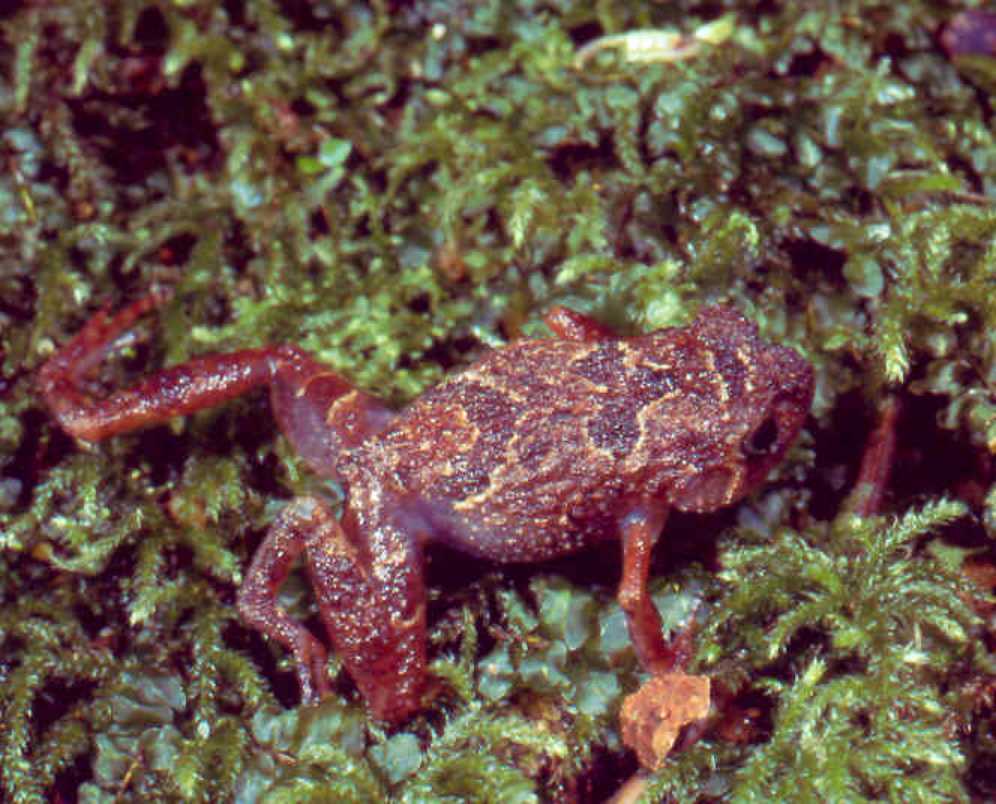
Diamond frogs, genus Rhombophryne, are easy to miss. Many spend their lives burrowed under soil, moss and forest debris, built round and strong for digging. Others have longer legs for moving through leaf litter. Most look plain brown at a glance, but some flash orange, white or black markings when disturbed. Body size within the genus ranges from about 60 millimeters down to one species barely 12 millimeters long — among the smallest vertebrates on Earth.
Madagascar may hold more than 700 frog species total, but as of mid-2026 only 446 had formal scientific names. That gap isn't trivial: a species can't be protected if nobody can clearly identify it.
Solving The Puzzle With Century-Old DNA
The project began more than twelve years ago, and nearly every expedition back to Madagascar turned up another frog that looked like an unnamed species. The complication was old museum specimens carrying historical names that needed to be matched to modern genetic lineages — without that step, researchers risked naming the same species twice.
The breakthrough came through museomics: sequencing DNA from decades-old preserved specimens, including original type specimens that anchor each species' scientific name. The team, led by Dr. Mark D. Scherz of the Natural History Museum Denmark, combined that historical DNA with newly collected samples, frog calls, body measurements and micro-CT bone scans — ultimately analyzing 204 DNA sequences, 77 of them newly generated for this study.
"Diamond frogs have been hiding their diversity beneath our feet." — Dr. Mark D. Scherz, lead author
"Museum collections are far more than archives of the past," added Dr. Alice Petzold of the University of Potsdam, who led the museomics work. "They are essential scientific resources for understanding biodiversity today."
Why Naming A Frog Protects A Forest
The study, published in the journal Vertebrate Zoology, names seven new species: Rhombophryne maraorao, R. mavokely, R. anatiala, R. kotrobaratra, R. sonaliae, R. kilonjy and R. quentini. Several unresolved candidate species were deliberately left unnamed, since too few specimens exist yet to confirm they're genuinely distinct.
That caution matters because taxonomy directly shapes conservation policy. During a Madagascar protected-area planning workshop in March 2026, the newly clarified species — including R. quentini — helped planners justify expanding protected forest boundaries. Most diamond frogs live only in humid forests across northern and eastern Madagascar, in ranges small enough that local habitat loss carries outsized risk; two species, R. kilonjy and R. matavy, may even qualify as critically endangered.
"For many species, we still know almost nothing about their breeding biology, population sizes or ecological requirements," said Dr. Andolalao Rakotoarison of the Institut d'Enseignement Supérieur de Soavinandriana Itasy in Madagascar. Scherz put the bigger picture simply: "Every newly described species represents millions of years of unique evolutionary history. The more we learn about Madagascar's remarkable amphibians, the clearer it becomes that there is still an enormous amount left to discover."