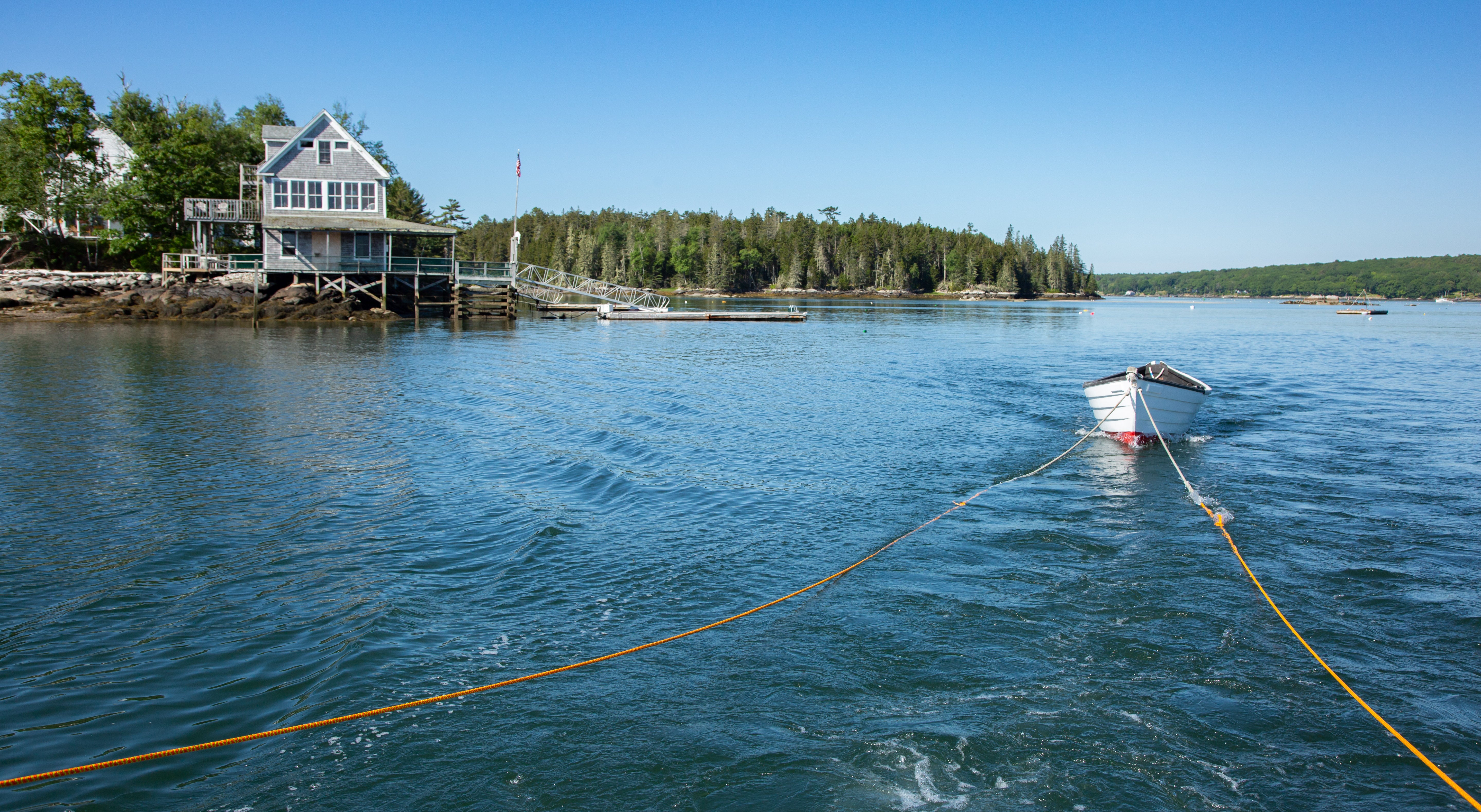
In the middle of the Great Depression, a writer and her daughter spent their savings to stop loggers from clear-cutting a spruce-covered island in Muscongus Bay. Ninety years later, that island is still training the scientists who protect America's coastline.
- 330 acres of protected spruce forest on Hog Island
- 90 years of continuous operation since the camp opened in 1936
- 200+ former campers, instructors, and volunteers who returned for the August 2026 anniversary
- 13 wildlife sanctuaries now run along the Maine coast by Audubon's Seabird Institute
A Depression-era rescue
Hog Island's modern story starts with Mabel Loomis Todd, a writer and editor best known for publishing the poetry of Emily Dickinson. In the 1930s, landowners planned to clear-cut the island's centuries-old spruce forest, including "wolf trees" left standing generations earlier to shade grazing livestock. Todd recognized the value of the untouched woods and tried to buy the property before her death in 1932.
Her daughter, geographer Millicent Todd Bingham, picked up the effort, eventually securing the island. In 1936, Bingham partnered with John H. Baker, then head of the National Association of Audubon Societies — now the National Audubon Society — to open Audubon's first Nature Study Camp, according to records from the Todd Wildlife Sanctuary's history archive. The program trained schoolteachers in outdoor field biology so they could carry it back to classrooms nationwide. Bingham later gave the island to Audubon outright, creating a permanent refuge for wildlife and migratory seabirds.
From nature camp to global model
That original teacher-training mission scaled into something much bigger. In the 1970s, ornithologist Stephen Kress launched Project Puffin from Hog Island, developing techniques — including wooden decoys and recorded calls — to lure Atlantic puffins back to nearby Eastern Egg Rock after hunting had wiped them out. Those "social attraction" methods are now used worldwide to rebuild seabird colonies, according to Audubon's own program history.
More than 200 former campers, instructors, researchers, and volunteers returned to Hog Island this past August to mark 90 years of continuous operation — a reunion the island has hosted only because it never stopped running.
The four-day anniversary gathering, held Aug. 20–23, 2026, included guided walks, tours of the historic Bingham cottages and the old Fish House, and a panel called "The Future is Bright at Hog Island," where Audubon's Chief Conservation Officer, Marshall Johnson, joined instructors Maggie Dewane and Anthony Hill to discuss the next decade of research on the island.
The volunteers who keep it running
None of it happens without the Friends of Hog Island, a volunteer group that logs thousands of hours each summer on building maintenance, kitchen duty, habitat management, and fundraising for the camp's endowment. The island also hosts an Artist-in-Residence program, continuing Mabel Loomis Todd's own literary legacy by housing writers, visual artists, and musicians in the historic Bingham cottages each season.
Ninety years after two women refused to let it be logged, Hog Island remains what it was built to be: a small, hard-to-reach patch of Maine coast that keeps producing an outsized share of the people and ideas behind American bird conservation.
Still shaping the next generation
The island's reach today goes well beyond the campers who make the boat trip to Bremen each summer. Curricula and field techniques first tested on Hog Island have been adapted by teacher-training programs across the country, and the seabird-restoration methods pioneered there now guide work on islands from Maine to the Pacific. As rising seas and warming waters reshape the Gulf of Maine's coastline, the same 330 acres that survived a logging threat in the 1930s are now a living record of how that coast is changing — and a training ground for the people trying to protect what's left of it.