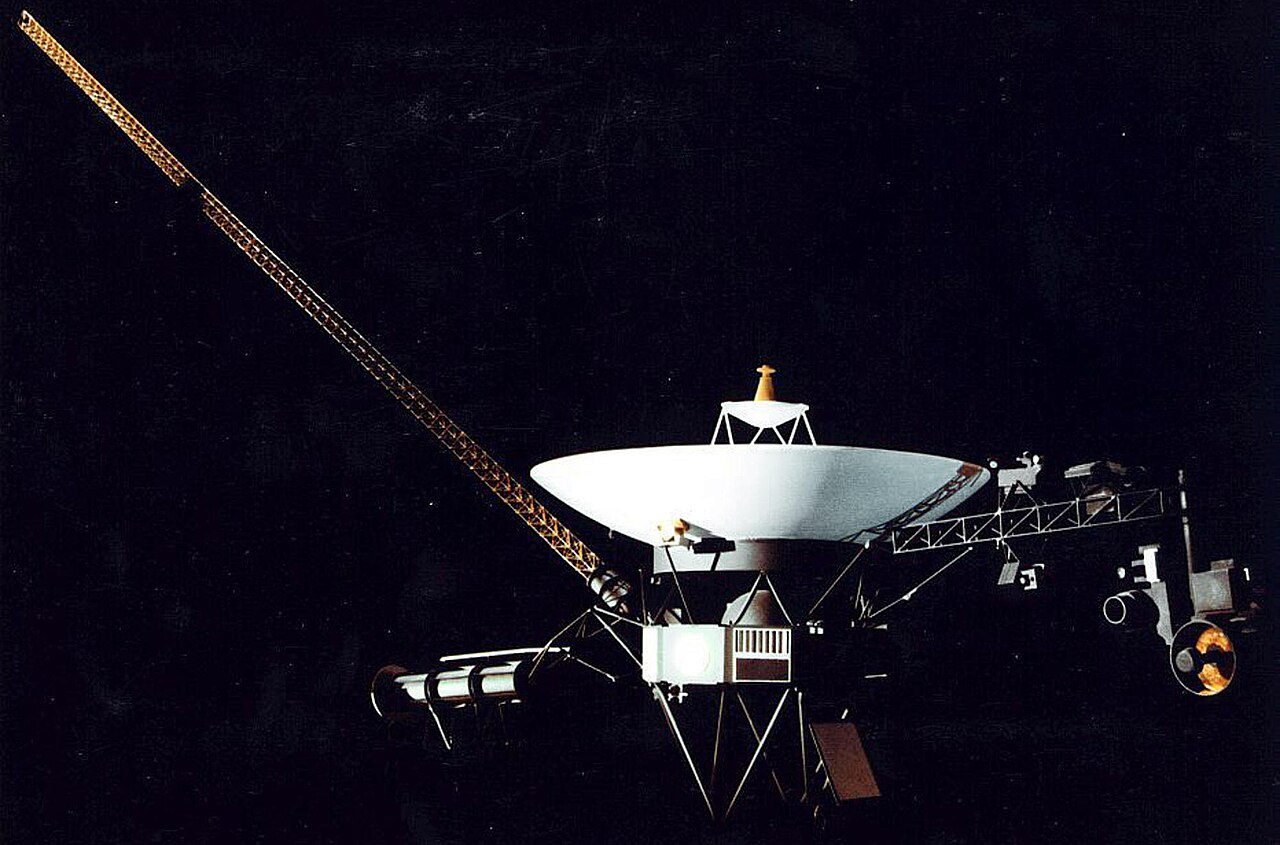
Forty-seven years ago, humanity flung a spacecraft into the void with a simple audacious goal: go as far as possible, and keep sending back data.
Voyager 2, launched in August 1977, has exceeded every reasonable expectation. It has traveled beyond the heliosphere into true interstellar space, become one of only two human-made objects to cross that threshold, and continued transmitting scientific data from a distance of more than 12 billion miles.
But physics has a way of humbling even the greatest achievements. The plutonium-powered radioisotope thermoelectric generators aboard both Voyager spacecraft decay at a predictable rate — about 4 watts of available power lost per year. After nearly five decades, those losses have added up.
A choice with no do-overs
By early 2026, NASA's Jet Propulsion Laboratory team overseeing the Voyager mission faced an uncomfortable math problem. Without intervention, they would have been forced to shut down yet another science instrument aboard Voyager 2 before the end of the year — reducing its already-sparse scientific payload further.
To avoid that fate, the team devised a plan they called the "Big Bang." The approach: simultaneously shut down certain powered components and replace them with options that consume less energy, while carefully managing the spacecraft's internal temperature to ensure it stayed warm enough to function in the extreme cold of interstellar space.
Project Manager Suzanne Dodd described the decision as inherently risky — "no do-overs," as she put it. A miscalculation from 12 billion miles away could have ended the mission entirely. The team deliberated extensively before committing.
The maneuver worked.
An extra year of science
With the power savings secured, Voyager 2's three remaining science instruments are now expected to continue operating for at least one additional year — time that will yield more data from interstellar space, the poorly understood region where the sun's influence ends and the galaxy's begins.
That data has scientific value that cannot be replicated by any other mission. No other spacecraft has crossed into interstellar space and returned measurements. Every reading Voyager 2 sends back is, by definition, unique.
"Every watt saved now is a decision about what data humanity still gets to learn from out there," Dodd said.
The same procedure will now be applied to Voyager 1 — currently even farther from Earth, traveling in a slightly different direction through interstellar space. The JPL team expects to complete that power-saving swap in the coming months.
47 years and still going
The Voyager missions were designed for a planetary tour of the outer solar system — Saturn, Jupiter, Uranus, Neptune. That mission was complete by 1989. Everything since has been a bonus, a slow-motion race between decay and discovery.
Since 2024, the team has had to switch off two science instruments on each Voyager spacecraft as power dwindled. The original 10-instrument payload is now pared down to a few essential detectors measuring magnetic fields, plasma waves, and cosmic rays at the frontier of the solar system.
But those instruments are still sending data. And thanks to a team of engineers willing to risk a "Big Bang" from 12 billion miles away, they will continue to do so for at least another year.
For a spacecraft launched before many of its caretakers were born, that counts as one more small miracle.


