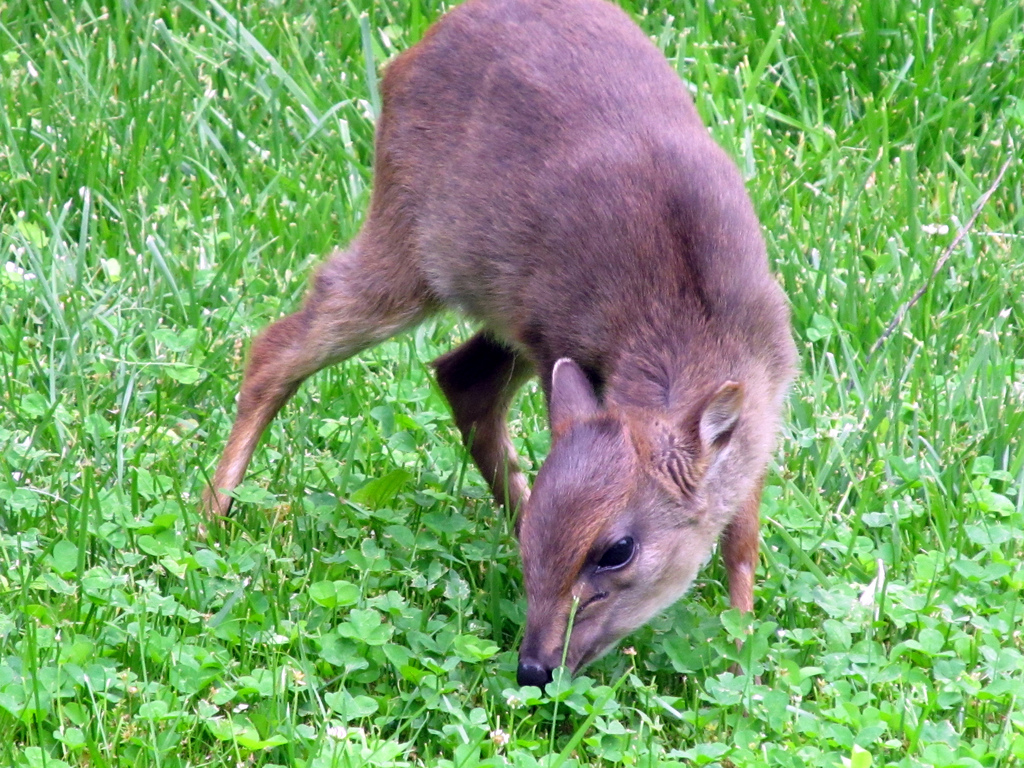
Conservationists have captured the first-ever camera trap photographs of the Pemba blue duiker, a tiny antelope that stands just 30 centimeters (12 inches) tall at the shoulder and lives in a remnant patch of native forest on Zanzibar's Pemba Island.
The images, taken by around 20 motion-activated cameras placed in the Ngezi Nature Forest Reserve in late January, provide the first photographic evidence of the animal in more than two decades. The project was led by ecologist Margherita Rinaldi in collaboration with Italian conservation group Istituto Oikos.
"We're just excited they're there and well distributed," said Silvia Ceppi, scientific adviser to Oikos. The cameras detected blue duikers across at least half of the 2,030-hectare (roughly 5,000-acre) reserve, suggesting a healthier population than many feared.
The Pemba blue duiker may be a subspecies of the blue duiker found on the African mainland, but its exact taxonomic status remains uncertain. It's possible the animals were introduced to Pemba more than a century ago, or they could represent a naturally occurring population isolated for millennia. Droppings collected during the survey could help determine their genetic makeup and settle the question.
Confirming the duiker as a distinct subspecies would be a significant conservation win. An endemic, endangered antelope isolated on an island would strengthen protections for the entire Ngezi reserve — home to Pemba scops-owls, Pemba flying foxes, and around 500 plant species — at a time when an eco-resort is planned across a large section of intact coastal forest nearby.
Several images were captured on the Tondooni Peninsula, a section of the reserve surrounded by villages and under pressure from illegal tree cutting and animal trapping. Recent funding from the Critical Ecosystem Partnership Fund has enabled the hiring of additional guards to protect both the duikers and their habitat. The project has also received support from Fondation Audemars-Watkins, Fondation Franklinia, and the European Union.
"Conservation of Ngezi is extremely important, as this only remaining patch of native habitat still holds undescribed species," said Hanna Rosti, a conservation biologist at the University of Helsinki. Research documenting small mammals persisting in these last fragments of island habitat is vital, she added — "not least because it serves as a record of their natural history in case everything is lost."
The discovery is a reminder that patience and persistence in conservation can yield remarkable results, even when a species has gone unseen for decades.