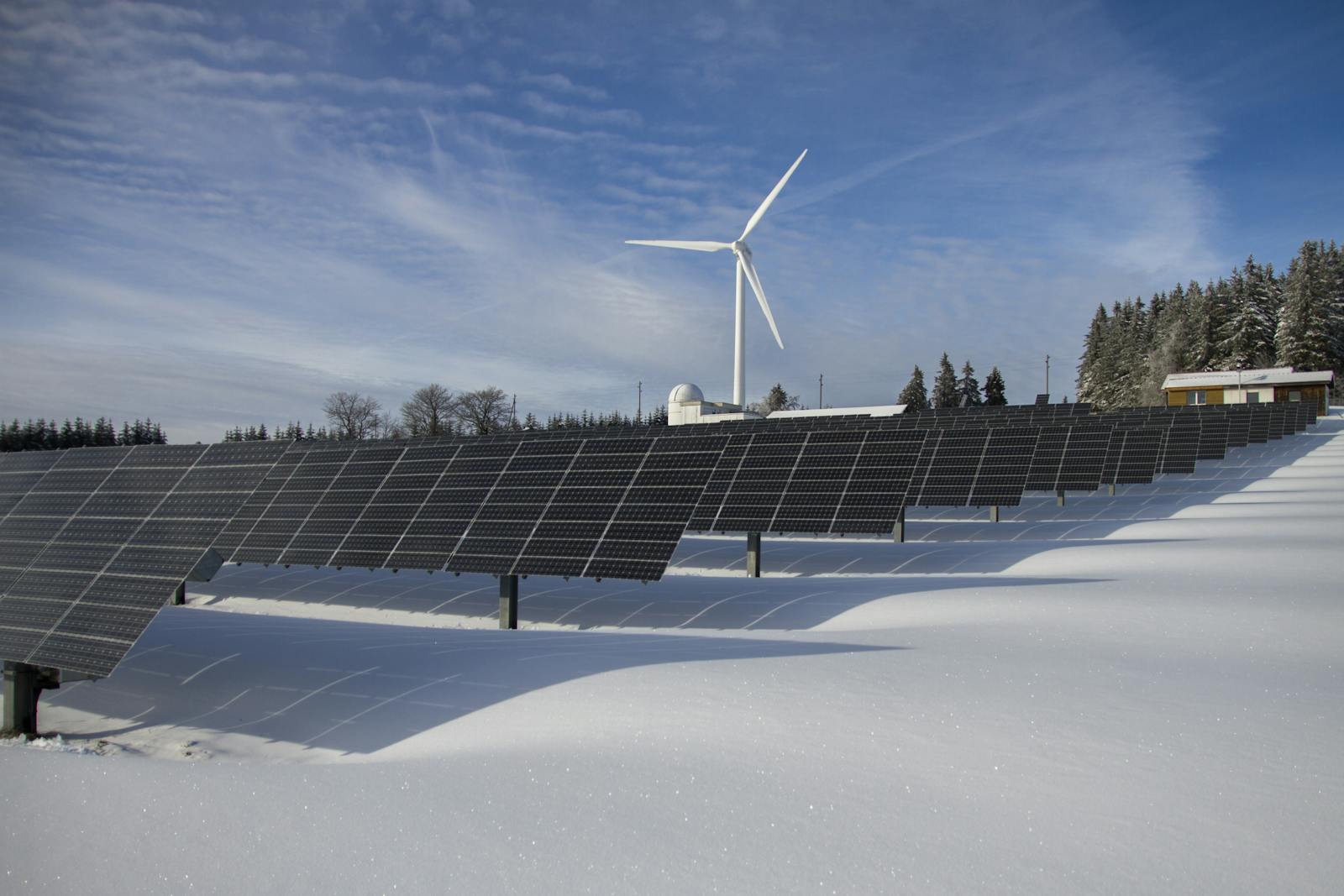
Britain's electricity grid crossed a new threshold on Wednesday, running on 98.8% zero-carbon power for a half-hour period — the cleanest the system has ever been. The moment, confirmed by grid operator data and reported by Energy Voice, pushed fossil gas down to its lowest share on record, a far cry from the days when British electricity meant coal and smokestacks.
For three decades, the UK's power mix has been quietly transforming. Coal, which generated 40% of electricity as recently as 2012, was retired entirely last year. Gas has been taking over its role as the swing fuel, but Wednesday's record shows gas, too, is increasingly sidelined when wind, solar, nuclear, and hydro are all running at the same time.
A Windy Spring Afternoon
The record half-hour came during a gusty stretch across the North Sea, with offshore wind farms producing near-peak output and solar panels catching a bright April afternoon. Nuclear plants contributed a steady baseload, and imports from Norway's hydroelectric network filled whatever small gap remained. According to the National Energy System Operator, gas briefly supplied about 1.2% of total demand.
For grid engineers, that number is remarkable. Just 10 years ago, gas routinely supplied 30% or more of power during daylight hours. Five years ago, anything under 10% would have been celebrated. Now Britain is flirting with single-digit percentages during strong renewable windows — and, briefly, almost eliminating fossil generation altogether.
"We are getting into territory that would have seemed impossible a decade ago," said one industry analyst. "The question has moved from 'can we do this' to 'how often can we do this.'"
What the Record Means
The 98.8% mark is a half-hourly snapshot, not a full-day average. Britain's grid still relies on gas overnight and during still, cloudy weeks. But the direction of travel is clear: more hours each year are now clean, more weeks each year set new records, and more seasons each year quietly slip past milestones that would once have made headlines.
The UK's 2035 target is to fully decarbonize its electricity system. To get there, the country is investing heavily in long-duration energy storage — big batteries, pumped hydro, even hydrogen — so that renewable surpluses from windy afternoons can be saved for calm evenings. Grid operators are also accelerating upgrades to transmission lines that connect Scotland's wind farms with English demand centers.
A Global Ripple
Britain is not alone. Ember's 2026 Global Electricity Review, published this week, found that low-carbon sources met 100% of the rise in global power demand last year for the first time ever, preventing any net increase in fossil-fuel generation. Solar alone grew faster than any single power source has grown in half a century, and for the first time, India installed more new solar than the United States.
Against that backdrop, the UK's 98.8% number is not a one-off stunt but a data point on a steepening curve. Germany, Spain, and Portugal have all posted similar records this year. Texas's grid, long dominated by gas, now routinely runs with solar and wind supplying more than half of daytime electricity. Countries that once dreamed of 50% renewable grids are suddenly planning for 90% and beyond.
The Next Threshold
The obvious question is when Britain will hit 100%. It is almost certainly a matter of months, not years. On the right day, with enough wind, enough sun, and enough storage ready to take up slack, the grid could cross the line and run briefly on entirely carbon-free power.
When it happens, it will not be a surprise. It will be another half-hour, another report, another quiet milestone in a transformation that has been decades in the making — and is finally, visibly, happening.


