A kidney from a pig named Wilma just did something no other animal organ has done in a living person: it worked well enough, for long enough, to buy a dying man nine months of freedom from dialysis.
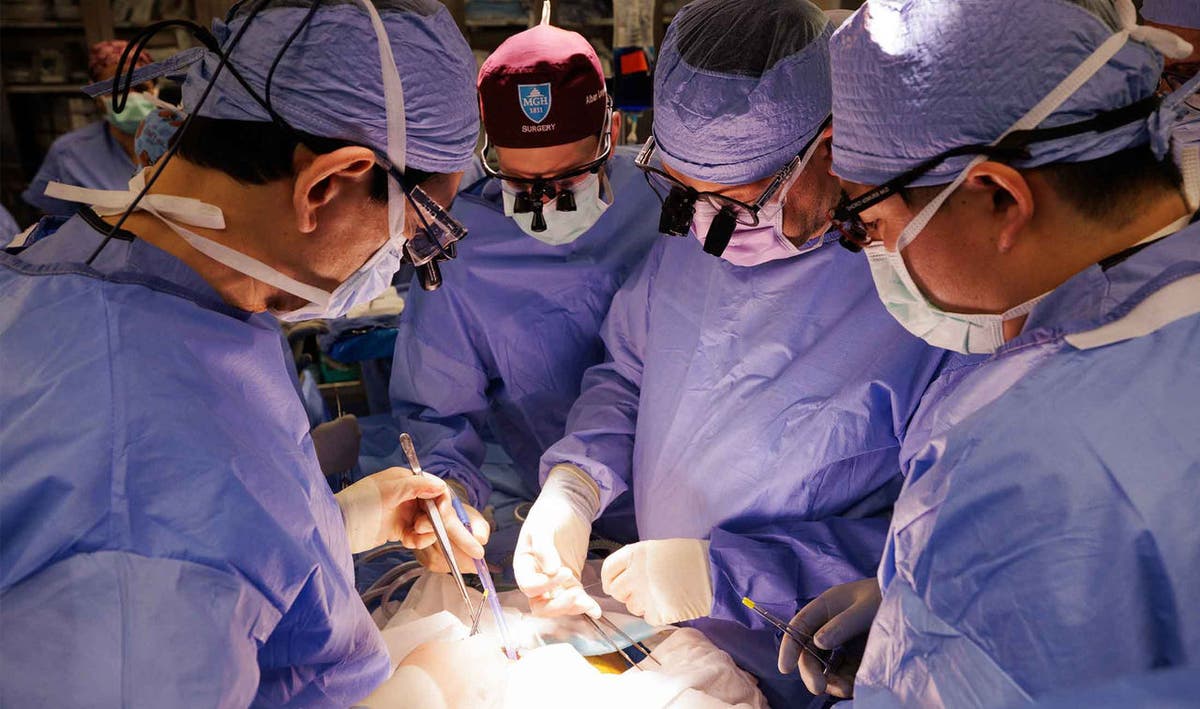
Tim Andrews, 66, of New Hampshire, had end-stage kidney disease from type 2 diabetes and just a 9% chance of getting a human kidney within five years. Surgeons at Massachusetts General Hospital transplanted a genetically engineered kidney from Wilma, a Yucatán miniature pig, into Andrews in January 2025.
- 271 days — the record stretch the pig kidney kept Andrews off dialysis
- 69 gene edits made to the donor pig's genome before transplant
- 9% — Andrews' estimated chance of a human kidney within five years, pre-transplant
- 1st time a pig kidney has worked as a "bridge" all the way to a successful human transplant
A pig kidney engineered for a human body
Wilma's kidney carried 69 edits to her genome before surgery — some designed to strip out pig viruses that could pose a risk to people, others to make the organ compatible with a human immune system. It is the kind of genetic engineering that has turned xenotransplantation from science fiction into a real, if still experimental, medical option.
The first-ever pig kidney transplant into a living person, in 2024, ended after just 52 days when that patient died of unrelated heart problems, and no prior case had shown a xenograft surviving even two months. Andrews' kidney blew past both benchmarks by half a year.
"I was alive, and I hadn't been in a long time," Andrews said of the transplant, which let him cook, vacuum and take long walks with his dog, Cupcake.
From bridge to human transplant
After roughly six months, damage appeared in the pig kidney's blood vessels, and it eventually failed. Doctors removed it nine months after the transplant, and Andrews went back on dialysis for several months before receiving a kidney from a deceased human donor, which has worked well through six months of follow-up.
Doctors found no new antibodies against human tissue and no pig viruses at any point, meaning the pig kidney did not complicate the human transplant that followed it. Details were published in The Lancet01295-X/fulltext).
"The organ shortage is the greatest crisis we have right now in transplantation," said Dr. Leonardo Riella of Mass General Brigham's Center for Transplantation Sciences. "Our vision is that xenotransplantation could help address this gap."
More than 90,000 Americans are currently waiting for a kidney, most for years. Andrews' case, detailed by Mass General Brigham, gives transplant teams a real data point for how long a gene-edited pig organ can realistically buy a patient, and hope that the gap between waiting lists and available organs might someday narrow.