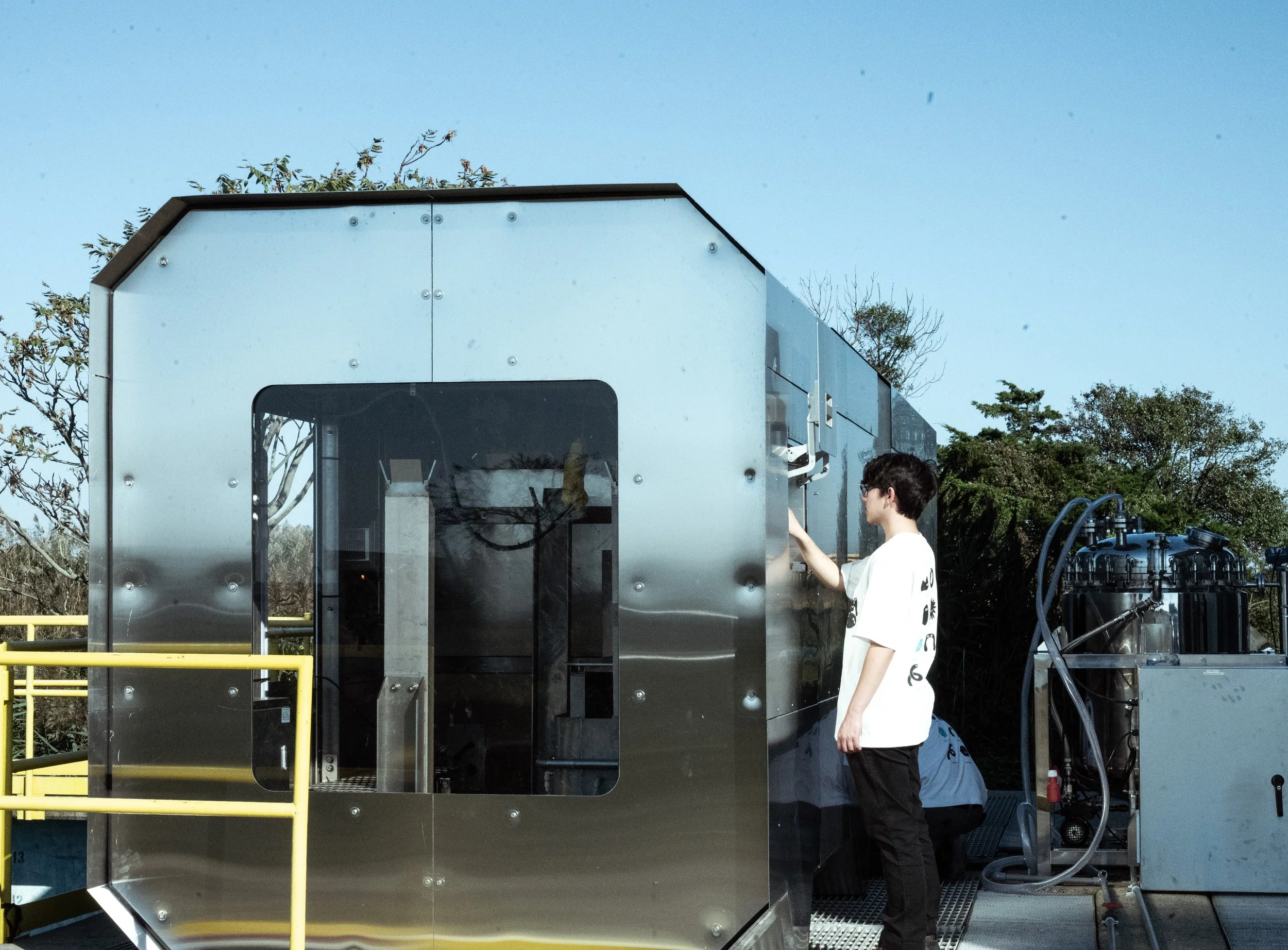
A device inspired by water-shedding leaves is now doing something no wastewater plant in the world has done before it: filtering microplastics out of city sewage at full commercial scale.
- 98% of microplastic particles removed in lab testing
- 90% cheaper to run than competing removal methods, per the company
- 40,000 residents served by the pilot city's wastewater system
- 2 years long is the pilot program now underway in Atlantic County
How a Leaf Inspired a Filter
The system, built by startup PolyGone Systems, mimics hydrophobic plants found in nature — leaves that shed water completely on contact while still snagging tiny particles clinging to its surface. As wastewater moves through the device, that same effect strips out microplastic fragments, which are then collected and sent off for recycling.
PolyGone was founded by two Princeton University graduates, architecture-trained engineers Nathaniel Banks and Yidian Liu, who built the company around a simple complaint: systems exist to collect and recycle large plastic waste, but almost nothing exists to intercept the microscopic plastic fragments already in the water supply.
"I think this really marks a new era for treatment innovation, where we're able to build very large, scalable systems that use a very small amount of material and very low energy to treat very challenging contaminants," said Banks, PolyGone's co-founder and CEO.
Why Atlantic City Said Yes
The Atlantic County Utilities Authority (ACUA) in New Jersey agreed to pilot PolyGone's commercial-scale filtration unit for two years, even though no federal regulation currently requires utilities to remove microplastics from wastewater at all.
That's notable, because most treatment plants nationwide were built to handle human waste, solid matter, and heavy metals — not plastic particles smaller than a grain of sand. Microplastics slip through routine processing and get discharged straight into rivers and oceans.
"We're discharging to the ocean. So, if we're not removing the plastic that's in our wastewater, we're putting it back into the environment," said Matt DeNafo, president of the ACUA. "It's getting into the fish that we're eating, even the water that we're bathing. So, it really becomes an issue for human health."
Laboratory tests on a prototype of the system showed it could strip out 98% of microplastic particles before discharge. The two-year Atlantic City pilot, serving a city of roughly 40,000 people, is designed to prove that efficiency holds up once the device is scaled to full commercial size — something PolyGone says has never been attempted before, according to reporting from WHYY.
What Comes Next
PolyGone isn't stopping at New Jersey. The company already operates a second commercial-scale installation in California, and co-founders Banks and Liu say they're working on scaling the same filtration media down for residential use — potentially letting individual households intercept microplastics from laundry and tap water before they ever reach a treatment plant.
Researchers have now found microplastic particles virtually everywhere they've looked: the bottom of the Mariana Trench, the summit of Mount Everest, and inside human organs ranging from the brain to the placenta. Unlike the localized damage of a coal plant or a single deforested valley, microplastic contamination is already global and still accelerating.
PolyGone's approach won't undo decades of plastic already circulating through the water cycle, but it represents something treatment authorities have lacked until now: a scalable intervention point they can install today, without waiting for Washington to write the rulebook first.