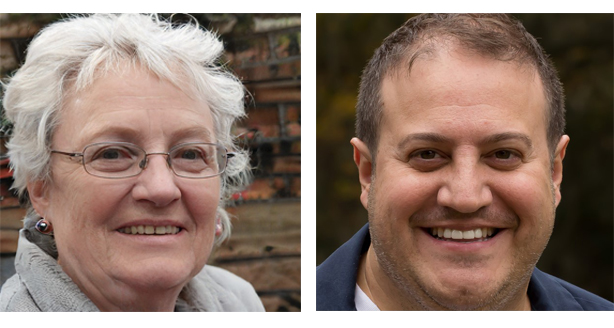
Look at two portraits side by side — one is a real person, one was never alive. Most people guess wrong more often than a coin flip would. Fifteen minutes of training can flip that.
Researchers at the University of Southampton built a short course called DISCERN-AI after finding that AI-generated faces of white people now look so convincing that people rate them as more genuine than real human photos. The training pushed volunteers from below-chance accuracy to reliably above it, and the gain was still there three weeks later.
- 600+ participants tested across multiple experiments
- 15–20 minutes — the total length of the DISCERN-AI training
- 20 days later, a surprise retest showed the improvement had held
- 7,000+ fake AI-profile accounts already found spreading spam on X
Why our instincts get it backwards
"People are surprisingly bad at spotting these hyper-realistic images," said Mansi Pattni, co-lead author and postgraduate researcher at Southampton. "We perform worse than if we were to flip a coin and are more likely to choose fake hyper-realistic faces over real people."
That is because the instincts people rely on point the wrong way. A face that looks proportionate and familiar reads as more human, but those very qualities are often signs it was generated. A memorable, slightly unusual face — the kind that seems more likely to be fake — is actually more likely to be real.
Inside the three-part training
DISCERN-AI is built around correcting exactly those instincts. The first section unlearns the cues that mislead; the second highlights overlooked cues that actually work, like the fact that a flawlessly polished image is the more suspicious one, while a distinctive or slightly odd photo is more likely genuine. The third section tells trainees to ignore red flags they have been taught to trust, such as smooth skin or a warm smile, because neither reliably separates real faces from generated ones.
"The training didn't just make people more sceptical, it improved their ability to correctly identify images and reduced false alarms," said Dr. Tina Seabrooke, the study's co-lead author.
The research, published in Computers in Human Behavior, tested the training across several designs, comparing performance before and after, trained versus untrained groups, and a follow-up test three weeks on. Trained humans still lagged behind specialized detection software, which hit 94% accuracy on the same task, but the gap between people and machines narrowed substantially.
The tool is not public yet; the Southampton team says it plans to put the full course online for anyone to use, a small but concrete defense as AI-generated faces keep showing up in romance scams, election interference and fake social media accounts. Full details are available from the University of Southampton.