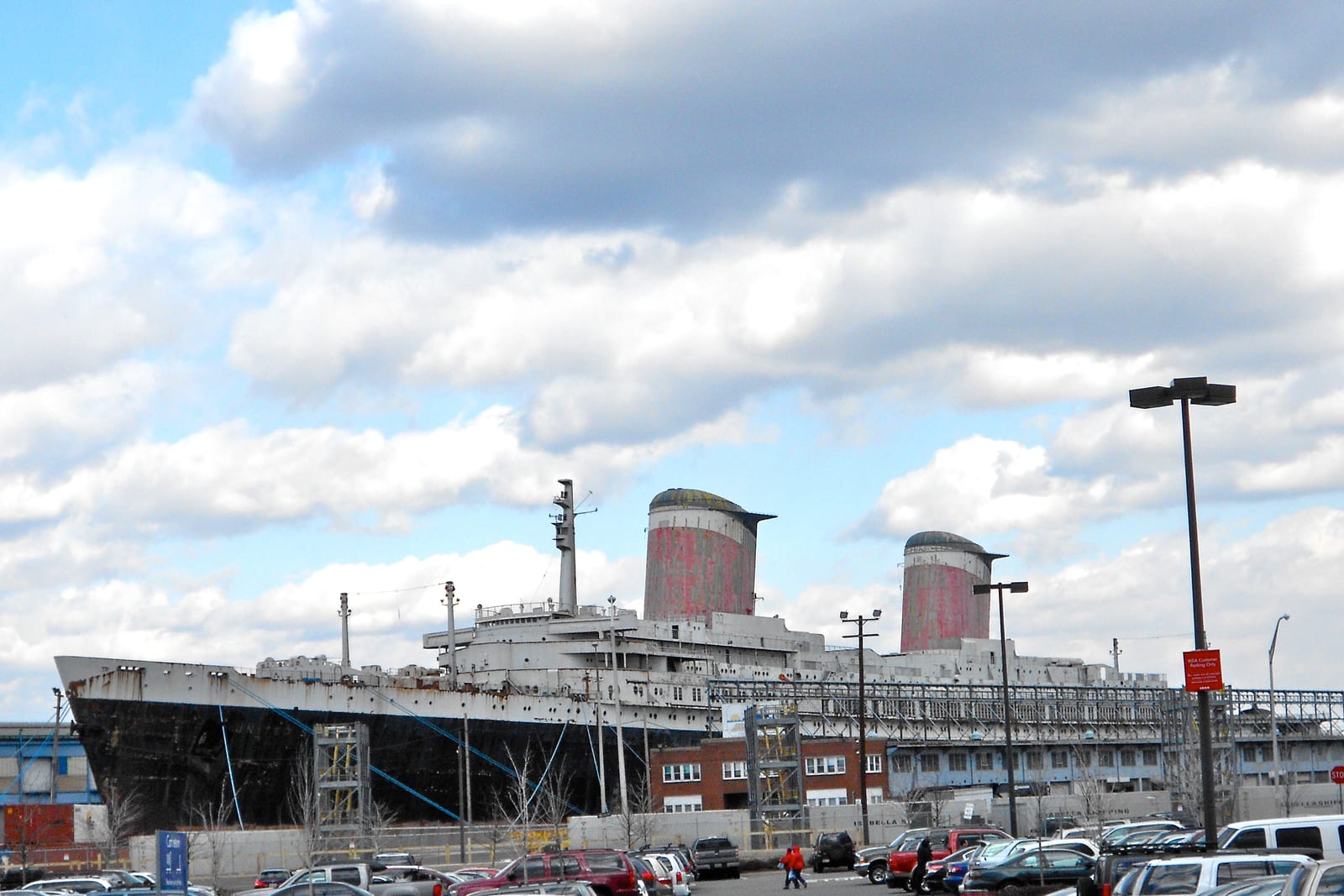
For 70 years she held the transatlantic speed record. Now the SS United States holds a different one: she's the largest ship ever turned into an artificial reef, resting on the Gulf of Mexico floor off Destin, Florida.
- 990 feet long — the full length of the former ocean liner
- November 11, 2026 — the date she was sunk
- $13.5 million spent by Okaloosa County to acquire, clean, and prepare the ship
- 888 feet — the previous record-holder, USS Oriskany, sunk off Pensacola in 2006
Why a 1950s ocean liner needed a new home
The SS United States launched in 1952 and still holds the record for the fastest transatlantic crossing by a passenger ship, a title that has stood unbroken since her maiden voyage more than seven decades ago. Built with Cold War-era backup funding from the U.S. Navy, she was designed to be converted into a troop transport if needed, which is part of why her hull was built so massively oversized for a civilian liner.
She was retired from service in 1969 and sat empty, first in Norfolk and later at a Philadelphia pier, for more than 50 years while preservation groups tried and failed to raise the money needed to restore her for museum or hotel use. No buyer could find the tens of millions of dollars required. Full history is documented on Wikipedia's entry for the ship.
Okaloosa County, on Florida's panhandle, offered a different kind of second life. Rather than scrap the vessel for materials, the county purchased her outright with the specific goal of sinking her to create marine habitat and a world-class dive attraction for the Destin-Fort Walton Beach area.
From ocean liner to ocean habitat
Crews spent months stripping the vessel of fuel, wiring, insulation, and anything else that could pollute Gulf waters before towing her out to the reefing site roughly 20 nautical miles offshore. Once a steel hull that size settles onto open sand, it becomes instant vertical structure for coral, sponges, and fish that would otherwise take centuries to colonize a featureless seabed.
That's exactly what happened to the previous record holder. The USS Oriskany, an 888-foot decommissioned aircraft carrier sunk off Pensacola in 2006, is now one of the most-visited wreck-diving sites in the country and a thriving artificial reef system, according to naval history records). The SS United States, more than 100 feet longer, is expected to dwarf it in surface area for marine growth.
The ship that once carried presidents, movie stars, and immigrants across the Atlantic faster than any other vessel now carries a new title: the largest artificial reef on Earth.
What divers and marine life get next
Okaloosa County has marketed the project as both an ecological investment and a tourism driver, positioning the region as a new hub for wreck diving alongside its existing beaches. Reef-building fish populations typically establish within the first few months after a sinking, with slower-growing coral and sponge communities following over the next several years.
Local dive operators expect the wreck to draw visitors from well beyond Florida once it's accessible to recreational divers, following the same trajectory that turned the Oriskany into a bucket-list destination. For a ship that spent more than half a century as an unresolved piece of maritime history, the outcome offers an unusually clean ending. She still holds a speed record set in 1952. She now holds a size record too — just underwater, instead of across the open ocean.