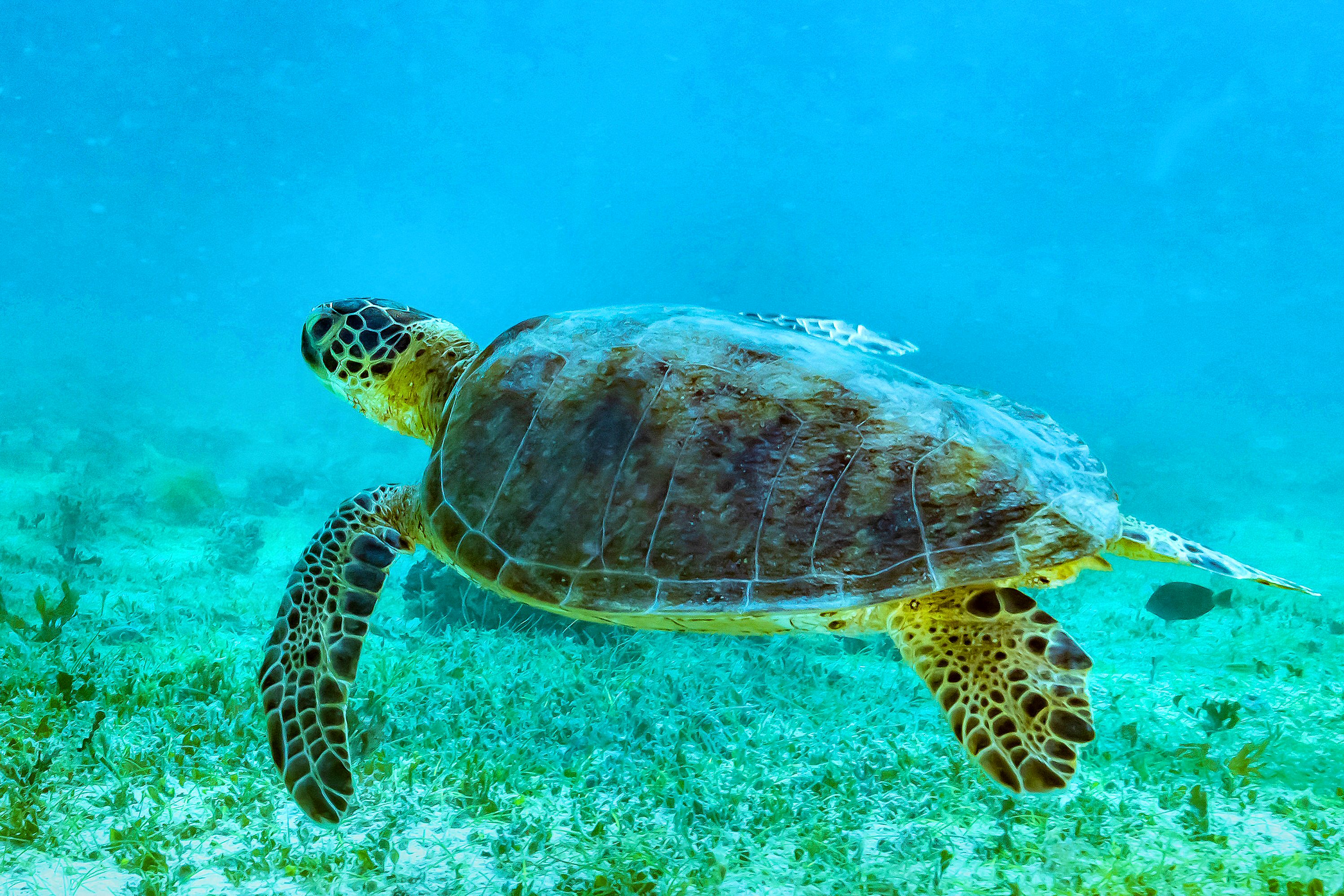
Green sea turtles have just become the first marine turtle species in history to climb all the way out of the "Endangered" category on the world's most authoritative wildlife list — skipping past the intermediate rankings entirely.
- 1st marine turtle species ever reclassified from Endangered straight to Least Concern
- 80+ nesting countries involved in the coordinated recovery effort
- 50+ years of sustained protection behind the turnaround
- 28% overall population increase recorded across much of the species' range
A rare leap, not a small step
The IUCN Red List, the global reference for extinction risk, usually moves species one category at a time as populations shift. Green sea turtles (Chelonia mydas) instead jumped straight from Endangered to Least Concern, a reassessment described by the IUCN Marine Turtle Specialist Group as reflecting genuinely large-scale recovery rather than a technicality.
Brendan Godley, who chairs the specialist group, called the news encouraging after decades of grim turtle headlines. The milestone is now one of the centerpiece recovery stories in WWF's newly released 2026 Living Planet Report, published October 7, which tracks wildlife trends across nearly 36,000 monitored populations worldwide.
What five decades of work actually looked like
There was no single fix. The recovery stacked up gradually, nesting-beach by nesting-beach, across more than 80 countries with green turtle populations.
Conservation groups and governments protected nesting females and their eggs from poaching, managed beachfront lighting that otherwise disorients hatchlings heading for the surf, and pushed fishing fleets to adopt turtle excluder devices — simple escape hatches built into shrimp trawl nets that let turtles swim free instead of drowning.
"The recovery reflects 50-plus years of coordinated work across roughly 80 nesting countries."
That is how WWF's Living Planet Report summarizes the turnaround — not a single policy, but a sustained, multi-decade campaign repeated at thousands of individual beaches and in thousands of individual boats.
Part of a wider pattern of comebacks
The turtle recovery isn't an isolated case in the new report. WWF highlights three other species-level turnarounds alongside it: wild tiger numbers have climbed from roughly 3,200 in 2010 to about 5,700 by 2025, a gain of more than 70% driven by anti-poaching enforcement and cross-border trafficking crackdowns. Atlantic and Pacific bluefin tuna, once fished down to a fraction of historic levels, are no longer classified as overfished after science-based catch limits took hold. And in parts of southern Africa, elephant populations are growing where local communities hold direct legal stakes in managing the land.
The common thread, according to the report's authors, is that recovery is never automatic — it shows up only where specific protections were funded, enforced, and sustained for long enough to matter.
The gains are real, but not finished
The global downlisting does not mean every green turtle population is thriving equally. Ximena Barrera, WWF's head of wildlife policy, has cautioned that regional populations in the Central South Pacific and North Indian Ocean remain under real threat, and groups like the Olive Ridley Project have stressed that "conservation challenges remain" even as the species-wide number improves.
The species' recovery is also explicitly described as "conservation dependent" — remove nesting-beach protections or excluder device requirements, and the gains could reverse. For now, though, green turtles sit alongside recovering tiger and bluefin tuna populations as evidence, in WWF's words, that targeted, sustained conservation funding produces measurable results even against a backdrop of global biodiversity decline.
For scientists who have spent careers logging turtle nests one by one, the reclassification is the rare kind of data point that turns decades of unglamorous fieldwork into a headline worth celebrating.