Engineers didn't truck in a single load of new material to build seven islands on the Mississippi River — they just stopped treating the sand they were already dredging as waste.
- 500,000 cubic yards of river sand dredged and reused as island material
- 7 new islands built inside McGregor Lake
- 270+ acres of aquatic habitat restored
- $25 million total project cost over six years
- 22 acres of wetlands protected from erosion
Turning Dredge Spoil Into Habitat
McGregor Lake is a 200-acre backwater lake in Pool 10 of the Mississippi River, tucked inside the Upper Mississippi River National Wildlife and Fish Refuge near Prairie du Chien, Wisconsin, and Marquette, Iowa. The U.S. Army Corps of Engineers has to dredge sand out of the river's navigation channel there regardless, just to keep barge traffic moving. For decades, that sand was simply disposed of elsewhere.
The McGregor Lake Habitat Rehabilitation and Enhancement Project, which broke ground in 2020 and wrapped this fall, flipped that approach. Crews piled 500,000 cubic yards of that same dredged sand into seven new islands instead, using it to rebuild eroding shoreline rather than hauling it away.
Construction crews dredged 500,000 cubic yards of clean river sand straight from the Mississippi's navigation channel — material that would otherwise have simply been disposed of — to build the islands from the ground up, according to the U.S. Army Corps of Engineers, St. Paul District.
What the Islands Protect
The new islands and five accompanying rock features now shield more than a mile of shoreline from erosion, while dredging also cleared 35 acres of backwater habitat to give fish a deeper place to overwinter. In total, the project improved more than 270 acres of aquatic habitat, enhanced 45 acres of floodplain forest, and protected 22 acres of wetlands that had been steadily washing away.
That matters because the forests lining this stretch of river corridor support migrating songbirds, nesting bald eagles, herons, and kingfishers. Backwater lakes like McGregor are exactly the kind of slow-water habitat those species — and the fish beneath them — depend on, and exactly the kind of habitat that erosion and sedimentation have been quietly eating away at for years.
A Model Already Being Repeated
McGregor Lake is one piece of the Corps' broader Upper Mississippi River Restoration Program, which has used similar island-building techniques at other backwater lakes along the river. The approach only works because the Corps already has to dredge the channel for navigation — pairing that unavoidable maintenance work with habitat construction turns a standing cost into a conservation win at no extra sourcing expense.
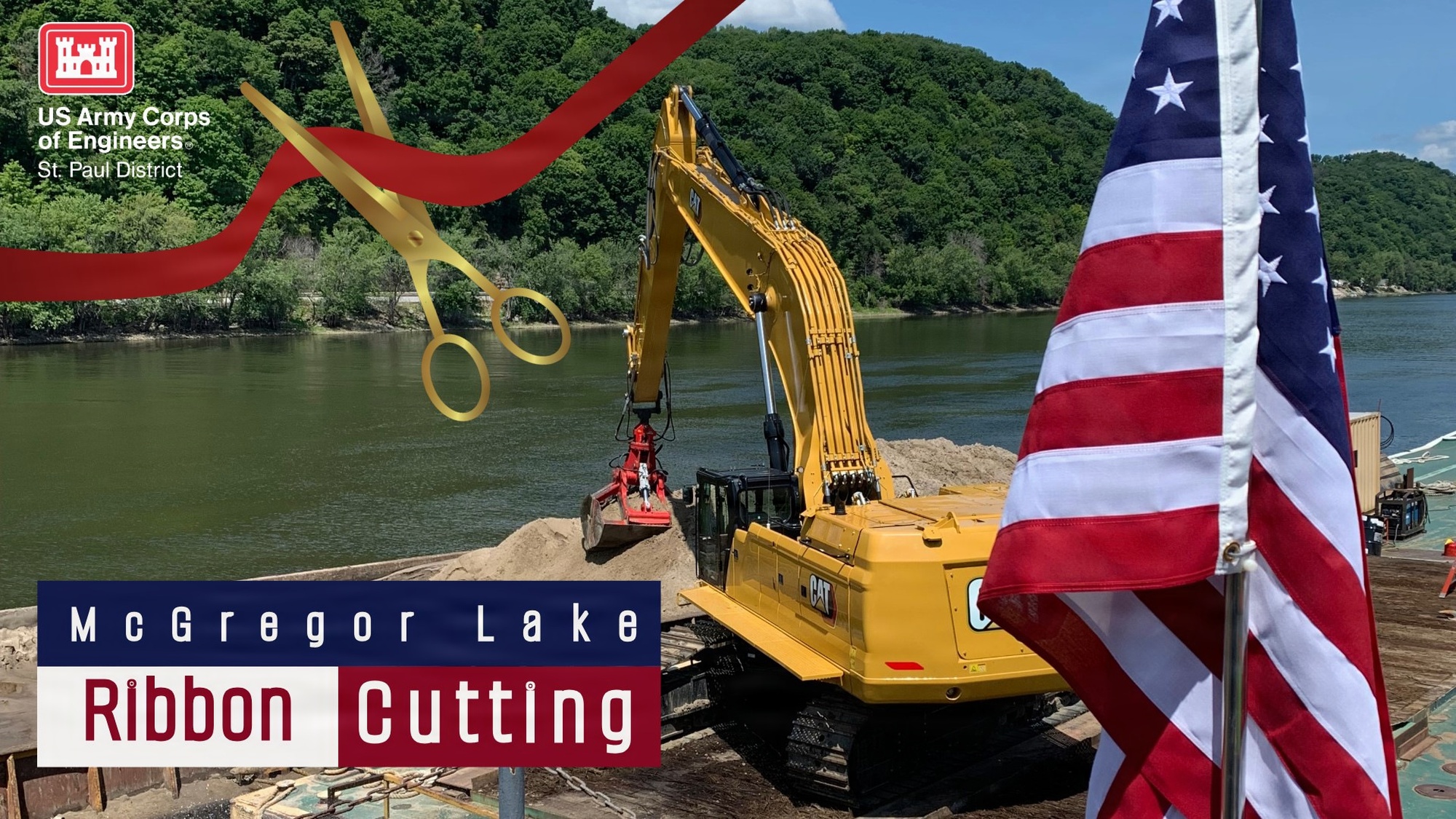
The project reached completion with a ribbon-cutting at the Marquette Marina in September, marking the close of a build that started with barges, excavators, and a simple question: instead of asking where to put river sand nobody wanted, what if the answer was "an island"? Six years and half a million cubic yards later, the Mississippi River has seven new ones, and the fish, birds, and wetlands around McGregor Lake have room to spread out.