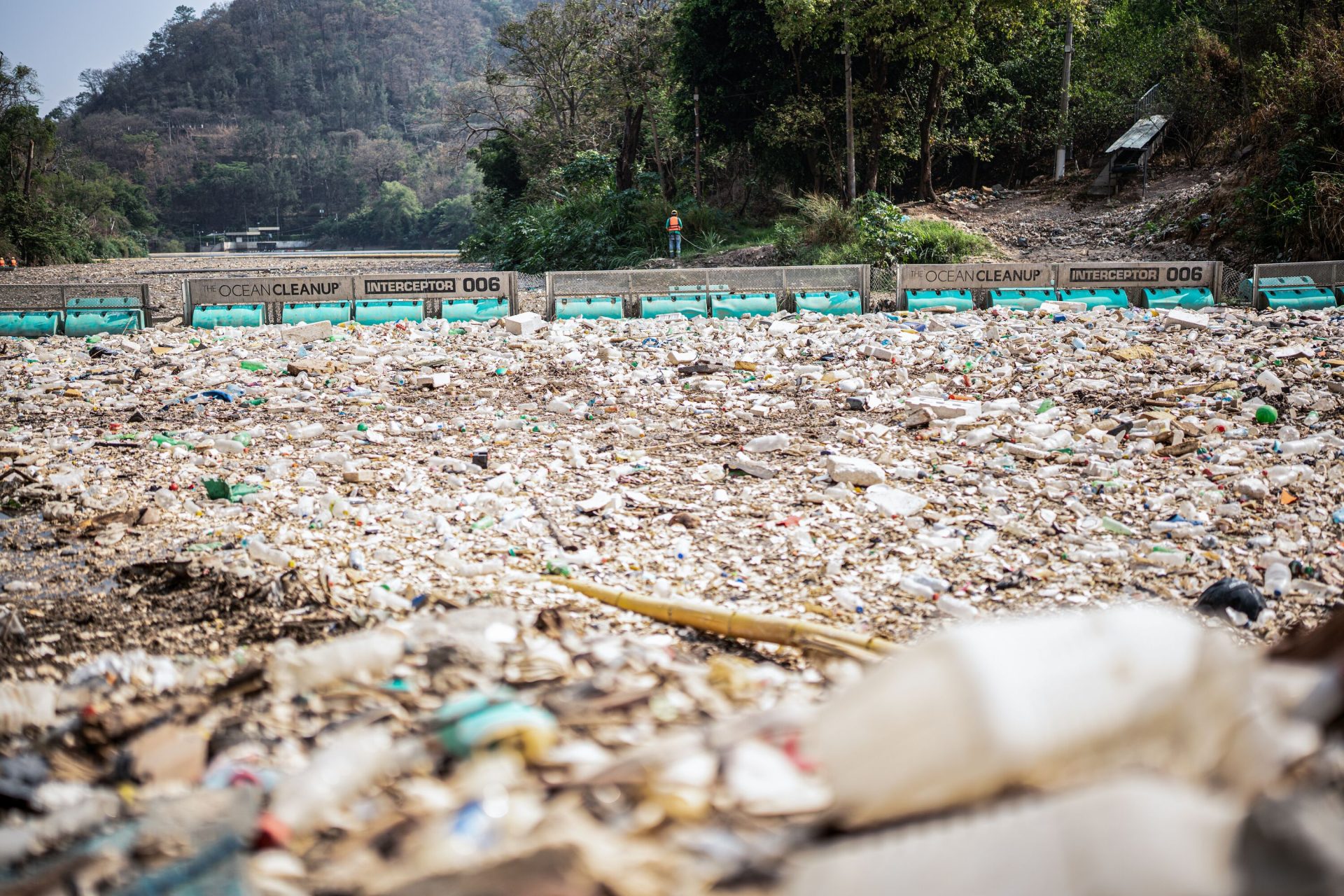
One flash flood, one river barrier, and 231 tons of plastic bottles, styrofoam, and debris that never made it to the Caribbean Sea.
- 463,000+ pounds of trash stopped in a single catch (over 210,000 kg)
- 231 tons — what that weight works out to
- 11th Interceptor deployment for The Ocean Cleanup worldwide
- 1 river system, the Rio Las Vacas, that feeds directly into the Rio Motagua and then the Gulf of Honduras
Why one river can carry so much trash
The Ocean Cleanup posted video of the catch from Interceptor 006, its barrier system installed on the Rio Las Vacas near Guatemala City. During the region's rainy season, which runs roughly May through October, flash floods wash huge volumes of plastic and other waste out of Guatemala City and surrounding communities and straight into the river network.
The Rio Las Vacas empties into the Rio Motagua, one of the most heavily polluted rivers on the continent, which in turn carries debris to the Gulf of Honduras and the wider Caribbean. Catching the trash at Las Vacas means intercepting it near the source, before it has traveled far enough to break down into microplastics that are far harder — and far more expensive — to remove.
What the barricade actually does
Interceptor 006 is a floating barrier system, not a boat or a net that has to be actively operated. It sits across the river and lets water pass while trapping solid debris against the barrier, where it accumulates until crews can bring in excavators to haul it out. The Ocean Cleanup calls the current design the "Interceptor Barricade," an upgrade built after an earlier barrier at the same site was damaged by the force of a 2022 flash flood.
"During Guatemala's rainy season, flash floods wash down vast quantities of plastic and other waste from nearby Guatemala City and the surrounding area," The Ocean Cleanup said of the catch.
Prevention over open-ocean cleanup
The broader strategy behind Interceptors is to target chokepoints — specific rivers responsible for an outsized share of ocean plastic — rather than trying to collect debris once it has scattered across open water. The Ocean Cleanup has now deployed the technology in rivers across multiple continents as part of that river-first approach, with Rio Las Vacas serving as one of its most heavily tested sites.
The environmental case for stopping trash upstream is straightforward: debris left in waterways clogs channels, degrades local water quality, and eventually threatens marine animals and coastal communities once it reaches open water. A catch of this size, pulled out before a single flood cycle finished, is the kind of bulk removal that downstream beach cleanups can rarely match.
The job in Guatemala isn't finished — this is one catch in an ongoing, seasonal fight against a river system that keeps generating more debris every time it rains hard. But each barricade catch is 463,000 pounds that a beach, a fishing boat, or a sea turtle somewhere in the Caribbean will never have to deal with.


