Four years ago, village elders in Angola's remote southeastern highlands walked up to a conservation scientist with an unusual request: help us turn our own hunters into guardians.
Today, 75 veteran hunters patrol that landscape as official "Watchers," carrying camera traps and smartphones alongside their traditional knowledge of the bush, and local leaders plan to grow that number to 100.
- 75 community Watchers currently patrol the landscape, with a goal of 100
- 150,000 km² (58,000 sq mi) of miombo woodland, lakes and peatlands now under watch
- 50,000+ km² of that territory was just designated a wetland of international importance
- 4 years since the program began
From poachers to protectors
The elders had noticed a problem. Outsiders were arriving to hunt bushmeat without permission from local chiefs, ignoring traditional rules on where, when and how much wildlife could be taken. Some even recruited locals to hunt on their behalf.
"They asked for help to reinforce the traditional ways," said Kerllen Costa, Angola director of the National Geographic Okavango Wilderness Project and co-founder of the conservation group Fundação Lisima.
Each village across the landscape nominated one trusted hunter to serve as a Watcher. Their patch is called Lisima Lya Mwono — "the source of life" in the local Luchaze language — a sprawling expanse of woodland, lakes and peatlands in Angola's Moxico province.
Those wetlands aren't just locally important. They feed the Cuito and Cuando rivers, which in turn supply Botswana's Okavango Delta and the Zambezi, Africa's fourth-longest river and a water source for millions of people across the region.
What the camera traps found
Equipped with smartphones, the Watchers record the coordinates of hunting camps, photograph the condition of source lakes and surrounding forest, and send audio reports in their own language whenever they spot illegal hunting or out-of-season fires.
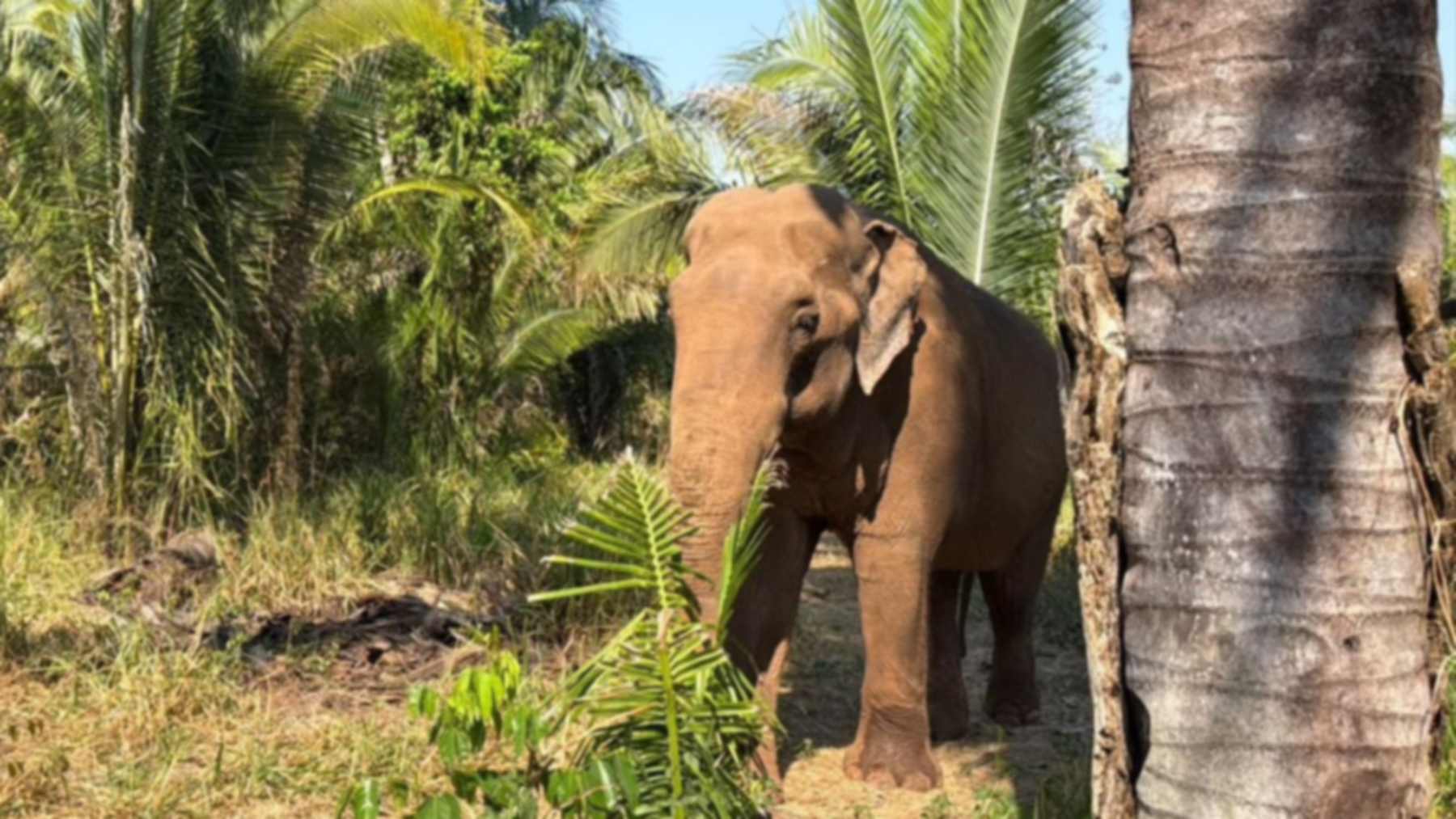
Their camera traps have documented a remarkable cast of wildlife moving through the landscape: roan antelope, common duiker, the marsh-dwelling sitatunga, and predators including lions, leopards, cheetahs and African wild dogs. One team has even set up a high-definition trap in a remote corner of Moxico province hoping to document a rumored population of "ghost elephants."
"This is basically trying to show the world that these forests are as pristine as they are because of the way the people live and the traditions that they have," Costa said.
More than 50,000 square kilometers of the Lisima landscape was recently designated a wetland of international importance under the Ramsar Convention — though it still lacks formal protection under Angolan law, leaving the Watcher network as the de facto frontline for now.
Why a veteran hunter's eye still matters
Among the Watchers, Costa points to António Luhoke as a standout example of how deep local ecological knowledge outperforms outside expertise. Luhoke can identify seven distinct woodland types within the miombo biome that most Western-trained scientists would struggle to tell apart.
Fire is part of that knowledge system too. Communities have "co-evolved" with it, using controlled burns for farming, hunting and grass regeneration, according to environmental scientist Luisa Escobar-Alvarado, who studies historical fire use in the region and is helping develop a science-based fire management plan with local partners.
The bigger long-term risk, Costa argues, isn't fire at all — it's unmanaged agricultural expansion by outside actors. That is why the next priority is building livelihood systems communities can run themselves, so stewardship of Lisima stays firmly in local hands.
Read the full reporting at Mongabay, and learn more about the new designation through the Ramsar Convention on Wetlands.