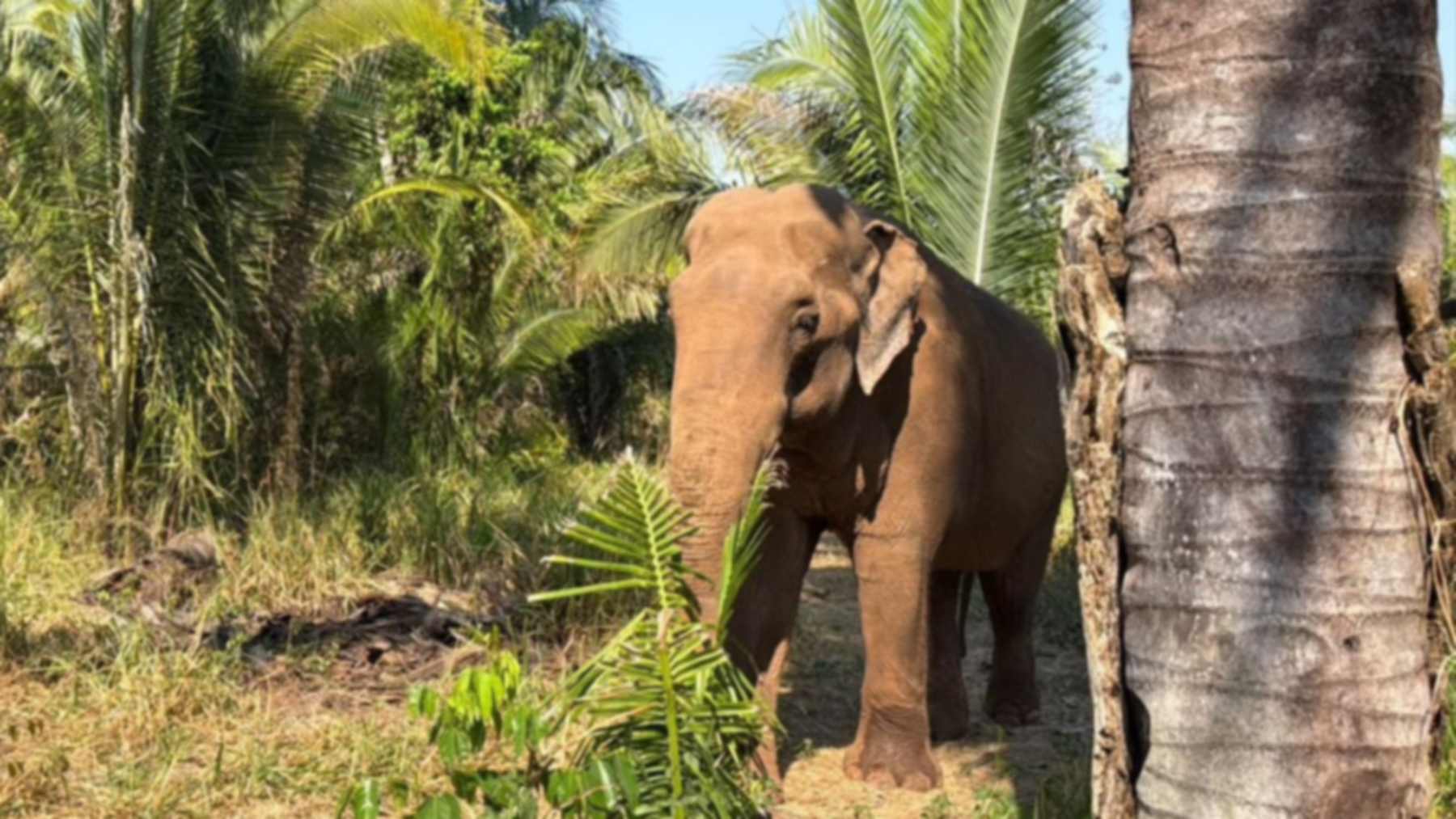
Sandro spent 16 hours a night for 44 years in a barn stall only inches taller than he stood. On September 18, 2026, the roughly 54-year-old Asian elephant walked out of a transport crate in Mato Grosso, Brazil — and by his second night in his new home, he skipped the barn entirely and slept outdoors under the stars.
- 44 years Sandro spent at the Sorocaba Zoo in São Paulo state
- 1,000+ miles covered on the 2½-day journey to his new home
- 13 acres of forest, mud wallows and ponds now his to roam
- 5 seconds — how long it took him to walk into his new yard
A Circus Calf, Then Four Decades in a Barn
Sandro was captured in Asia as a baby in 1971. He passed through a Dutch zoo and a traveling circus before arriving at Sorocaba's Quinzinho de Barros Municipal Zoo in 1982, according to the sanctuary's rescue page. A female elephant, Haisa, joined him in 1995; after she died in 2020, Sandro lived alone.
Global Sanctuary for Elephants, the U.S. nonprofit behind Elephant Sanctuary Brazil, says Sandro's enclosure left him just inches of headroom at night. A prosecutor recommended his relocation in 2020, and the city fought the move in court for years before a three-judge panel unanimously ruled in the sanctuary's favor.
The Move: No Sedation, Three Cameras
The crate entered Sandro's old enclosure on September 11, and he stepped inside within minutes once given access. Before dawn on September 16, a crane and flatbed truck arrived; protesters blocked the road, and security escorted the convoy through.
Scott Blais, co-founder of Global Sanctuary for Elephants, said his team does not sedate elephants for transport and used three cameras to monitor Sandro throughout the drive. When the crate door finally opened at the sanctuary, Sandro had his feet on the ground in under 30 seconds.
"I blinked. It was out." — Scott Blais, co-founder, Global Sanctuary for Elephants
Learning to Be an Elephant Again
Within days, Sandro was grazing independently and navigating hills on his own. On October 9, caregivers reported he'd knocked down his first small tree — the kind of ordinary elephant behavior he'd had no room for in decades. Around the same time, he let out a soft rumble during a night feed, another first his caregivers had never heard from him.
The good days come with a long medical list. On his sanctuary profile, the nonprofit describes Sandro as a geriatric elephant whose health issues were "never been adequately investigated," with particular concern about his back right foot and weak leg muscle from decades of limited movement. Nobody is certain how many teeth he has left, so his food is chopped fine or cooked for now.
Training relies entirely on positive reinforcement — rewarding him with food for small, voluntary steps like lifting a foot. At the zoo, caregivers placed food in his trunk but never touched him directly; building the trust needed for basic veterinary exams will take time.
Sandro is the first male elephant to live at the Brazilian sanctuary, joining a growing network of rescued elephants finally given space most never had. His caregivers say every milestone — a toppled tree, a rumble, a night spent outside — marks a step toward an old elephant finally getting to behave like one.


