Nearly every female and juvenile Pacific walrus left on Earth now has one place they can always come home to — and it can never be paved, drilled, or developed.
- 47,000 acres (74 square miles) of Alaska coastline now permanently protected
- 200,000 walrus have hauled out on the islands in a single season
- 10 years it took a coalition of conservationists and Alaska Native partners to close the deal
- 2007 the year walrus first began mass-hauling at Point Lay as sea ice thinned
Why the walrus came ashore
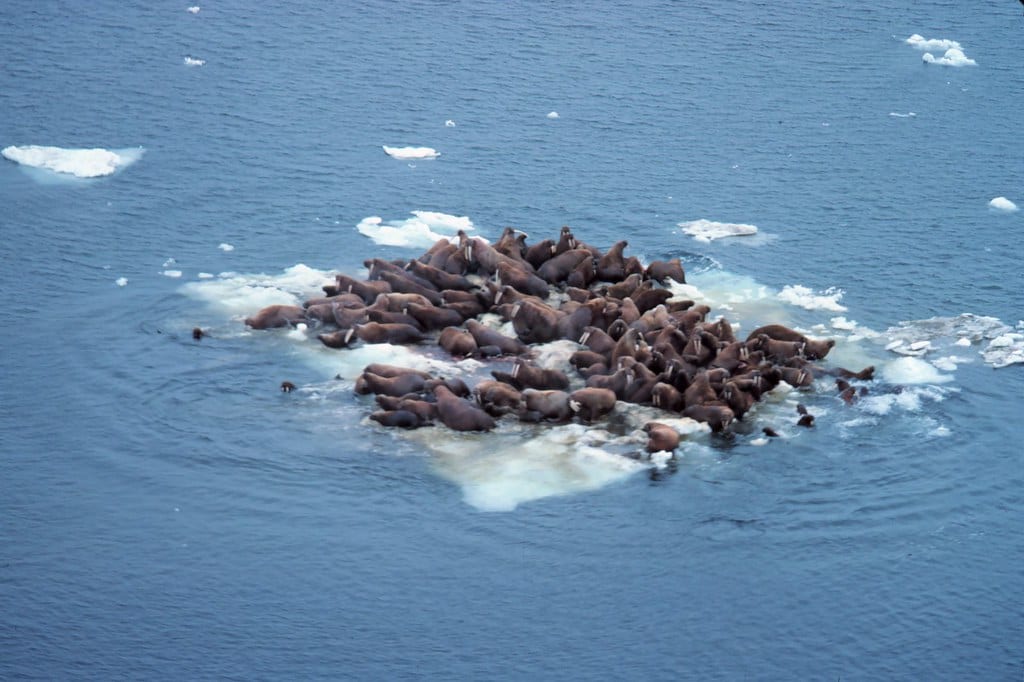
Pacific walrus traditionally rested on floating Arctic sea ice during their summer migration between the Bering and Chukchi seas. Females and their calves would ride the ice north each year, using it as a floating nursery while diving to feed on clams and mussels on the seafloor below.
That strategy began failing around 2007, when Arctic sea ice grew too thin and unpredictable to reliably support them. Walrus adapted by hauling themselves onto the barrier islands near Point Lay, a small village on Alaska's northwest coast. In one record year, an estimated 200,000 walrus crowded onto those beaches at once — and they've returned every year since, making it the largest known concentration of the species in North America.
A decade of negotiation pays off
The Conservation Fund led the coalition that spent 10 years working alongside Alaska Native corporations and tribal partners to secure permanent protection for the barrier islands and the adjoining Kasegaluk Lagoon — one of the largest undisturbed coastal lagoon systems left anywhere in the world.
The new conservation easement was purchased from Cully Corp., an Alaska Native corporation, and will be held and actively monitored by the Interior Alaska Land Trust. That means increased on-the-ground stewardship aimed at preventing human disturbance, including the stampede events that have occasionally been triggered in the past by low-flying aircraft or boats venturing too close to resting herds.
Subsistence hunting and cultural traditions on the land remain protected under the agreement, consistent with how the U.S. Fish and Wildlife Service describes co-stewardship arrangements across the species' Arctic range.
"The sea ice may not come back, but on this stretch of Arctic coast, walrus will always have somewhere to rest along their profoundly changed migration."
What "permanent" actually means here
Unlike a park designation that a future administration could weaken or reverse, a conservation easement is a binding legal agreement attached to the land itself. It restricts industrial development and large-scale disturbance no matter who owns or governs the property down the road.
That distinction matters because commercial shipping and tourism traffic through the Alaskan Arctic are both expected to keep climbing as retreating sea ice opens shipping routes that didn't exist a generation ago. Without a permanent buffer, the very same pressures that pushed walrus onto land in the first place could eventually crowd them off it too.
For now, the herds at Point Lay have something the ocean can no longer guarantee them: solid, protected ground to rest, nurse their calves, and wait out the open-water months between migrations — regardless of how much further the Arctic changes around them.