South Florida's wading birds just posted their best nesting season in recorded history, and the federally threatened American crocodile is quietly rebounding alongside them, as decades of Everglades restoration finally start paying off.
- 138,834 wading bird nests counted in South Florida in 2018, the most since surveys began in 1995
- $29.8 billion projected 2026-dollar cost of the 50-year Comprehensive Everglades Restoration Plan
- 10x more water now flows under Tamiami Trail bridges than in 2015
- 80 years since waterfowl returned to Florida Bay's coastal lakes in these numbers
Nest Counts Tell the Story
Avian ecologist Mark Ian Cook surveys the coastal Everglades by helicopter roughly every two weeks during nesting season, photographing colonies too large to count from the ground. He tracks how wading birds respond to the Comprehensive Everglades Restoration Plan (CERP), the federal-state effort authorized by Congress in 2000 to restore freshwater flow to the southern Everglades and Florida Bay.
In the 1930s, the region held more than 200,000 nests before canals and levees cut off freshwater and coastal nesting collapsed. After Hurricane Irma sent heavy rain through the system in 2017, South Florida recorded 138,834 wading bird nests the following year, according to the South Florida Wading Bird Report that Cook edits. Nests topped 100,000 again in 2021.
Crocodiles and Flamingos Respond
American crocodile populations are increasing as restored freshwater creates the brackish conditions young crocodiles need before they develop salt glands as adults. American flamingos, hunted out of Florida more than a century ago, are returning as wintering birds for the first time in generations, even though they haven't yet nested.
In 2024, tens of thousands of waterfowl, including blue-winged teal and lesser scaup, returned to the bay's coastal lakes in concentrations not seen in roughly 80 years.
"The response was just amazing. The wading birds came back in really high numbers." — Mark Ian Cook, Everglades avian ecologist
The Bottleneck Still Ahead
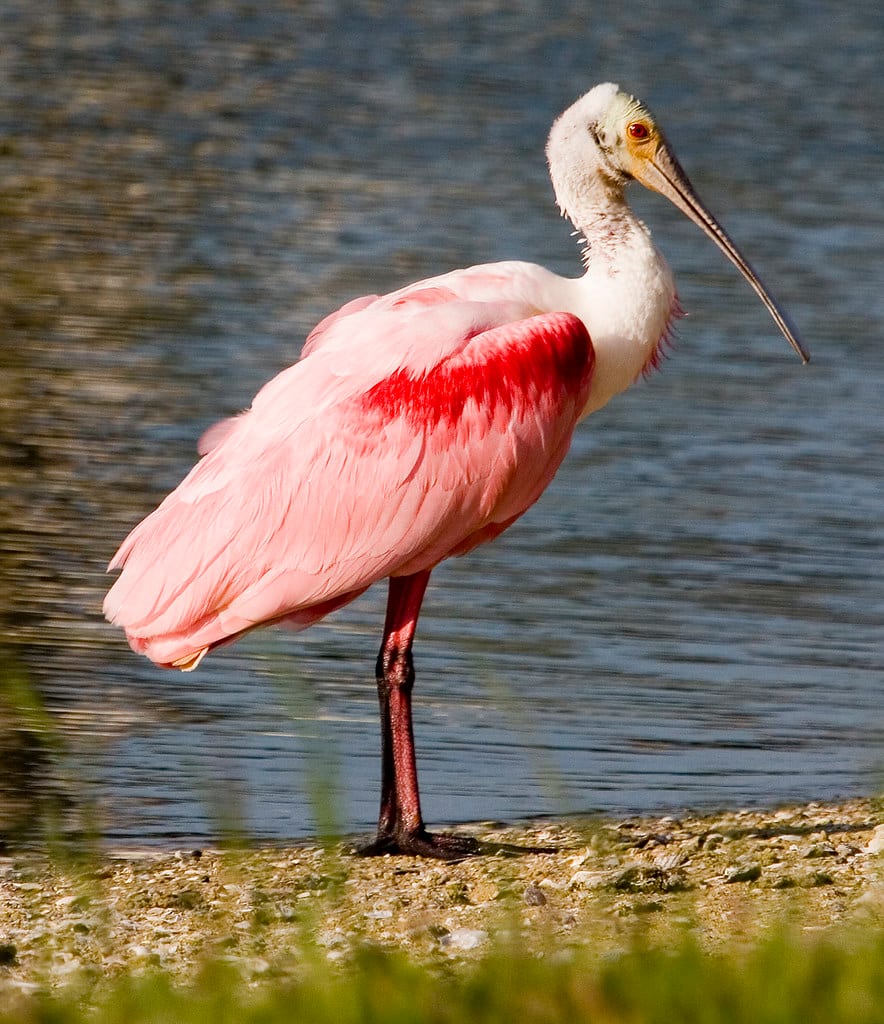
Progress hasn't been linear. After the strong 2018 and 2021 seasons, wading bird nesting declined for several consecutive years, and a severe 2025–2026 drought pushed nesting in Everglades National Park to its lowest level in roughly 30 years. Rising seas have also cut Florida Bay's roseate spoonbill nests from about 400 in 2012 to 157 in 2022, even as the species opens new colonies farther north.
Water storage remains the central bottleneck. Without enough capacity to hold Lake Okeechobee's excess water, managers still release much of it to nearby coastal estuaries rather than south toward the bay. The Everglades Agricultural Area Reservoir, built to fix that, isn't due for completion until 2029.
Even so, new bridges along the Tamiami Trail — a highway that for decades blocked water from reaching Everglades National Park — are already making a measurable difference: about ten times more water flowed beneath the road from January through July 2026 than over the same months in 2015, despite a harsher drought. For a restoration plan expected to run another few decades, that is the kind of incremental, bird-counted progress its backers are counting on.