Put plants directly beneath solar panels and, counterintuitively, the panels work better. A year-long study on a rooftop in Western Sydney just proved it at scale.
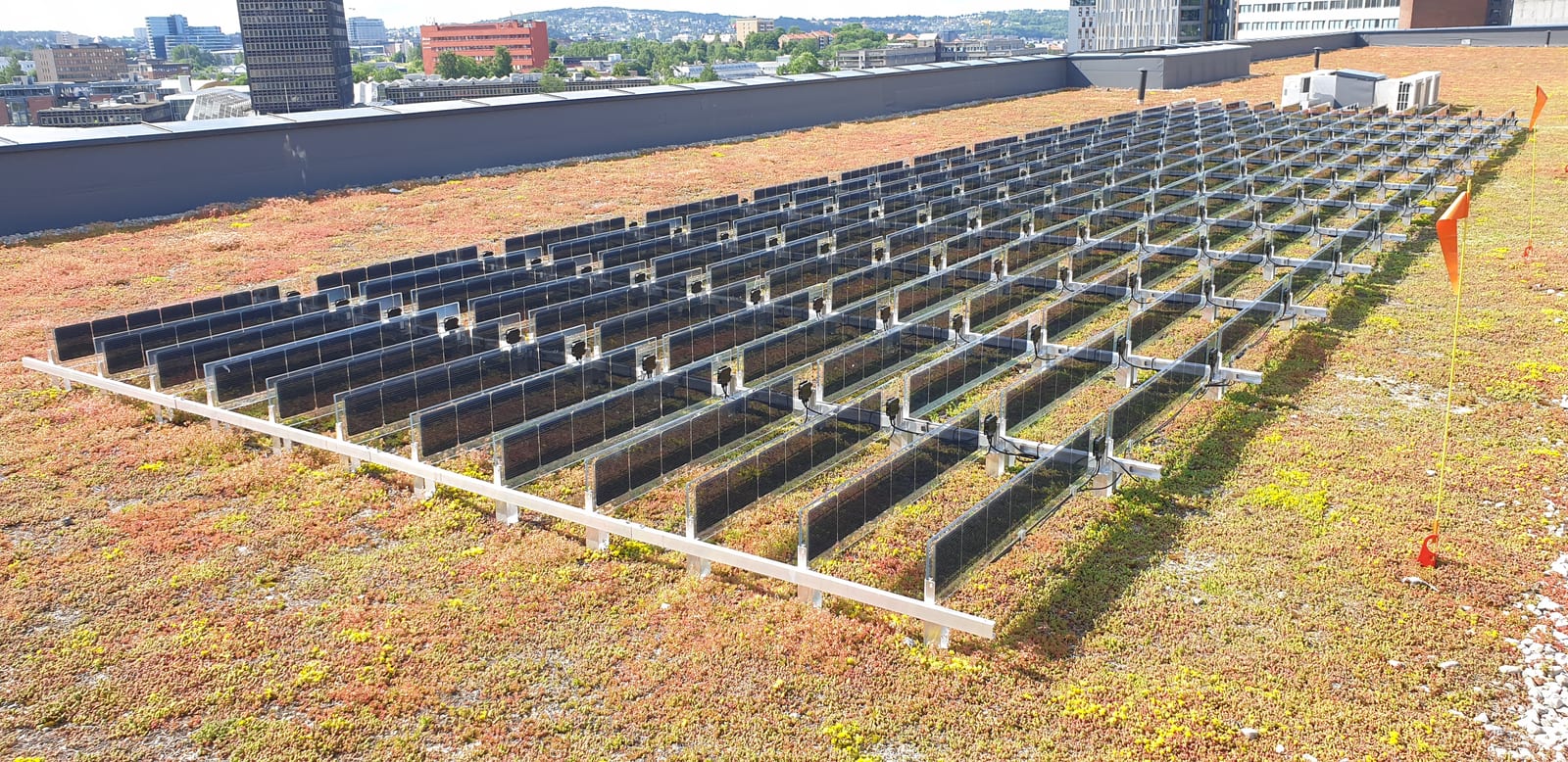
- 319 solar panels installed over 14,000+ native plants
- 11.1% average electricity gain over a conventional roof across summer 2025
- 23.25% peak gain during extreme-heat events
- 39 species of birds, insects, mammals and gastropods recorded on the roof
The research, led by University of Technology Sydney (UTS) Associate Professor Peter Irga in partnership with the Bradfield Development Authority, tracked the "biosolar" roof of the First Building — the inaugural structure at Bradfield, billed as Australia's first new city in a century, being built in Western Sydney's aerotropolis.
Why plants make solar panels more efficient
Solar panels lose efficiency fast once they overheat: output drops by roughly 2% for every degree above 25°C. The UTS team's fix was to put 319 north-facing panels directly above a thick bed of native vegetation covering 30% of the building's 1,300 square-metre roof.
As the plants release moisture through evapotranspiration, they cool the air around the panels — and the hotter the day gets, the harder that cooling effect works. "The hotter the day, the harder the plants work to moderate the building's microclimate and keep the solar panels operating efficiently," Irga said, describing the effect researchers measured as highly dynamic and temperature-dependent.
Comparing the biosolar roof directly against a conventional solar array over the 2025 summer, the team found an average output gain of 11.1% — equivalent to an extra 0.24 kWh per panel per day — rising to 23.25% on the highest-irradiance days, exactly when panels usually struggle most.
More than just power generation
"The question is no longer if it works, but how quickly we can make biosolar the new standard," Irga said.
The roof's benefits extended well past electricity. On the hottest days, the biosolar surface ran up to 28°C cooler than a bare aluminium roof. Its drainage and irrigation system retained an average of 73% of rainfall, and the plant layer filtered out more than 90% of key air and water pollutants passing through it.
That combination of cooling, water retention and pollution filtering is exactly the kind of multi-benefit case cities have struggled to prove with hard numbers — which is why the research findings, published via pv magazine, are already shaping policy well beyond one rooftop.
One building, a citywide mandate
Bradfield's own master plan now requires that 80% of suitable roof space across the entire development incorporate green or biosolar roofs — meaning the First Building's rooftop isn't a one-off demonstration, it's the template for everything built after it.
"Bradfield City presents a once-in-a-generation opportunity to embed sustainable solutions from the outset in Australia's first new city in a century," said Bradfield Development Authority CEO Ken Morrison. "These outstanding results demonstrate what can be achieved when sustainability is integrated from day one."
For a sector that has historically treated rooftop greenery and rooftop solar as competing uses of the same limited space, the Bradfield data offers a rare case where combining them beat doing either alone. Further technical coverage of the study is available via Tech Xplore.
With 80% of Bradfield's future roofs now committed to the same model, the next real test is whether other fast-growing cities adopt it before their own buildings go up.