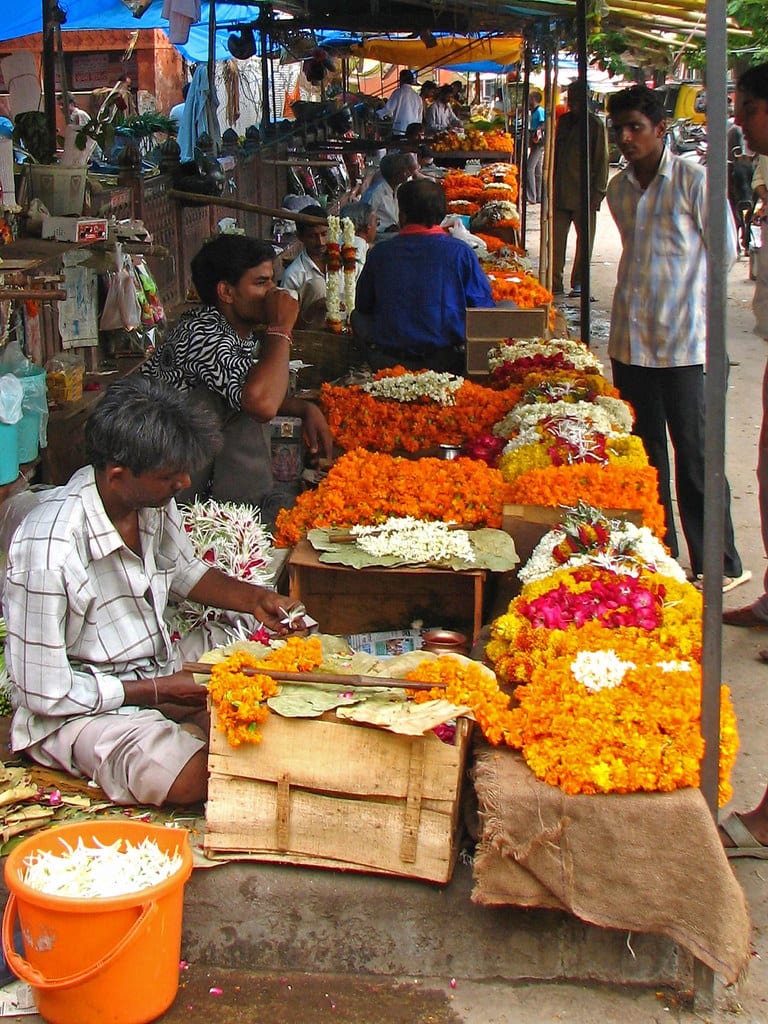
Every day, Indian temples throw away tons of flowers used in worship — and until recently, most of it ended up rotting in the Ganges. One startup figured out how to turn that waste into a material that behaves like leather.
- 163 women now employed collecting flowers
- 90 square feet of "Fleather" produced per day
- 5,000 women: the company's long-term employment target
- 3 weeks: time needed to turn raw flowers into finished sheets
From Polluted River to Material Science
Phool, a startup incubated at IIT Kanpur, was founded in 2015 by Ankit Agarwal after a simple, upsetting observation: a friend counted 147 people bathing in the Ganges during the Makara Sankranti festival, in water fouled by pesticide-laden flowers dumped by nearby temples. Agarwal started by collecting that flower waste and turning it into natural charcoal for incense sticks, giving temples a free, eco-friendly disposal option.
The leather breakthrough came almost by accident. After letting a pile of leftover flowers sit unused, Agarwal's team noticed a mat-like coating had formed on top that behaved uncannily like animal hide. Three years of material-science work later, they had a repeatable process and a name for it: Fleather.
How Flowers Become a Leather Substitute
The process starts at the temple. Flowers are collected daily, cleaned of pesticide residue, and sun-dried before being sorted by species. From there, they're processed at Phool's lab in Uttar Pradesh, where they're transformed into leather-like sheets over roughly three weeks — fast compared with the months required to tan actual animal hide.
The company now produces 90 square feet of Fleather every day, supplying it to fashion and accessory makers looking for a plant-based alternative to leather. But the material itself isn't the only output Agarwal cares about.
Employing these women is the closest thing to my heart, Agarwal has said of the women Phool hires to collect and sort flowers — many of whom previously worked in manual scavenging, one of India's most stigmatized and hazardous jobs.
A Prize Finalist Still Scaling Up
Phool currently employs 163 women in that collection work, and Agarwal has said the company's goal is to eventually employ 5,000 women full-time — a scale he believes could help break generational poverty cycles by funding employees' children through school.
The company was a finalist in Prince William's 2022 Earthshot Prize, in the Build a Waste-Free World category, and it was back in the spotlight this week: Phool was featured at the Earthshot Prize Impact Assembly 2026 in Mumbai on November 16, where Agarwal delivered a special address on the company's progress.
For a country that produces an estimated eight million tonnes of temple flower waste every year, Phool's model suggests a template other cities could copy: take a pollution problem nobody wants to deal with, and turn it into both a product and a paycheck. The company says it is now in talks to expand flower collection to more temple cities across northern India, betting that the same river that inspired the business can keep supplying the raw material to grow it.