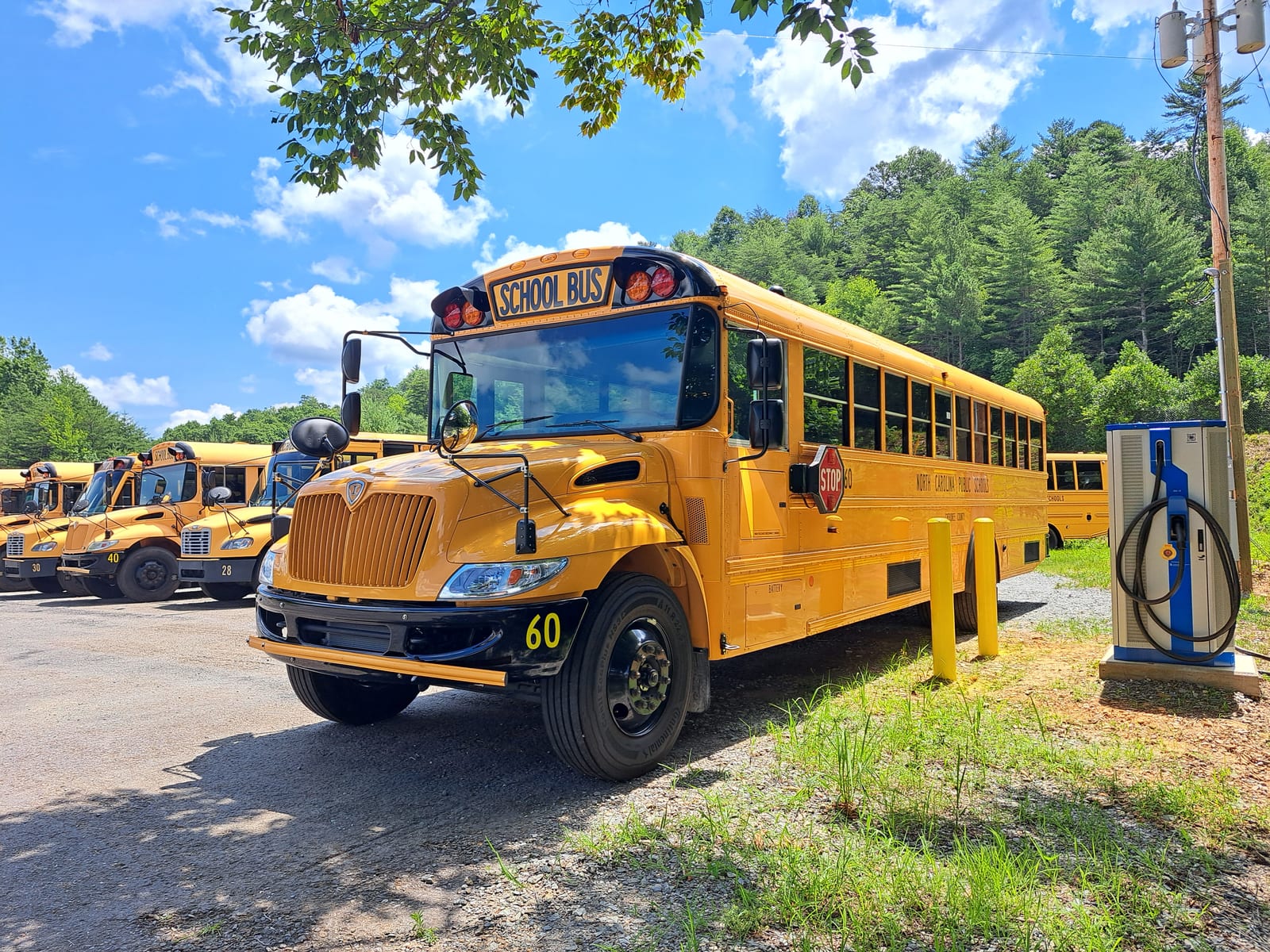
A school bus drives twice a day — morning pickup, afternoon drop-off — and sits parked the other 20-plus hours. New York City is now paying that idle time to work for the power grid instead.
- 10 megawatts of power the project is targeting from parked electric school bus batteries
- 40 additional electric school buses added to the fleet after phase one wrapped
- 20% cut to charging infrastructure costs achieved in phase one
- 2 companies behind the build-out: bus operator First Student and utility Con Edison
Parked Buses Become Power Plants
The technology is called vehicle-to-grid, or V2G: instead of a battery only drawing power to charge, it can also discharge electricity back out when the grid needs it. First Student and Con Edison built what they call a "Vehicle-To-Everything Smart Energy Hub" to do exactly that with a growing fleet of electric school buses based in Brooklyn.
Each bus battery is large enough to power a small building for a day. Multiply that by dozens of buses sitting unused for most of the afternoon and evening, and a school bus depot starts to look less like a parking lot and more like a distributed battery farm.
Why Brooklyn Is the Testbed
New York City has committed to electrifying its school bus fleet, but the switch comes with a hidden cost: upgrading depot electrical infrastructure so dozens of buses can charge without overloading local circuits. That buildout is often the most expensive part of fleet electrification, not the buses themselves.
By coordinating charging times and feeding power back to Con Edison's grid during peak demand, the Brooklyn pilot cut those infrastructure costs by 20% in its first phase, according to First Student. That savings helped justify adding 40 more electric buses to the city fleet.
A school bus that only drives twice a day spends the rest of its time as an enormous unused battery — unless someone plugs it into the grid.
What 10 Megawatts Actually Means
The project's target of 10 megawatts is a meaningful chunk of flexible capacity for a single neighborhood: enough to help smooth out the kind of short, sharp demand spikes that strain local grids on the hottest or coldest days of the year, when utilities would otherwise need to fire up expensive backup power plants.
For Con Edison, every megawatt that comes from parked school buses is a megawatt it does not need to generate from fossil-fuel peaker plants. For school districts, every bus that can earn money by selling power back to the grid helps offset the higher upfront cost of electric buses compared to diesel ones.
A Model Other Cities Are Watching
New York's buildout is one of the most closely watched vehicle-to-grid pilots in the country precisely because school buses are such a good fit for the technology: they run predictable routes, sit idle on a predictable schedule, and are typically owned in large fleets by a single operator — making it far easier to coordinate hundreds of batteries at once than it would be with privately owned electric cars.
If the Brooklyn hub continues to perform, First Student and Con Edison's model gives other cities a concrete blueprint: electrify the fleet, then let the batteries pay some of the electrification bill back.