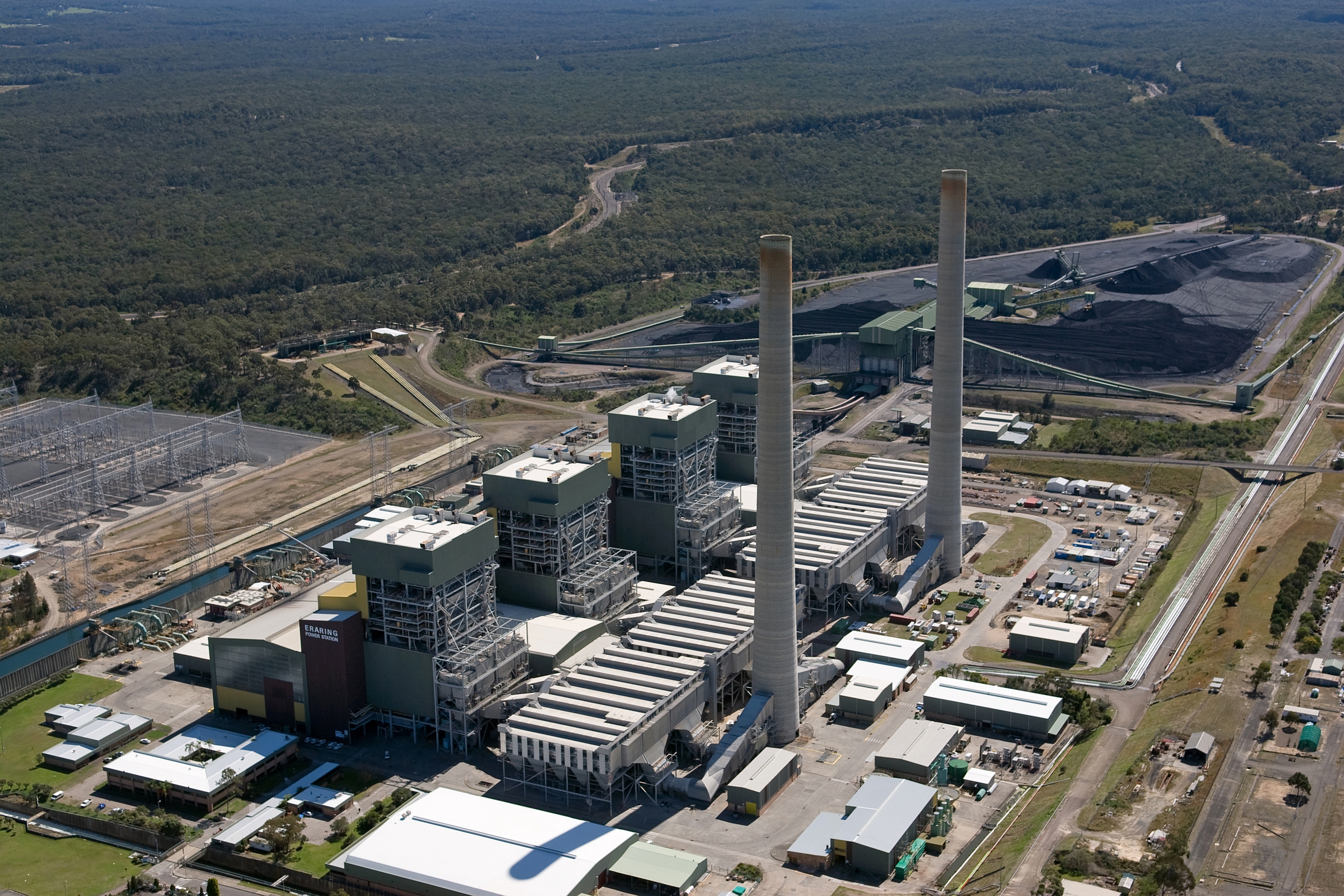
Australia's single biggest source of coal power is on track to be replaced, piece by piece, by the country's biggest battery — built on the very same site, with the first chunk already feeding the grid.
- 2.88 GW — generating capacity of the Eraring coal power station, Australia's largest
- 460 MW / 1,770 MWh — first battery stage, operating since January 2026
- 1,200 MW / 8,600 MWh — planned size of the full four-stage battery precinct
- 2029 — current scheduled closure date for Eraring's coal units
The Biggest Battery Bet in the Country
Origin Energy, Australia's largest utility, is seeking approval for a 500 MW, 4,942 MWh addition called Eraring North — the fourth stage of a battery complex rising in the shadow of the Eraring coal station on the shore of Lake Macquarie in New South Wales. Combined with three earlier stages, the finished project would reach 1,200 megawatts and 8,600 megawatt-hours, enough to power hundreds of thousands of homes through the evening demand peak after the sun goes down.
That would make it the largest battery in Australia by a wide margin, according to RenewEconomy, and large enough to overtake a 7,800 MWh system completed in Saudi Arabia — putting an Australian project in contention for one of the biggest grid batteries on Earth. The first 460 MW / 1,770 MWh stage is already up and running, built by Finnish technology group Wärtsilä and connected to the National Electricity Market at the start of 2026, with a second stage under construction.
Swapping Coal for Storage, On the Same Ground
Eraring has been Australia's largest coal-fired power station for decades. Origin announced plans back in 2022 to retire it early, and while the closure date has slipped more than once — now targeted for April 2029 — the company has kept investing in the battery buildout regardless, alongside other storage projects at its Mortlake site.
Origin's own filing to federal regulators calls Eraring's eventual shutdown "the largest single generation exit in Australian electricity history," with further coal retirements expected at Vales Point, Bayswater, and Mount Piper to follow.
Batteries like Eraring's exist to solve a specific problem: solar and wind generate most of their power in the middle of the day, but demand peaks in the evening. By charging from cheap daytime solar and discharging during the evening crunch, grid-scale batteries smooth out that mismatch without burning gas or coal to fill the gap — the same firming role coal plants used to play.
Still a Work in Progress
Eraring North remains in early planning, with only an environmental referral and scoping report filed with the New South Wales government so far. Origin expects construction to start in 2028 and full operation by 2031, according to pv magazine Australia, and the company is relying on 11 hectares of existing battery land plus an adjacent 11 hectares to limit its footprint.
The project isn't without tension: Origin has simultaneously been pursuing new gas-fired capacity elsewhere in the state, even as its own modeling shows batteries squeezing gas out of the long-term generation mix. But on the ground at Eraring, the hardware tells its own story — a coal station's cooling towers now sharing a fence line with rows of battery containers that are slowly taking over its job.