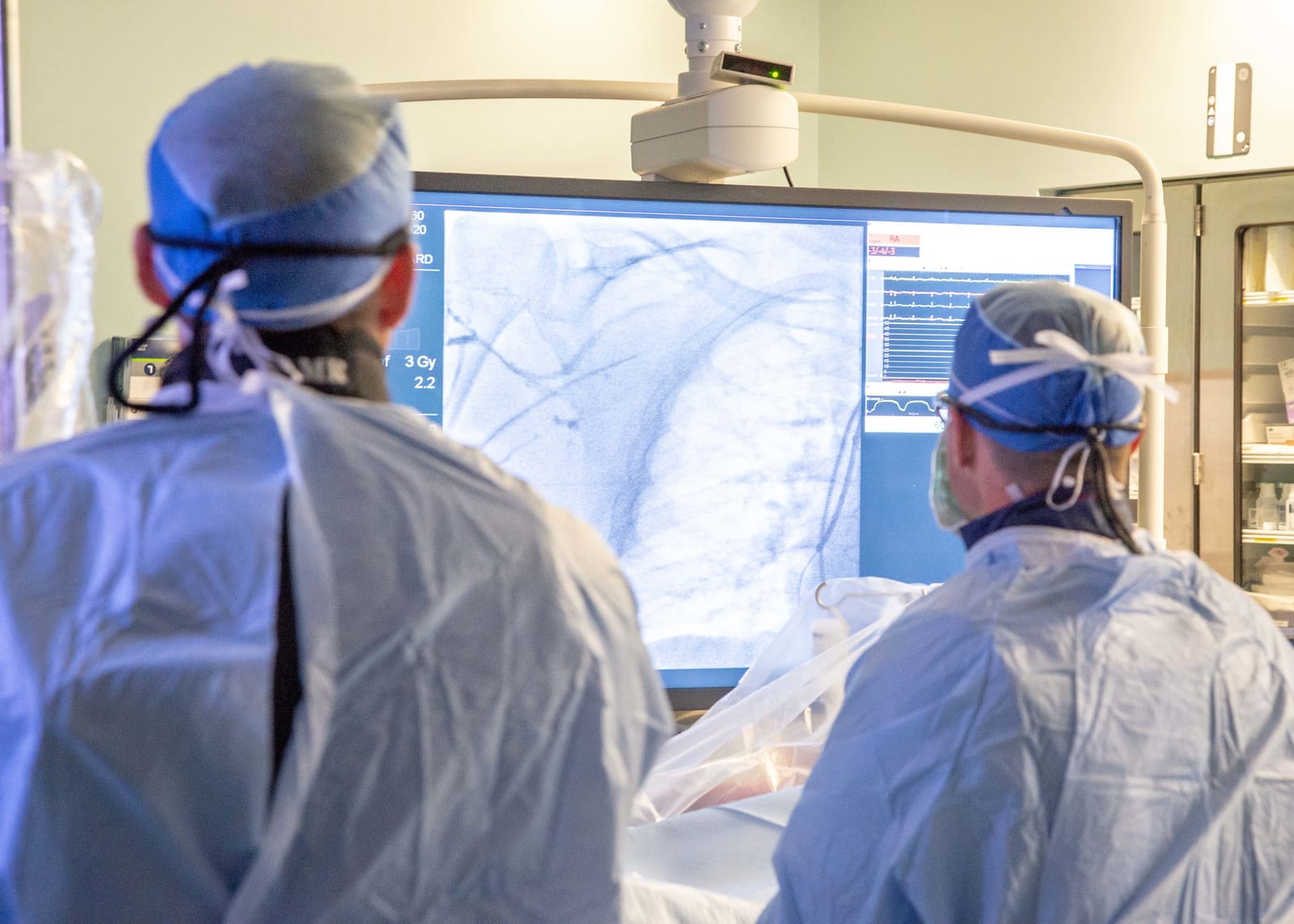
A 14-year-old girl with a failing heart valve walked out of surgery in Accra without a single incision in her chest. Doctors reached her heart through a blood vessel in her thigh instead — Ghana's first transcatheter pulmonary valve replacement.
- 1 hour: length of the procedure
- 14 years old: age of the patient
- ~30 visiting doctors, nurses and ICU staff on this year's partnership mission
- 1st time the procedure has been performed in Ghana
What Happened Inside the Cath Lab
The operation took place at the National Cardiothoracic Centre (NCTC) at Korle Bu Teaching Hospital, during an annual visit by a German medical partnership. The patient had severe pulmonary valve regurgitation, a condition in which a damaged valve lets blood leak backward into the heart, forcing it to work harder over time.
Instead of open-chest surgery, the team threaded a Harmony Valve — a device built for patients with enlarged pulmonary arteries — through a catheter inserted in her thigh, guiding it up to the heart and locking it into place. The whole procedure took about an hour. Doctors say the new valve is already "functioning excellently," and the teenager has been told simply to rest for a week and avoid heavy lifting.
A Decade-Long Partnership Reaches a New Milestone
The procedure was carried out jointly with Kinderherzen International and the Gerald Asamoah Foundation, German organizations that send teams of specialists to Ghana each year to perform complex pediatric heart operations. This year's visit brought roughly 30 doctors, nurses, physician assistants and ICU staff to work alongside NCTC's own cardiac team in its newly upgraded catheterization laboratory.
Isolated pulmonary valve insufficiency can develop without any other heart disease, and some of these conditions are detectable even during pregnancy — which is exactly why catching them early matters, said Dr. Katja Pauli, who led the visiting German team.
Dr. Kow Entsua-Mensah, director of the NCTC, called the operation a significant milestone for the hospital and the country. Ghana now joins a short list of countries on the continent capable of performing transcatheter valve replacement, meaning fewer families will need to raise money to fly children abroad for the same procedure.
Why a Thigh Vein Beats an Open Chest
Transcatheter procedures carry real advantages for pediatric patients: shorter recovery times, no chest scar, lower infection risk and a quicker return to school and normal life than traditional open-heart surgery requires. For a health system where many families already struggle to cover basic care, avoiding weeks of post-surgical recovery and ICU time also means lower overall cost.
The case was covered in detail by 3News, which has also reported on the broader partnership's track record — including the Ghana Medical Trust Fund's support for children's heart treatment nationwide. The girl's procedure was performed free of charge, funded jointly by the trust fund, the visiting German team and NCTC itself.
NCTC says it now plans to expand the range of catheter-based procedures it offers, including closing holes in the heart known as patent ductus arteriosus and atrial septal defects — conditions that, like the valve problem just treated, have traditionally required open surgery in Ghana. If the hospital can keep building on this year's visit, the country's youngest heart patients may increasingly get fixed without ever seeing an operating table.