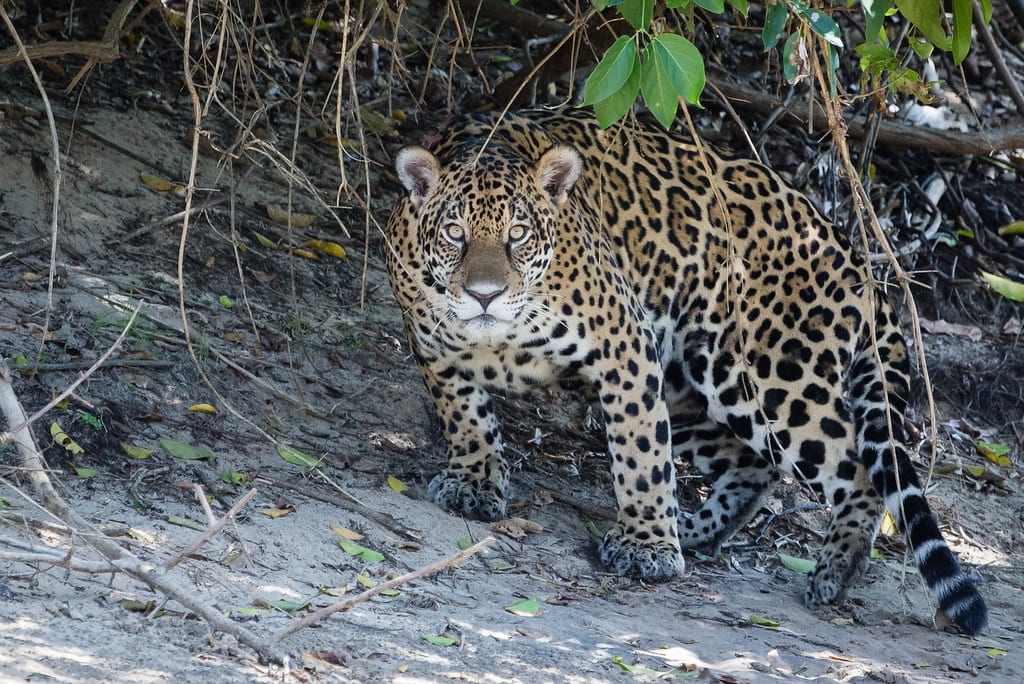
Nepal's wild tiger population has nearly quadrupled in a decade and a half, climbing from a low of 121 cats in 2009 to 429 in the country's newest national census — one of the biggest comeback stories in big-cat conservation anywhere in the world.
- 429 wild tigers counted nationwide in 2026, up from 355 in 2022
- 20% increase in just four years
- 121 tigers recorded in the 2009 baseline survey, the historic low point
- 5 national parks make up Nepal's Terai Arc Landscape tiger range
How rangers counted nearly 500 tigers
Tigers are notoriously hard to count directly, so Nepal's Department of National Parks and Wildlife Conservation runs the survey every four years using a mix of camera traps and sign surveys across the Terai Arc Landscape — the lowland belt of forest, grassland, and wetland that stretches along the country's southern border with India.
Field teams spent months between December and April walking transects, checking pugmarks, and retrieving memory cards from camera traps hidden along trails and waterholes. Each tiger has a unique stripe pattern, which lets researchers identify individuals from photos the same way investigators match fingerprints.
The results were unveiled in Kathmandu to mark Global Tiger Day, in the presence of Agriculture, Forests and Environment Minister Geeta Chaudhary and officials from the Department of Forests and Soil Conservation, the Nepal Army, and conservation partners who jointly run the survey.
Where the growth happened — and where it didn't
The increase wasn't even across the landscape. Chitwan National Park, the country's tiger stronghold, now holds 145 tigers, up from 128. Parsa National Park saw the sharpest jump of any single park, nearly doubling from 41 to 71 tigers.
Banke National Park's count rose from 25 to 51, and Shuklaphanta climbed from 36 to 50. Only Bardiya National Park moved the wrong direction, dropping from 125 tigers to 112 — the single decline recorded anywhere in the country.
Officials haven't pinned down exactly why Bardiya slipped, though prey depletion and habitat pressure from surrounding communities are the leading suspects going into the next survey cycle.
A conservation model other countries are studying
Nepal's recovery is part of a broader regional pattern. The country was one of the first signatories to the 2010 Global Tiger Recovery Programme, a pledge by 13 tiger-range nations to double wild tiger numbers by 2022. Nepal has now blown past that target at the national level, even as human-tiger conflict has grown alongside the cat population in villages bordering the parks.
The International Union for Conservation of Nature supports Nepali conservation work through its Integrated Tiger Habitat Conservation Programme, which funds science-based projects across priority tiger landscapes in Asia as part of commitments tied to the Kunming-Montreal Global Biodiversity Framework.
Tiger numbers climbed in every one of Nepal's five tiger-bearing national parks except Bardiya, rising from 121 animals in 2009 to 429 in 2026 — more than a threefold increase in a decade and a half.
Local reporting captured the scale of the shift on the ground. As the Kathmandu Post noted, Chitwan's tiger numbers alone have swung from roughly 60 in 2000 to 120 by 2013, dipped to 93 in 2018, and have now climbed back to 145 — proof that recovery in Nepal has rarely moved in a straight line, even when the long-term trend keeps bending upward.
With the next census due in 2030, Nepal's wildlife officials say the immediate priority is managing the side effects of success: more tigers sharing a finite landscape with farming communities, and the corridors between parks that will decide whether the next decade of growth is even possible.