Every solar panel ever built loses energy the moment it absorbs sunlight — because the same material that captures light also glows it back out in every direction. Researchers in Barcelona just found a way to stop that.
- 43% efficiency now considered theoretically reachable, using this method
- 33.16% is the long-standing Shockley–Queisser limit for single-junction solar cells
- Built from an inverted organic solar cell using a PM6:Y6 material blend
- Silver electrodes on both sides form a light-trapping optical cavity
The 90-Year-Old Ceiling Called Boltzmann Loss
Solar cells lose energy in several ways: some sunlight passes straight through without being absorbed, and some energy is lost as heat. But there's a subtler loss most research doesn't target, known as Boltzmann loss.
Because the Sun appears small in the sky, sunlight reaches a solar cell within a narrow cone of directions. The solar cell, however, emits photons back out across almost the entire hemisphere above it. That mismatch between a narrow absorption cone and a broad emission cone quietly wastes usable energy in every solar cell made today.
Turning A Solar Cell Into A Mirror Box
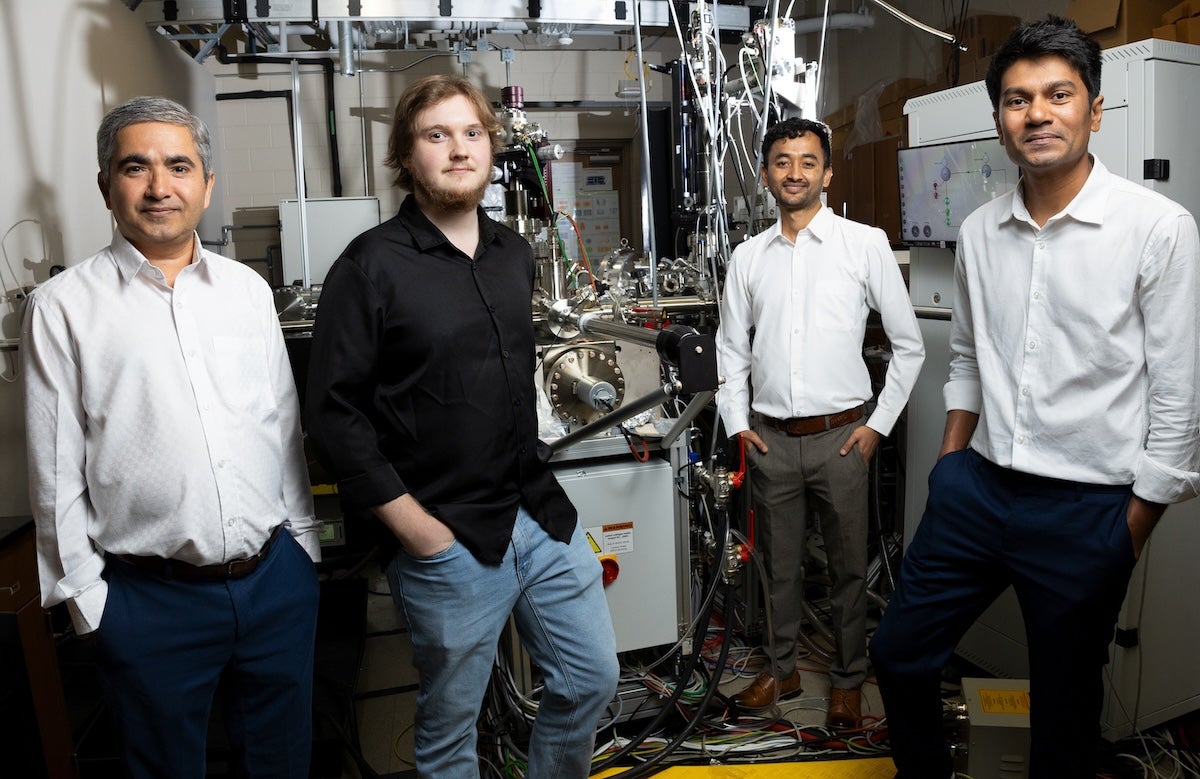
Researchers at ICFO — Francisco Bernal Texca, Chiara Cortese, Mariia Kramarenko and Quan Liu, led by Professor Jordi Martorell — built an inverted organic solar cell and converted it into an optical cavity using a silver-based front electrode paired with a silver back electrode. The layered structure reflects emitted light at wide angles while still letting incoming sunlight through, effectively narrowing the cell's emission cone to more closely match the sun's narrow input cone.
"Our study is a significant step forward in the solar energy conversion field, as it opens a completely unexplored route to surpass the Shockley–Queisser limit." — Dr. Francisco Bernal Texca, first author
The underlying Shockley–Queisser limit — 33.16% — accounts for the intrinsic loss mechanisms physicists have modeled in single-junction solar cells since the 1960s. Narrowing the emission cone, the team found, could in principle push efficiency toward 43%.
Why This Could Apply To Every Solar Panel
The result, published in Energy & Environmental Science, was demonstrated specifically in an organic solar cell. But Professor Martorell says the physics isn't limited to organic materials. "Although the path towards achieving such gains is demonstrated here in an organic solar cell, the underlying principle is not specific to organic materials and is, in principle, applicable across photovoltaic technologies," he said.
Just as important: the cavity design doesn't add manufacturing complexity. "The simplicity of the cavity cell design does not introduce any additional fabrication complexity, unlike many of the approaches currently being explored to surpass the Shockley–Queisser limit," Bernal Texca explained.
Higher efficiency translates directly into lower cost per watt and less land and material needed per unit of power generated — a meaningful gain for silicon panels, perovskites, or any other photovoltaic technology that can borrow the same mirrored-cavity trick. The team's next step is testing whether the same silver-electrode cavity design holds up outside the lab, at larger scale and across other cell chemistries.