A byproduct normally burned or dumped by paper mills just made lithium-ion batteries both safer and longer-lasting. Michigan State University engineers have built a working battery separator out of lignin — the natural wood glue that holds trees together.
- 60% longer battery cycle life using the lignin-based separator
- 25 micrometers thick — thinner than a quarter of a human hair
- 300°C heat stability, versus roughly 100°C for standard plastic separators
- 100% raw material conversion, with zero manufacturing waste
A Byproduct With a Big Job
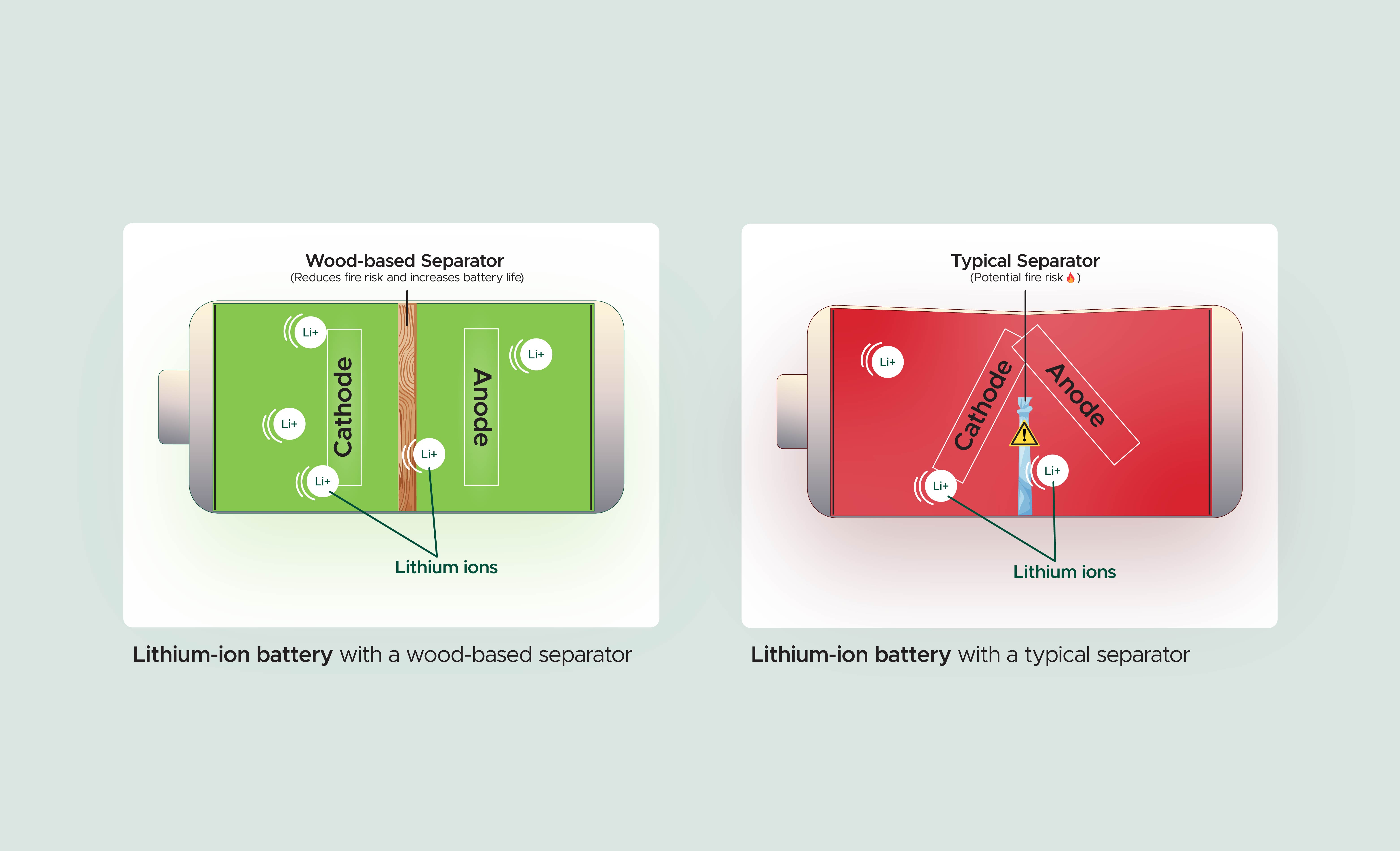
Inside every lithium-ion battery, a thin separator keeps the positively charged cathode and negatively charged anode apart. Today that separator is almost always plastic — and plastic has a weakness: it can shrink or melt at temperatures near 100°C, letting the two electrodes touch and short-circuit, which is how battery fires and explosions start.
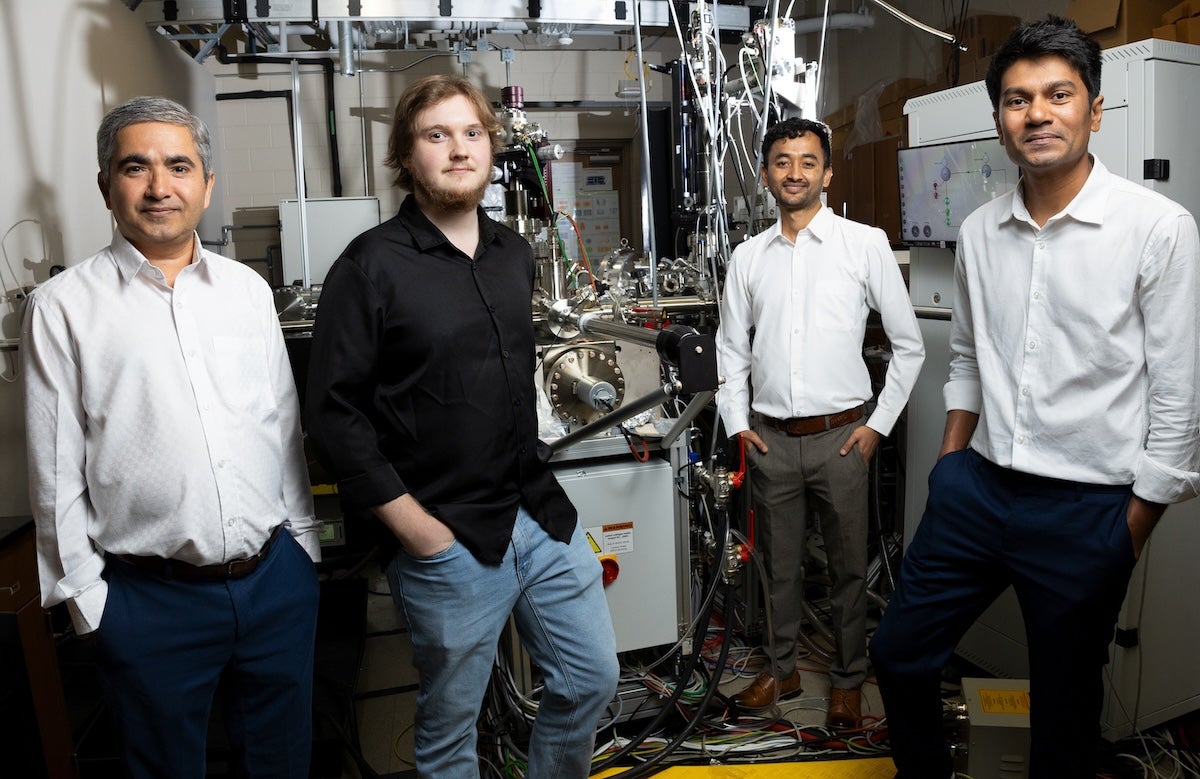
Chengcheng Fang, an assistant professor in MSU's College of Engineering, partnered with Mojgan Nejad of the College of Agriculture and Natural Resources to see whether lignin — a natural, abundant waste product from the paper and biofuel industries — could do the job better.
"We wanted to build a better battery," Fang said. "But we also wanted it to be safe, efficient and sustainable."
Lignin is the structural glue inside wood, the compound that gives trees their rigidity. Paper mills and biofuel plants strip it out by the ton and mostly burn it for low-value heat, because unlike cellulose, lignin has few established commercial uses. Fang's team saw an opportunity in that waste stream: lignin, particularly a form called lignosulfonate, is cheap, abundant, and needs no extra chemical treatment before it can go into a battery.
Why the Material Matters
The team engineered lignin into a thin film separator and tested it across a range of thicknesses. A film measuring 25 micrometers — thinner than a quarter of a human hair — proved most effective at keeping the battery's electrodes safely apart while staying stable at temperatures up to 300°C, three times hotter than plastic separators can handle.
The timing is notable. Lithium-ion fires have become a growing safety concern as the batteries spread into everything from phones and e-bikes to children's toys. East Lansing's interim fire chief has publicly described them as "ticking time bombs" after local house and car fires traced back to overheating battery packs.
"We were surprised to see that the lignin film also improved the battery's cycle life. We increased the battery's cycle life by 60%." — Chengcheng Fang, Assistant Professor, Michigan State University College of Engineering
From Lab to Patent
Beyond safety, the lignin separator turned out to extend how many times a battery can be charged and discharged before wearing out, by a full 60% — an unexpected bonus on top of the fire-risk reduction.
Manufacturing is sustainable too. The team produces the lignin film using a low-cost dry processing method that avoids the harmful solvents typically used to make battery separators, achieving full raw-material conversion with no waste or pollution left behind.
The research, published in the journal Advanced Materials, is now patent-pending through the MSU Innovation Center. For a material that paper mills currently treat as waste to burn, that's a significant promotion — from scrap to a safer battery found in the devices wired into nearly every modern home.
The need is immediate. Lithium-ion batteries now power nearly every rechargeable device in the average American household, from electric vehicles and e-scooters to cordless power tools and children's headphones. When damaged, overcharged, or exposed to heat, these batteries can enter "thermal runaway," a chain reaction that can push internal temperatures past a thousand degrees in under a minute and ignite a fire that ordinary extinguishers can't put out, because the reaction feeds itself from inside the cell.
Fang recommends simple precautions in the meantime: charge batteries to around 88% rather than a full 100% to preserve long-term performance, avoid leaving devices charging unattended overnight, especially on beds or couches, and never throw lithium-ion batteries in household trash — most hardware and office-supply stores now offer free battery recycling drop-off bins. Her lab's lignin separator won't replace those habits overnight, but if it scales from the lab bench to commercial production, it could make the batteries inside those everyday devices meaningfully harder to set on fire in the first place.